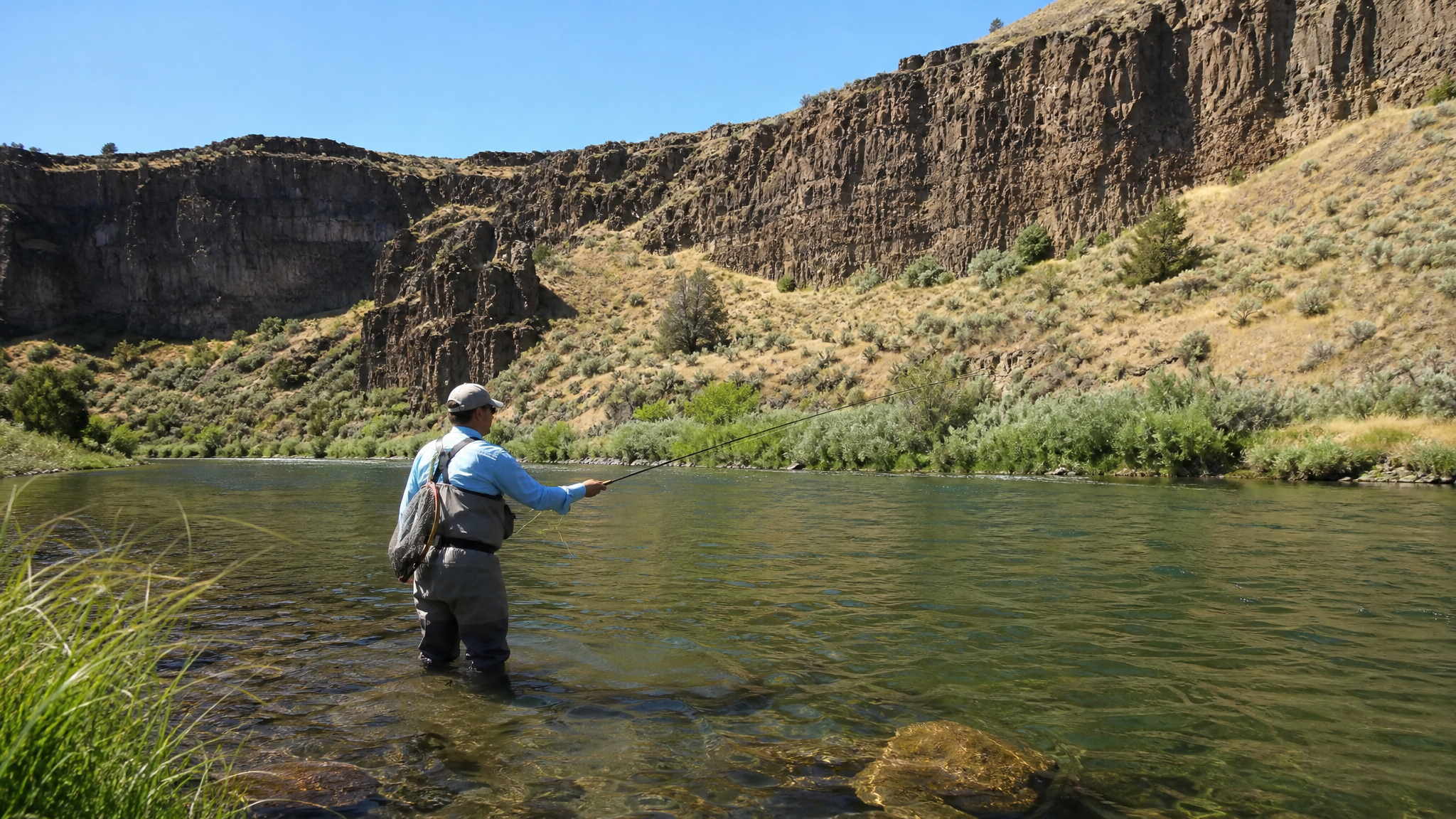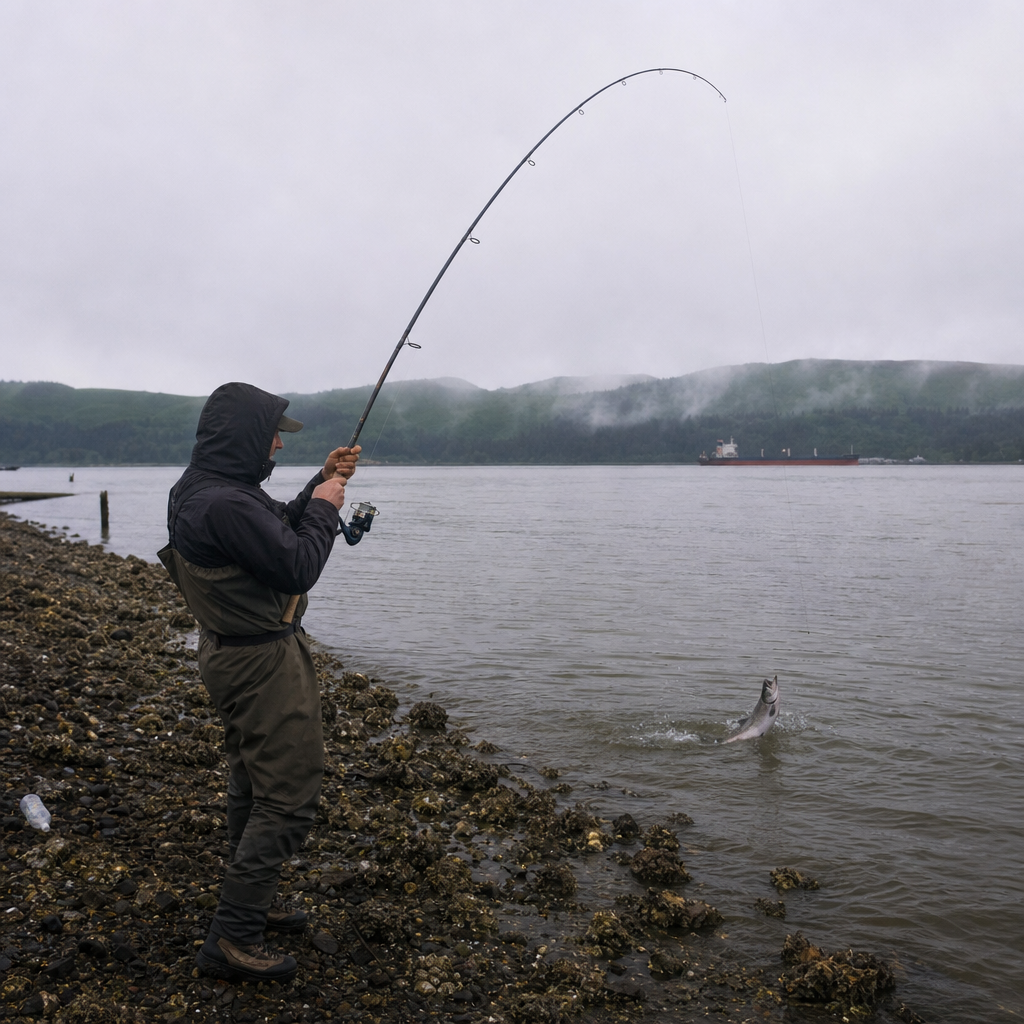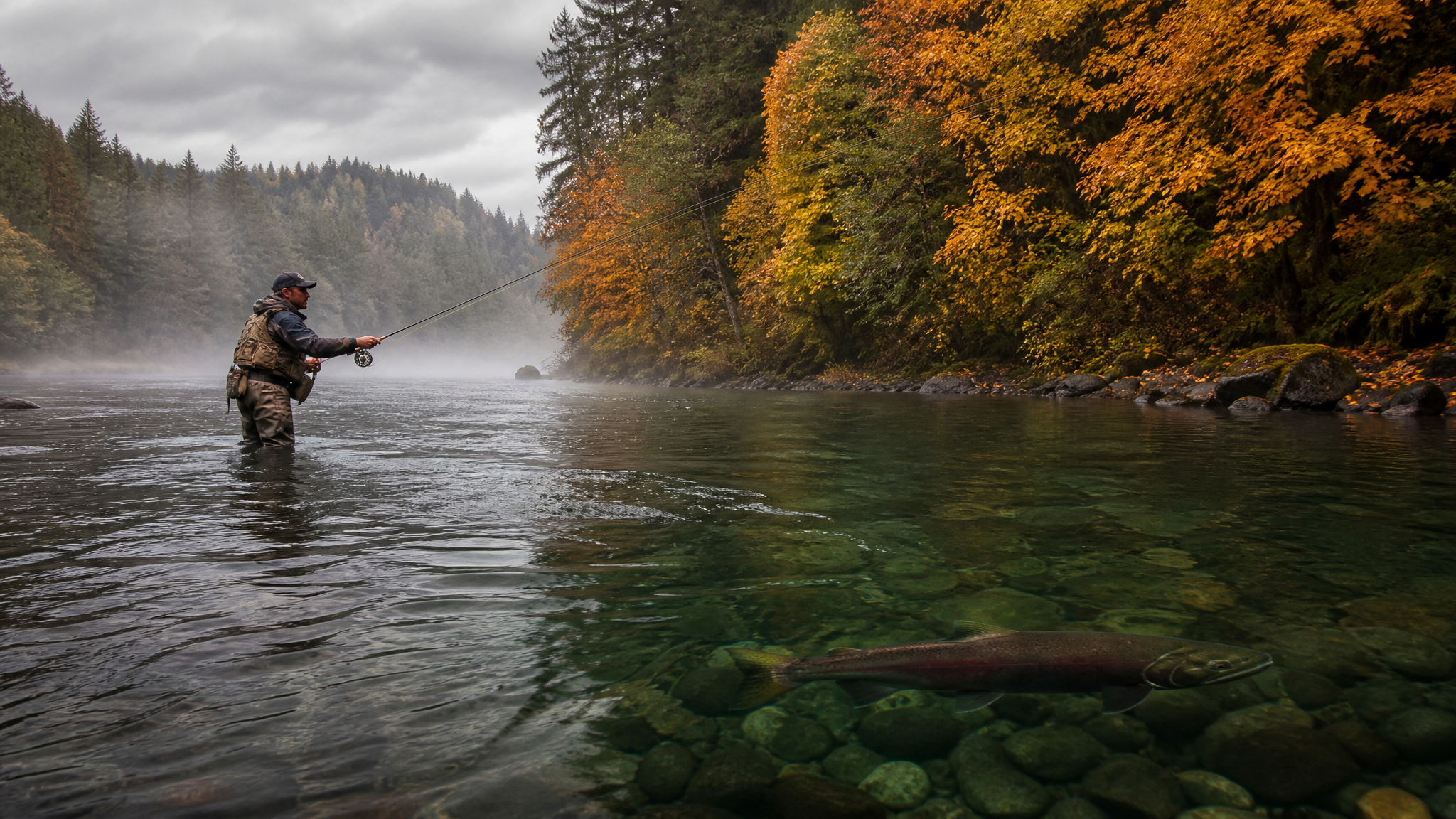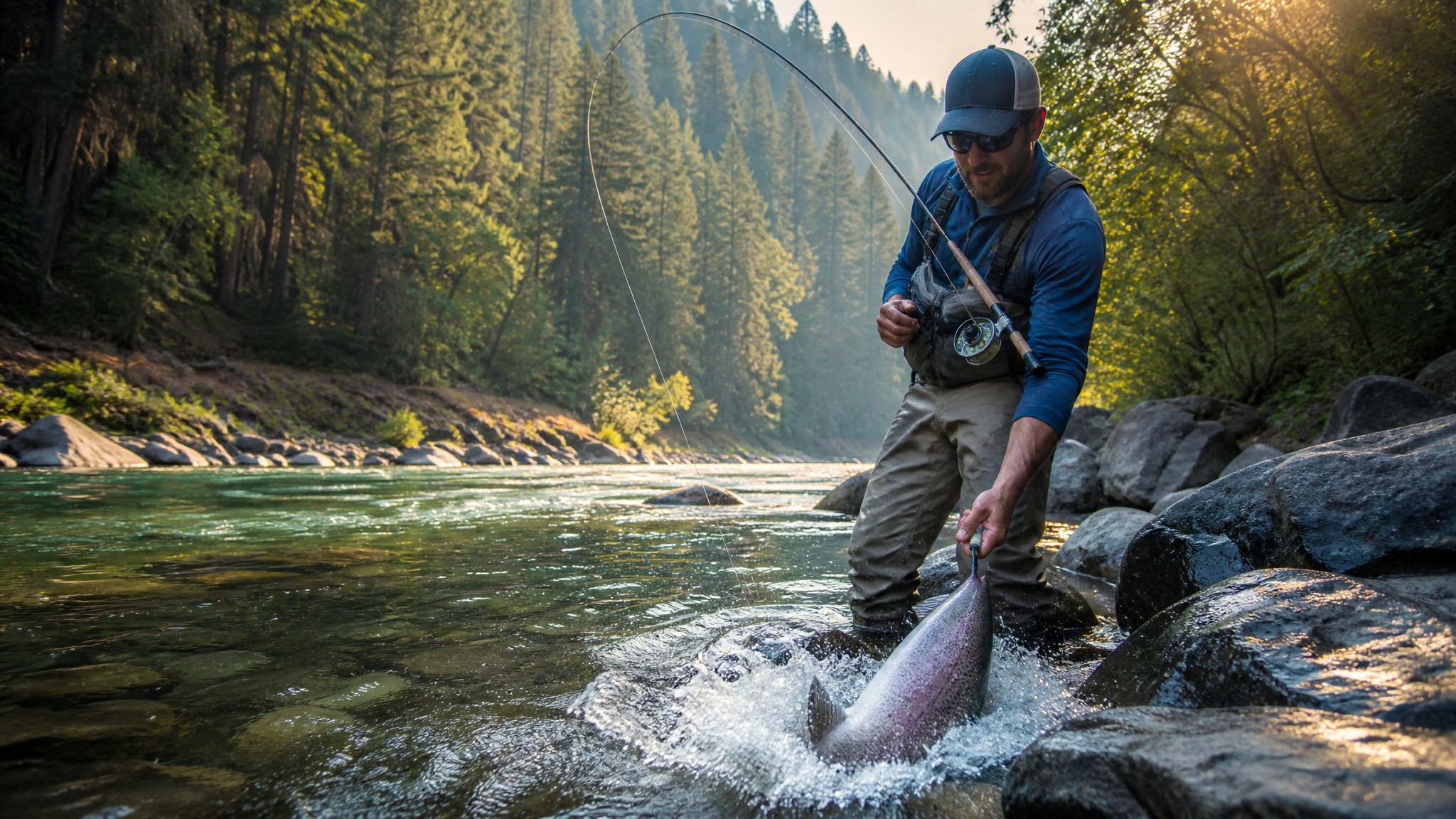
The North Umpqua River is famous for its summer steelhead, its wild trout water above Soda Springs Dam, and the Umpqua Trail winding through old-growth canyon timber. What it doesn't get nearly enough credit for is its fall Chinook run — a legitimate, fishable migration of wild and hatchery kings that pushes into the lower river from September through November, largely under the radar of the coastal salmon crowd.
If you've been bypassing the North Umpqua on your way to the Rogue or driving past Roseburg to reach a coastal estuary, it's time to take a closer look at what's in your backyard.
Understanding the North Umpqua Fall Chinook Run
Fall Chinook begin staging in Winchester Pool near Roseburg as early as late August, with the main push arriving in September and peaking through October. These are not hatchery stackers idling in a tailrace — the North Umpqua's fall Chinook move through bedrock pools and canyon runs, using depth and structure much like wild coastal fish. Winchester Dam fish ladder provides viewing access during the peak, and ODFW counts confirm the run's consistency even in moderate water years.
The river above Glide transitions to more classic canyon character — narrow corridors of fast water, deep offset pools below boulders, and long tailouts where salmon rest before moving. These upper reaches get light pressure compared to Winchester, and they hold fish that have been on the move, not staged fish pestered by crowds.
Top Bank Access Points
Winchester Pool (Roseburg)
The most popular and accessible stretch, Winchester Pool below the dam offers consistent holding water and enough room for multiple anglers to spread out. This is where most salmon first congregate before moving upstream. Fish here tight to the rock walls and structure on the far bank when you can reach it.
Rock Creek Confluence
Where Rock Creek dumps into the North Umpqua, you'll find a classic migration stopping point. Cold tributary water draws Chinook in warm September conditions. Park at the Rock Creek access and work both the seam below the confluence and the tailout above it.
Susan Creek Day Use Area
About 25 miles east of Roseburg, the BLM's Susan Creek area provides bank access to canyon water that most anglers overlook entirely. The pool below the gravel bar holds fish well into October. This stretch is worth the extra drive when the lower river sees pressure.
Glide to Idleyld Park
The reach between Glide and Idleyld has several pull-outs with fishable bank access to side channels and main river pools. These fish have been moving hard and tend to be aggressive when conditions are right — cooler morning temps, stable flows, and moderate cloud cover.
Tackle and Techniques for Bank Anglers
Side-Drifting and Float Fishing
With limited water to wade in many canyon sections, side-drifting from the bank using a float works well in the deeper pools. Rig a 3/4 to 1-oz. pencil lead above a swivel, tie 18 to 24 inches of 15-lb fluorocarbon leader, and thread on a pink worm, sand shrimp, or cluster of cured salmon eggs. Let the current swing your presentation naturally through the holding zone.
Back-Bouncing
Where you have a direct upstream cast into a deep pool or slot, back-bouncing is hard to beat. Use enough weight to tick the bottom — typically 1 to 2 oz. on the North Umpqua's heavier flows — and work your bait slowly downstream by feeding line in controlled pulses. This is the technique that catches the biggest Chinook in the deepest water.
Spinners and Kwikfish
On overcast days or after a fresh push of fish, hardware works. A large Blue Fox or Mepps in size 5 or 6, blue/silver or chartreuse, can trigger reaction strikes when bait fishing slows. Kwikfish plugs wrapped in sardine fillet and worked through the tailout of a pool are worth a serious look, especially for anglers who like a more active approach.
Timing and Conditions
Water temperature is your best guide to Chinook activity on the North Umpqua. Fish become sluggish above 58°F — common in late August and early September when the canyon is hot. The bite picks up dramatically when temps drop into the low 50s, typically after the first significant fall rain event in late September or October.
Flow is equally critical. Check the USGS gauge at Glide before any trip. The fish move best with rising or stable flows between 800 and 2,500 CFS. After a major rain event blows the river muddy, wait 48 to 72 hours for color to clear — Chinook stack up and bite hard during the drop.
Regulations and Licenses
Always verify current ODFW regulations before fishing. The North Umpqua has specific wild fish retention rules that change by reach and year. In many sections, wild Chinook must be released while hatchery retention is allowed. Know how to identify a clipped adipose fin at a glance before you ever pick up a fish — in low-light canyon conditions, a misidentification is an expensive mistake.
An Oregon angling license plus a Combined Angling Tag is required. If you plan to keep hatchery fish, have your tag ready before you make your first cast.
The Drive Is Worth It
The North Umpqua is one of those rivers that rewards anglers willing to hike a little farther, drive a little deeper, and learn the canyon on their own terms. The crowds that pile onto the Rogue or coastal estuaries simply aren't here. If you put in the scouting time during late September and find your own pool, you'll have it to yourself while everyone else is fighting for parking at the Rogue.
That's the deal the North Umpqua offers: a legitimate fall Chinook run, beautiful canyon country, and a genuine sense that you earned every fish. For bank anglers willing to go explore, it doesn't get better than that in Southern Oregon.