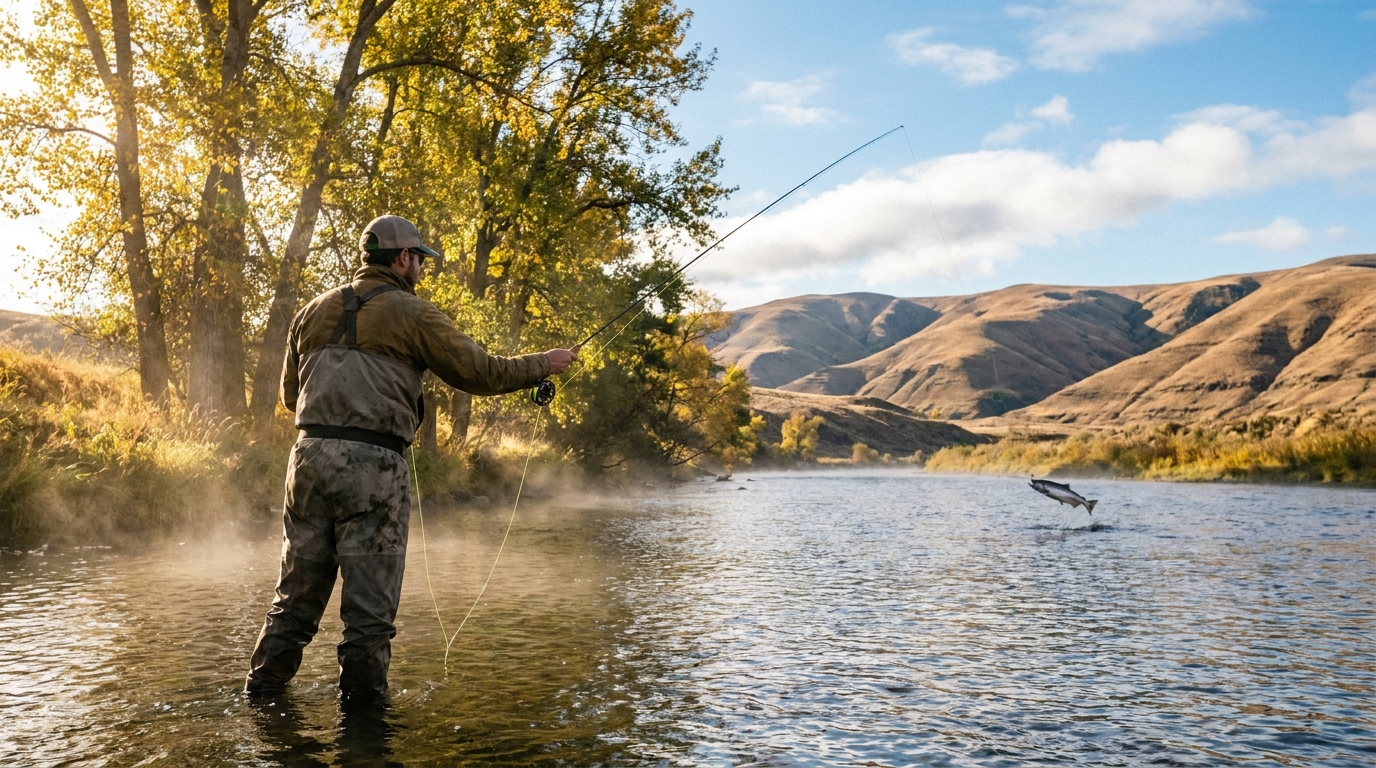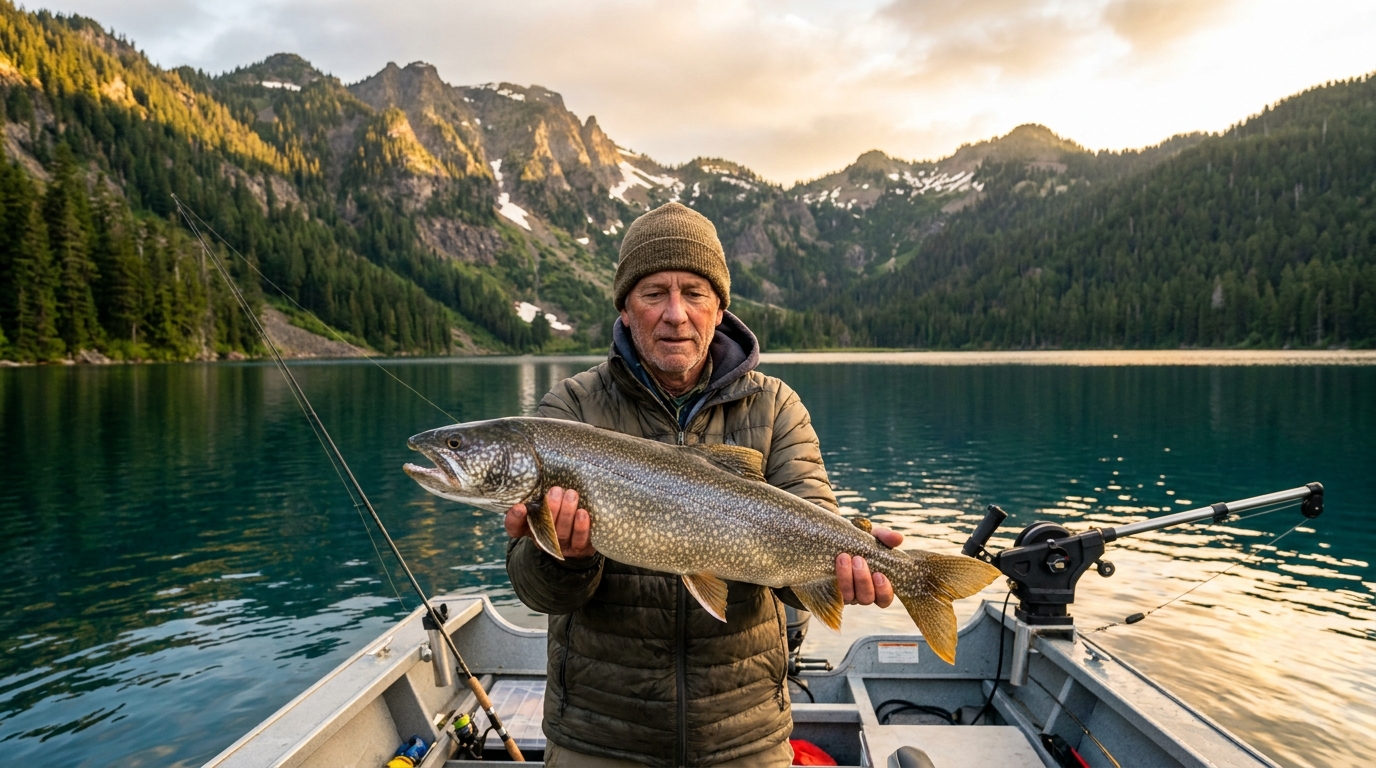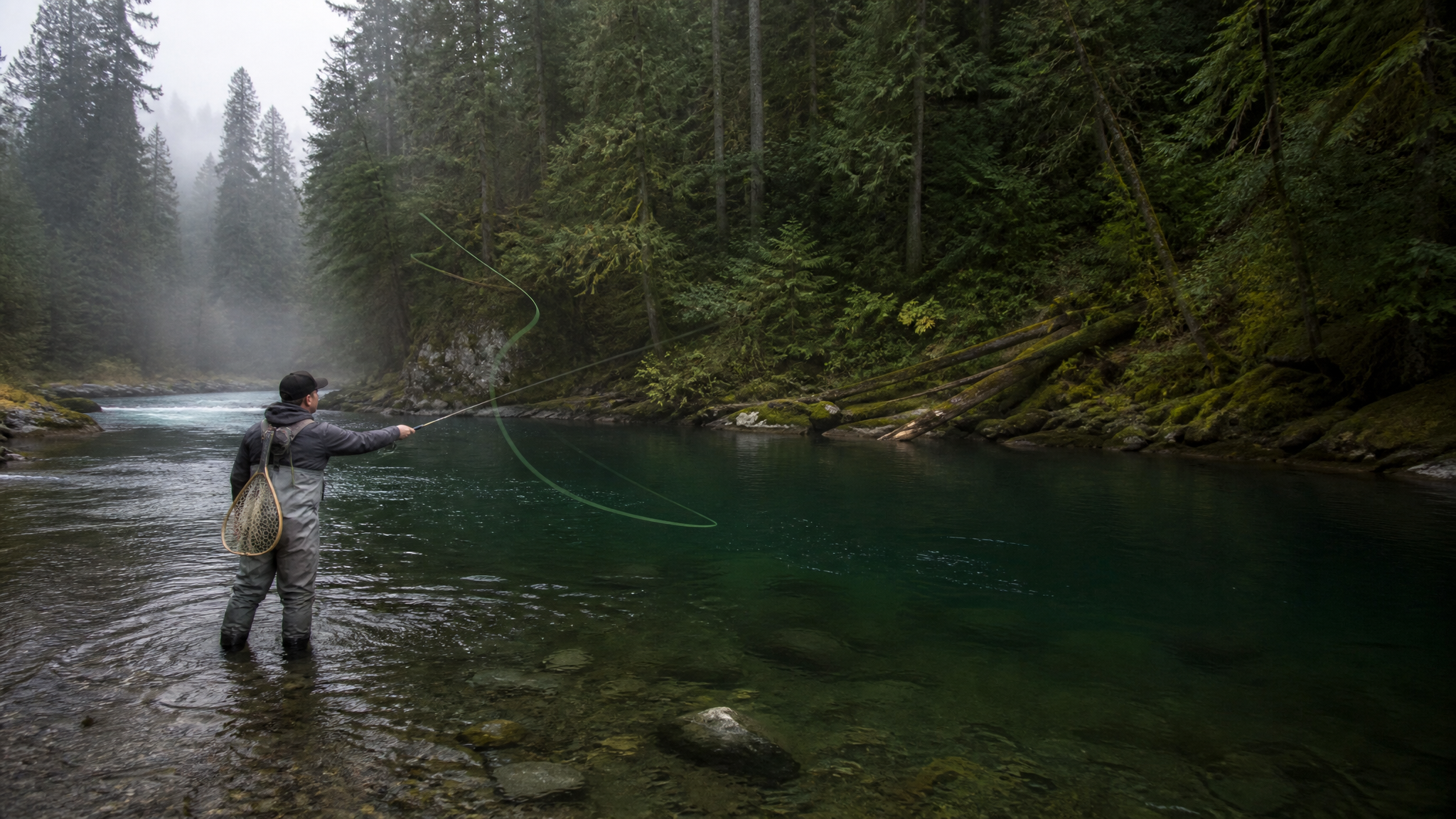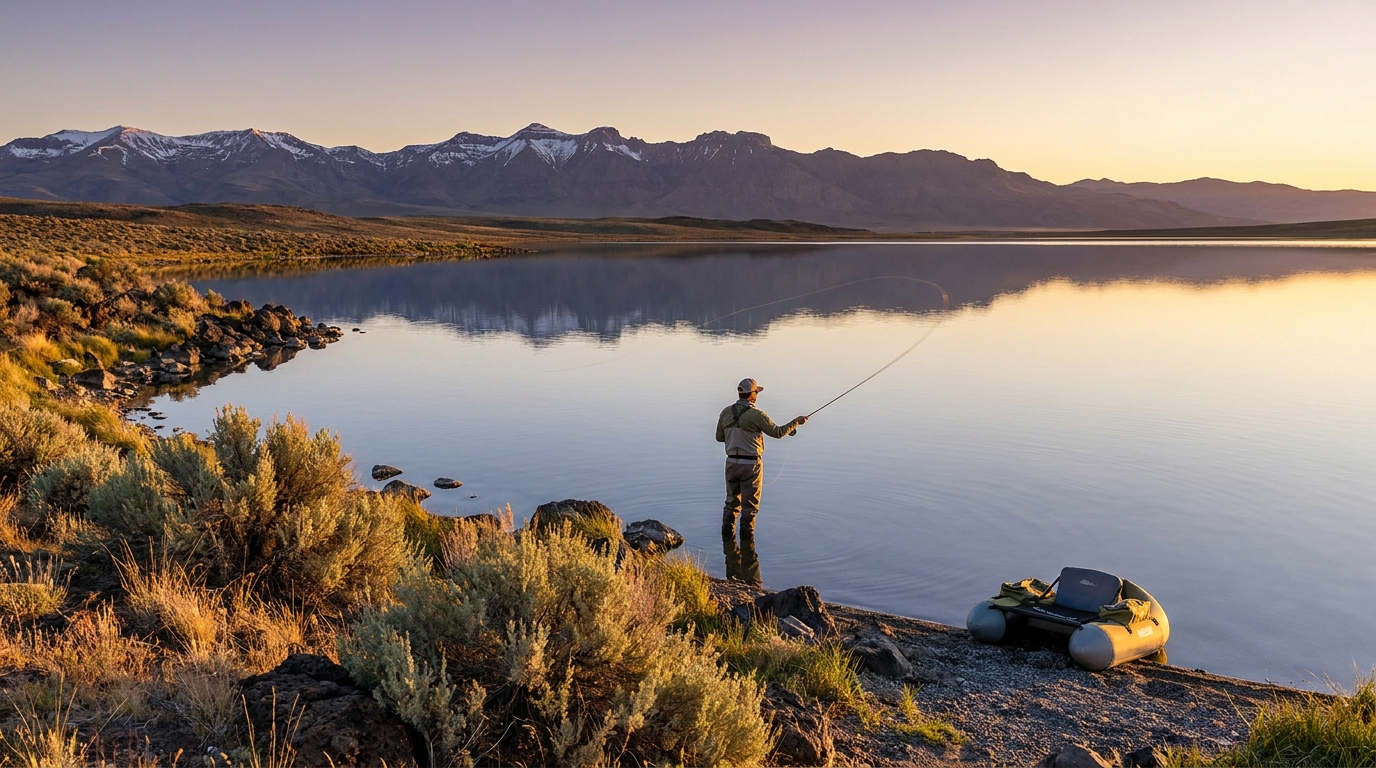
There are lakes in Oregon that most anglers will never visit. Mann Lake is one of them—and that's exactly why it's worth the drive. Sitting at 4,200 feet in the high desert of Harney County, just east of Steens Mountain, Mann Lake holds one of the few self-sustaining populations of Lahontan cutthroat trout in the state. These aren't stockers. They're wild, genetically distinct fish that can run 18 to 24 inches and push five pounds on a good year.
The fishing is fly-only, and barbless hooks are required during much of the season. No motors are allowed on the water. This keeps crowds to a minimum and the experience honest. If you want to fish Mann Lake, you're going to earn it.
Getting There
Mann Lake sits about 65 miles south of Burns on the Fields-Denio Road, a gravel two-lane that cuts south through Catlow Valley and skirts the eastern base of Steens Mountain. The lake is BLM land with a developed campsite nearby. A high-clearance vehicle is strongly recommended. After significant rain, sections of the road can become soft enough to swallow a truck to the axles—check conditions before you go and carry a recovery kit regardless.
From Portland, expect a five-and-a-half to six-hour drive. From Bend, it's closer to four hours. Either way, plan to spend at least two nights. One day fishing is never enough.
Understanding Lahontan Cutthroat Trout
The Lahontan cutthroat is the largest subspecies of cutthroat trout in North America. Native to the ancient Lahontan Basin that once covered much of the Great Basin, these fish evolved to survive in alkaline, sometimes marginal water. Mann Lake's water chemistry is similar enough to their native range that the fish thrive here, even as conditions fluctuate between seasons.
Compared to coastal or inland cutthroat, Lahontans tend to be more aggressive surface feeders and less spooky in low-clarity water. They're also built differently—deeper-bodied, heavier through the shoulders, with the kind of mass that makes a 20-inch fish feel like something entirely different from a 20-inch coastal cutthroat.
Best Times to Fish
The season traditionally opens April 22 and runs through November 30. Spring—April through early June—is typically the best period, with fish active in shallower water and more willing to take a dry fly. By midsummer, water temperatures climb and fish move deeper, becoming harder to locate and less aggressive. Late summer and early fall can turn things back on, especially after the first cool nights of September.
For an August visit, plan to fish early and late. Dawn through 9 AM and the last two hours of light before dark are your windows. Midday, when the desert sun is hammering the water, the fish go down and go quiet.
Flies That Work
Mann Lake Lahontans aren't particularly selective, but presentation still matters. Productive patterns include:
- Woolly Bugger (olive or black, size 6–8): The go-to searching pattern. Strip it slow with occasional long pauses.
- Chironomid patterns (size 14–18): When fish are rising in rings, drop a midge pupa under an indicator. This can be deadly in spring and fall.
- Callibaetis nymphs and dries (size 14–16): The lake produces good callibaetis hatches. Watch for the spinner falls in afternoon.
- Leech patterns (maroon or black, size 4–6): Effective on overcast days when fish are cruising the shallows.
- Foam hoppers and beetles (size 10–12): Summer and fall terrestrial action can be surprisingly good.
Tactics from the Bank and Float Tube
Float tubes are the preferred platform here. The shoreline is soft in places and steep in others, and the best fish often cruise 30 to 60 feet off the bank. A float tube gets you into position to intercept cruising fish, and the slow-kicking approach doesn't spook them the way a splashy entry would.
If you're fishing from shore, look for points and rocky sections where the bottom drops away. Fish travel these edges, especially at first and last light. Long casts—60 feet and beyond—aren't always possible with a float tube fin drag, so practice your bank casting before the trip if that's your setup.
Use at least a 9-foot, 5-weight rod with a quality reel and enough backing. These fish run hard in open water with nothing to stop them, and a reel without smooth drag will cost you the fish of the trip.
Camp, Gear, and Regulations
The BLM campsite at Mann Lake is primitive—vault toilets, no water, no hookups—but it's right on the lake, which makes it perfect. Bring everything you need, including plenty of drinking water. Cell service is nonexistent. The nearest fuel and services are in Fields to the south or Burns to the north.
Current regulations require fly fishing only with barbless hooks. Check the current ODFW regulations closely—rules at Mann Lake have changed in the past and there are slot limits and other special provisions that apply. A valid Oregon fishing license is required.
Mann Lake is one of those places where the desert silence, the scale of the Steens to the west, and the possibility of a five-pound cutthroat on a dry fly combine into something that doesn't translate well to social media. You just have to go.