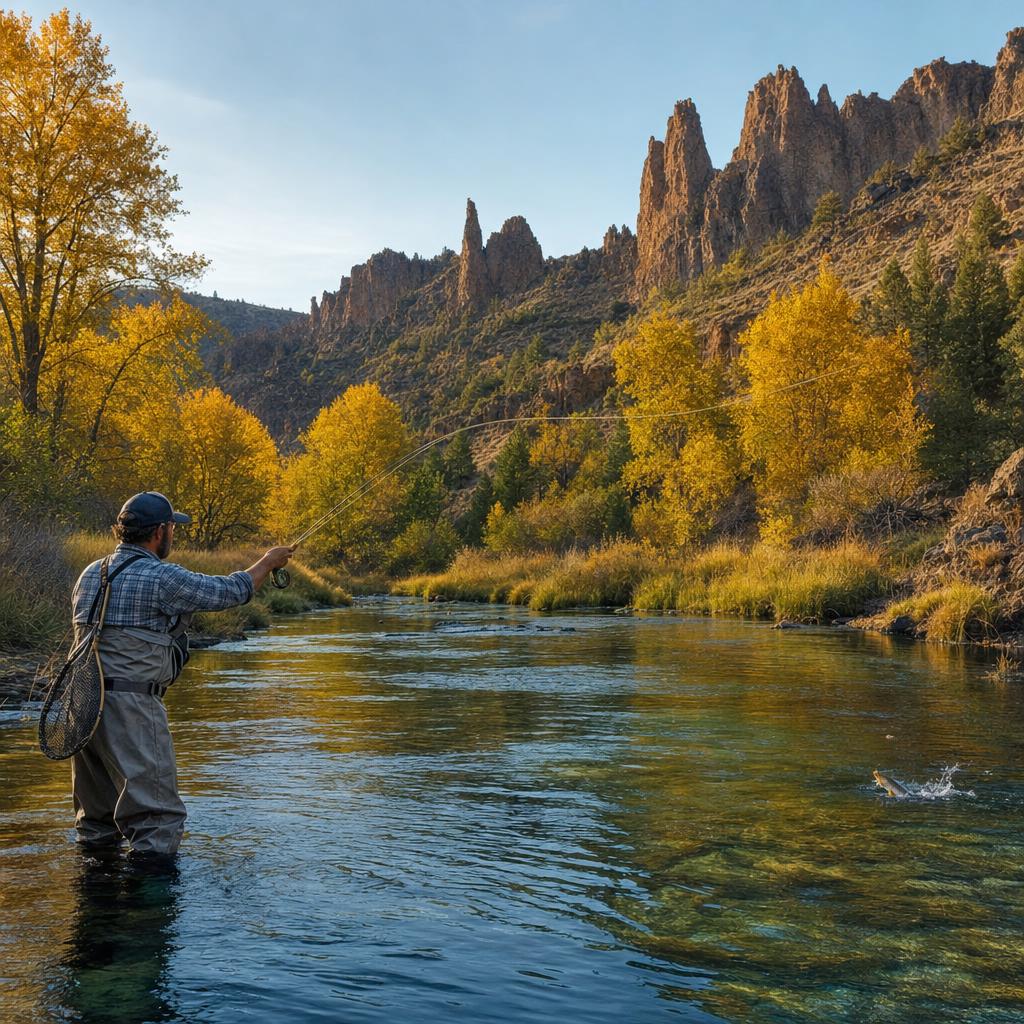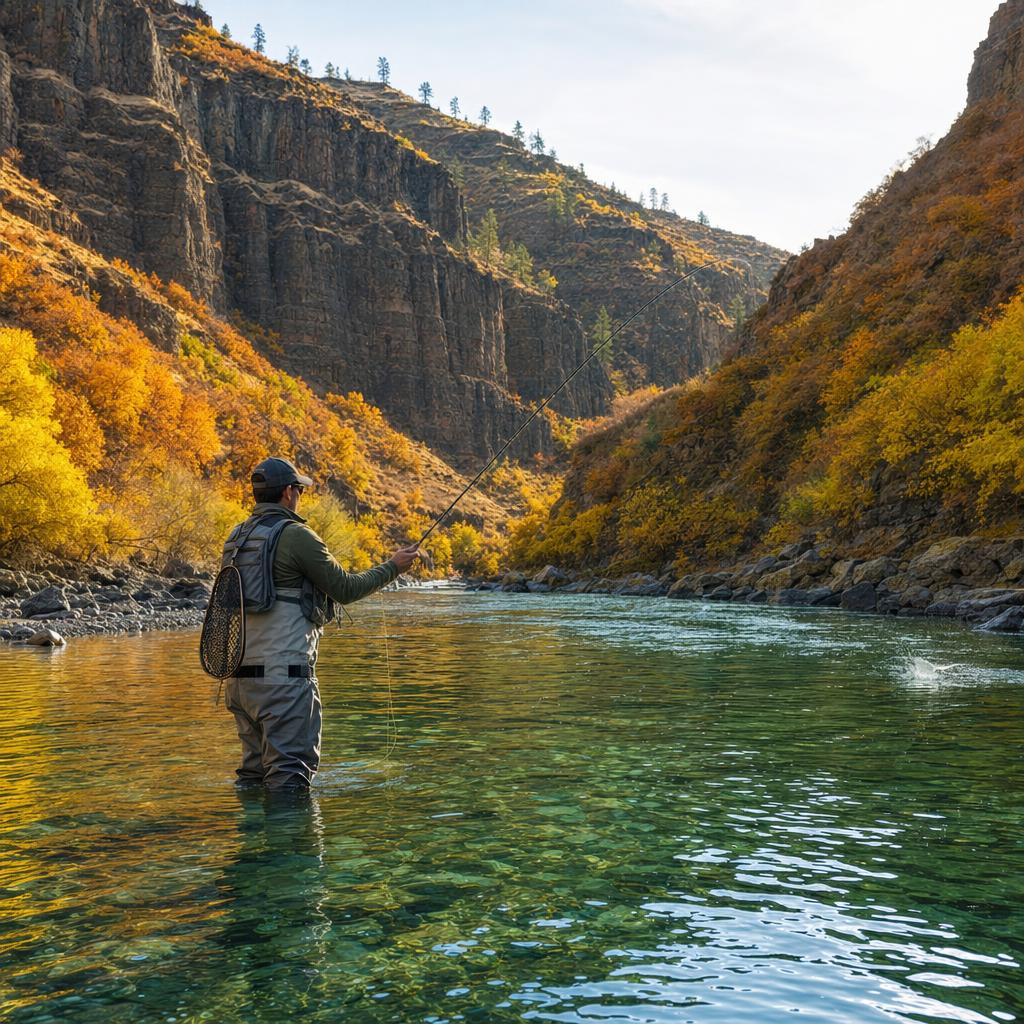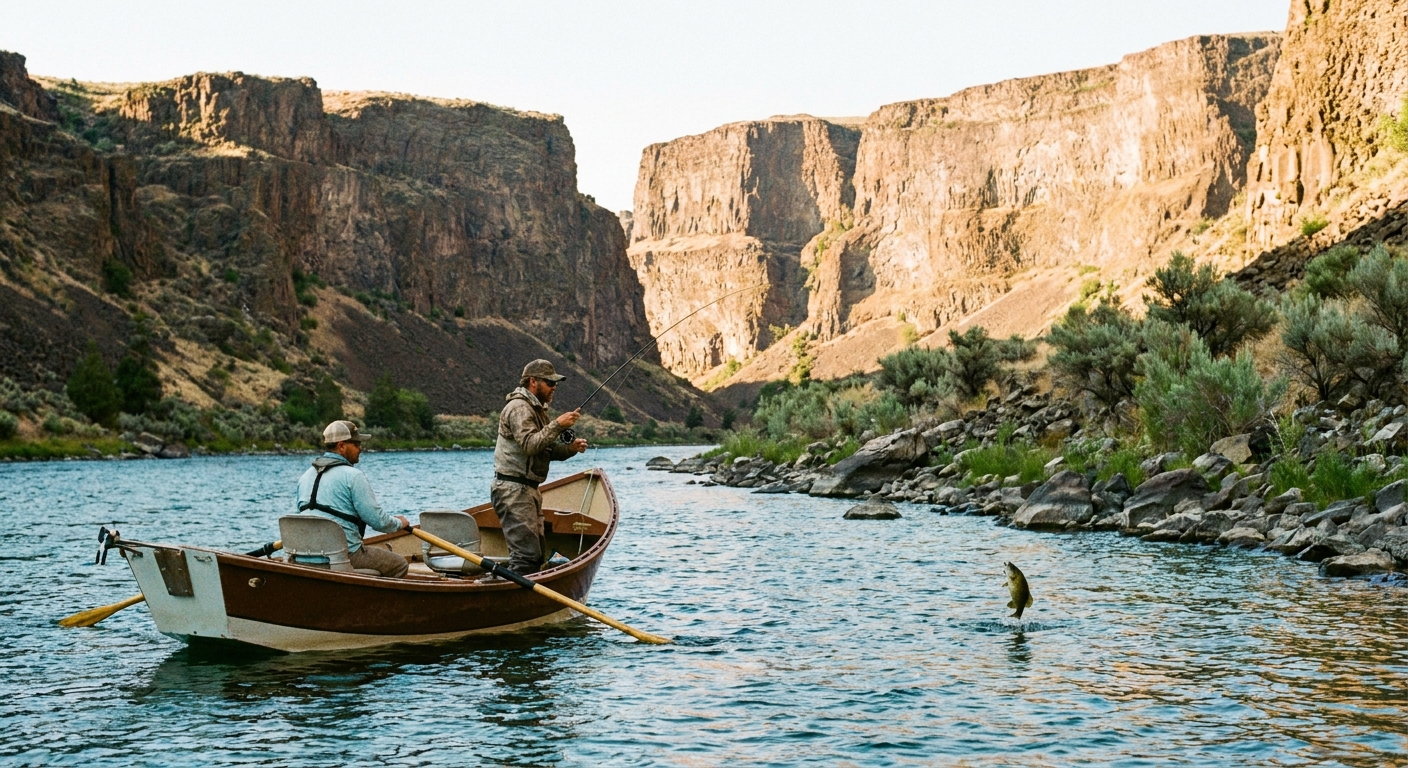
If you've fished the Deschutes and only targeted trout or steelhead, you're leaving one of Oregon's finest fisheries on the table. The lower canyon stretch between Macks Canyon and Heritage Landing — roughly 25 miles of roadless, river-access-only water — holds some of the best smallmouth bass fishing in the Pacific Northwest, and July is when those fish are at their most aggressive.
Why July Is Prime Time
Smallmouth bass are a warmwater species that thrive when river temperatures climb into the mid-60s. On the Lower Deschutes, July typically sees afternoon water temps of 66–72°F — the sweet spot for active, feeding fish. Bass that spent spring staging in deeper pools push up onto shallow rocky flats to hunt crayfish, sculpin, and juvenile trout. Long summer days extend feeding windows, and topwater action in the early morning and evening hours can be nothing short of spectacular.
The canyon walls provide shade on the west bank in the morning and east bank in the late afternoon — position accordingly. Smallmouth fishing here is genuinely world-class, and it's dramatically underutilized compared to the legendary trout fishery above Sherars Bridge.
The Float: Macks Canyon to Heritage Landing
This section is most efficiently fished as a 2–4 day float, launching from the Macks Canyon BLM campground and taking out at Heritage Landing. You'll need a drift boat, raft, or hard-sided kayak — this is moving water with some technical riffles that demand a capable craft and paddler.
- Macks Canyon Launch: Well-maintained BLM ramp with parking. This is where the road ends and the canyon begins.
- Day 1: Work the canyon through the lower gorge sections — the water slows, widens, and the smallmouth populations are dense. Target the boulder gardens and eddy lines.
- Heritage Landing: Paved BLM takeout with restrooms and a short walk to a parking area. Arrange a shuttle beforehand — this is key logistics for any float here.
BLM camping is allowed along the corridor. July brings fire restrictions — check current conditions before your trip and pack a stove. No campfires may be permitted in dry years.
Best Techniques and Tackle
Topwater (First and Last Light)
The morning topwater bite on the Lower Deschutes is something every bass angler should experience at least once. Smallmouth in fast canyon water are explosive, and when a 3-pound fish blows up a Heddon Zara Spook or a River2Sea Whopper Plopper against a basalt wall at dawn, you'll be planning next year's trip before breakfast is over.
- Poppers: Strike King KVD Splash, Rebel Pop-R
- Walking baits: Zara Spook in chrome or bone
- Prop baits: Whopper Plopper in 90mm
Mid-Day Subsurface
When the sun is high and topwater slows, go subsurface. The Deschutes smallmouth love crayfish, and anything that mimics that scuttling prey will get bit.
- Tube jigs (3–4 inch, brown/green pumpkin) on a 1/4 to 3/8 oz jig head
- Ned rigs on rocky flats and ledges
- Swimbait on a scrounger head for covering water
- Crankbaits — a Strike King Series 3 in crawdad patterns is a proven canyon fish catcher
Gear Setup
A medium-power spinning rod in the 6'8"–7'2" range paired with a quality 2500-series reel and 10–15 lb braid with a 10 lb fluorocarbon leader is the versatile setup most canyon guides recommend. For topwater and crankbaits, a 7' medium baitcaster with 14 lb mono gives you the casting accuracy to drop lures tight against the canyon walls where big fish hold.
Regulations and Access
The Lower Deschutes is managed by ODFW as part of the Deschutes River Recreational Use area. Smallmouth bass have no closed season and a generous 10-fish bag limit with no minimum size. An Oregon fishing license is required. Note that the wild trout regulations still apply for any trout caught — know your fish. Motorized boats are restricted in the lower canyon; human-powered and oar-driven craft only.
Logistics and Shuttle
The canyon road from the Macks Canyon end requires a high-clearance vehicle. Shuttle services operate out of Maupin — book early in July as this is peak steelhead guide season and shuttles fill up. Alternatively, drop a vehicle at Heritage Landing and drive back to Macks Canyon the night before your launch.
Pack for desert heat — July canyon temperatures regularly exceed 95°F. Bring far more water than you think you need, a wide-brim hat, and sun protection. The lower canyon has no cell service from Macks Canyon all the way to the Columbia.
The Bottom Line
The Lower Deschutes smallmouth fishery deserves the same respect given to the famous trout water above it. In July, these fish are fat, aggressive, and willing — and the canyon scenery makes every cast feel like an event. If you haven't floated this stretch for bass, put it on the list. It's one of Oregon's great summer trips.