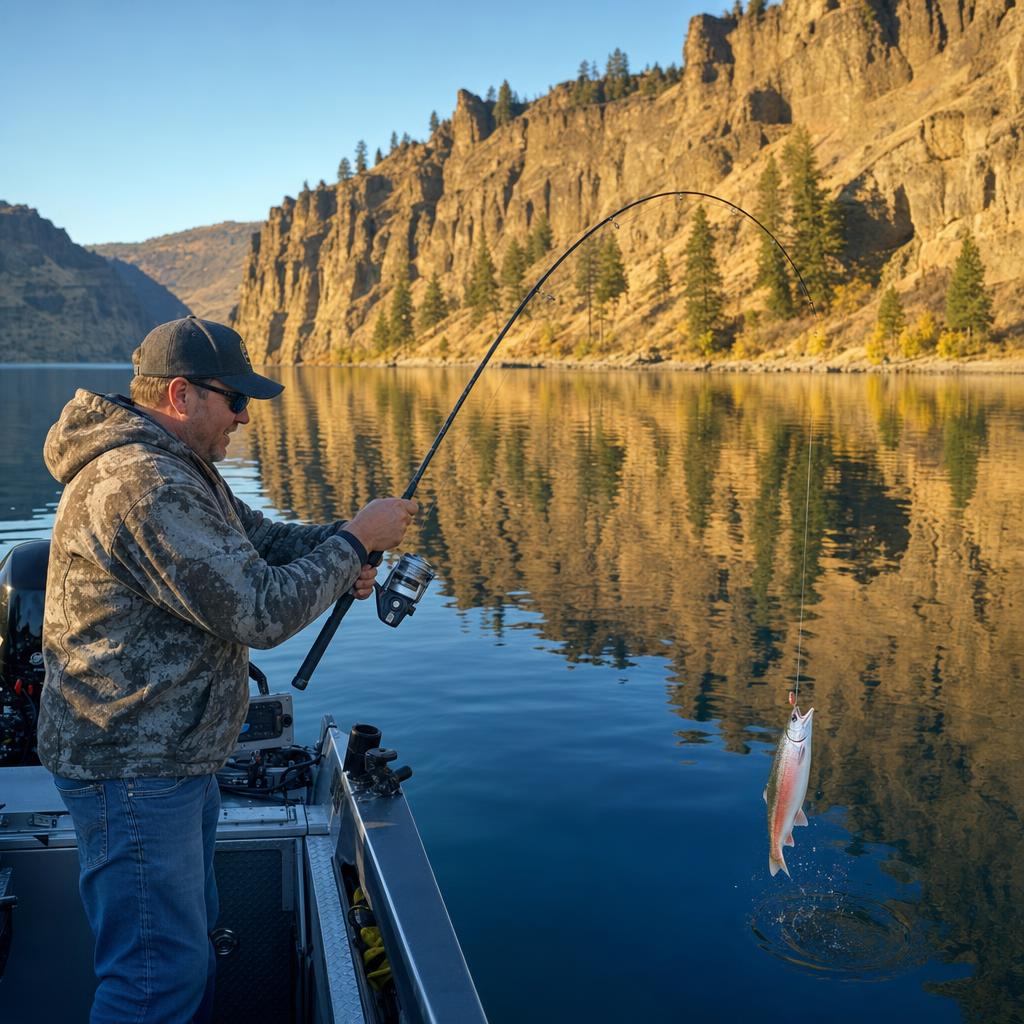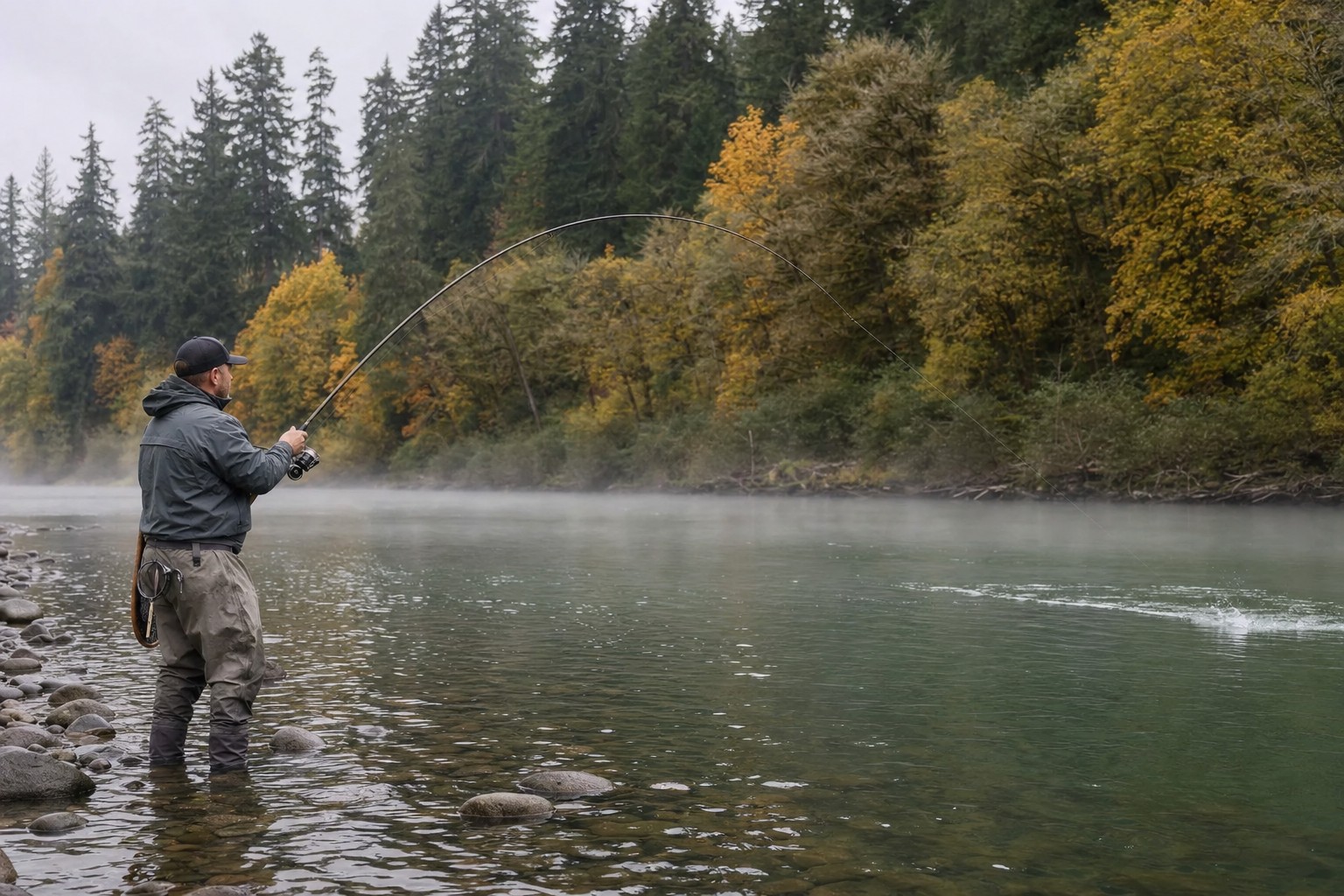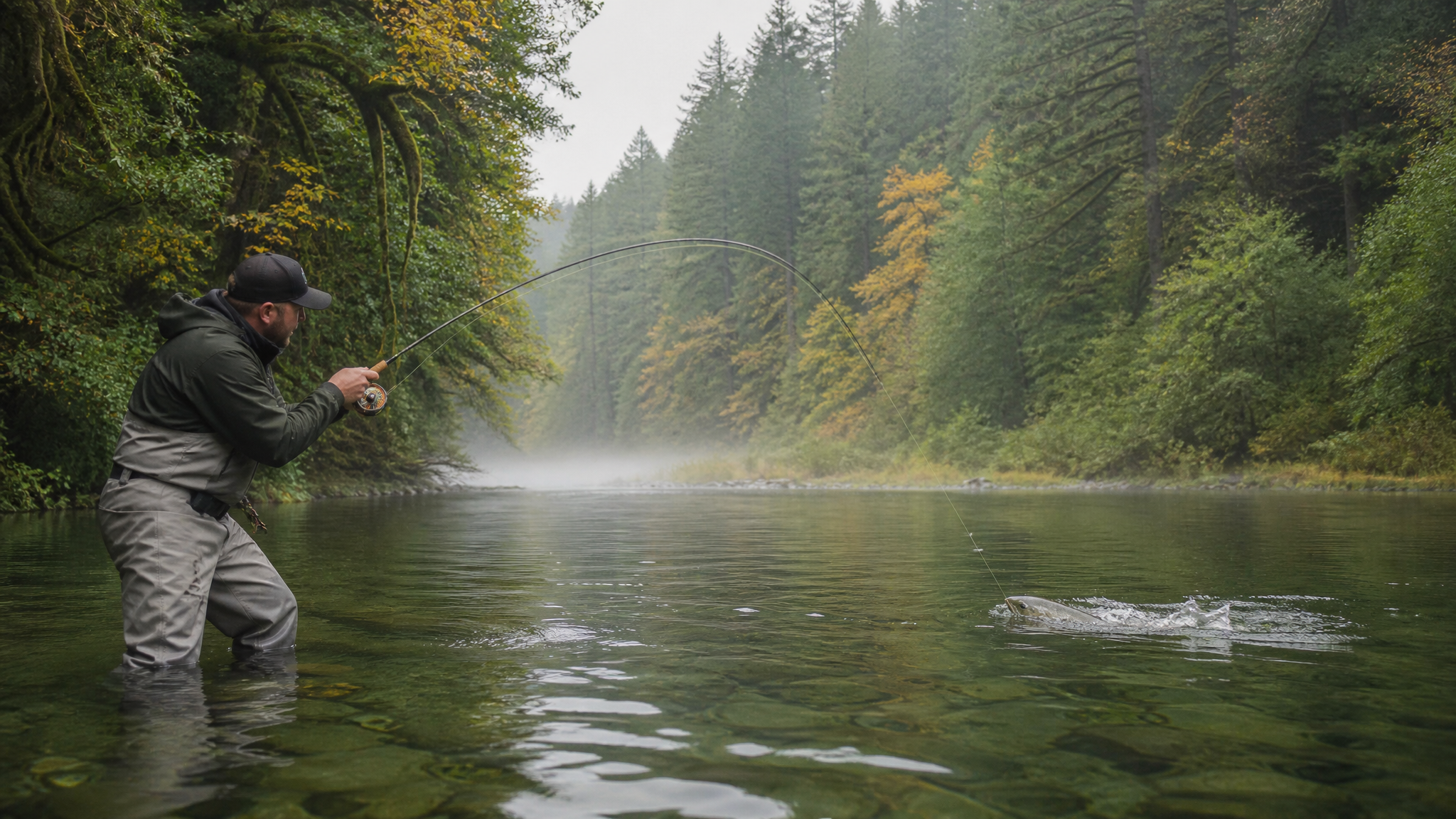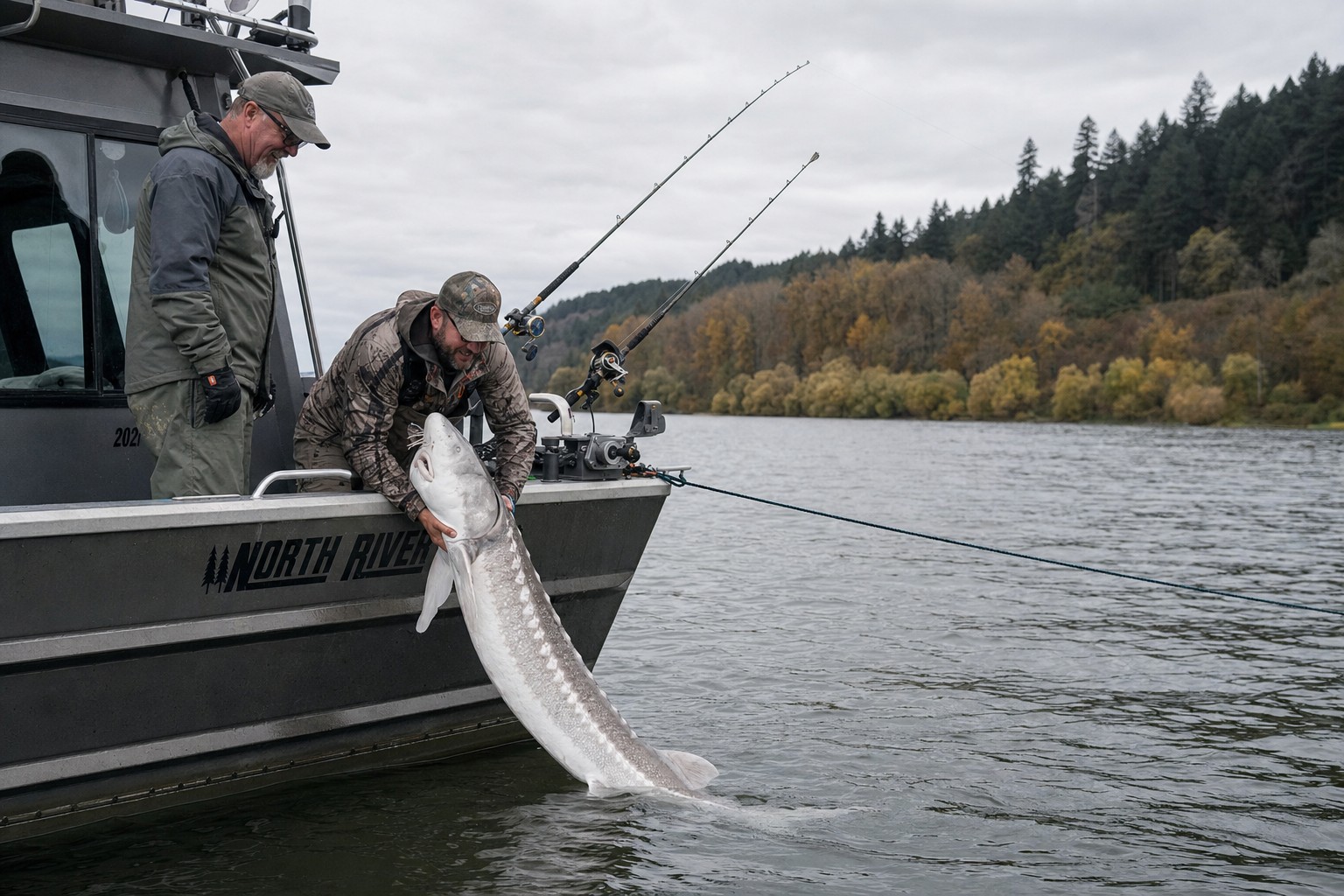
White sturgeon are Oregon's most prehistoric trophy — a species that roamed the Columbia River long before humans set foot in the Pacific Northwest. Come fall, as water temperatures drop and baitfish concentrate in predictable deep-water haunts, the Lower Columbia River offers some of the best anchor fishing of the year. From the tidal flats below Astoria clear up to the John Day Dam backwaters, this is a serious fishery that demands good tackle, the right bait, and patience. Here's how to put yourself on fish this October and November.
Understanding the Fall Sturgeon Migration
White sturgeon in the Columbia are largely a year-round resident species, but fall triggers distinct movement. Juveniles and sub-adults push into shallower side channels and sloughs as smelt, herring, and sand shrimp concentrate before winter. Trophy fish — the over-5-footers that define a true bucket-list sturgeon — tend to hold in deeper main-channel troughs, feeding aggressively on eulachon (candlefish), lamprey, and bottom-dwelling invertebrates stirred up by the season's first high-flow events.
ODFW manages the Columbia River white sturgeon population with strict slot limits. In 2026, the legal retention slot is 38–54 inches fork length — measure carefully, because undersized and oversized fish must be released unharmed. A valid Oregon fishing license plus a Combined Angling Tag is required. Check ODFW regulations annually, as emergency closures are not uncommon.
Best Anchor Spots on the Lower Columbia
Astoria Area (River Miles 0–20)
The tidal zone near Astoria concentrates massive bait schools in fall. Focus on deep holes adjacent to the shipping channel between the Astoria-Megler Bridge and Tongue Point. The 50–80 foot holes on the Oregon side hold fish through November. Tidal movement is critical here — the strongest bites occur during the 2 hours on either side of tide change.
Rainier to Longview (River Miles 65–70)
The deep trough running along the Oregon bank near Rainier is a fall classic. Anchor upstream of the main hole and let your bait sweep into the current seam. Fish stack heavily here in October when eulachon runs begin. The Kalama Bar on the Washington side also holds fish but watch for commercial traffic in this stretch.
Portland Metro — Lower Willamette Confluence (River Miles 100–105)
The back-eddy pools just below the Willamette confluence at Kelley Point Park are accessible by small boat from the St. Johns boat ramp. This is an overlooked area — productive from September through December — where sturgeon ambush baitfish pushed out of the Willamette by cooling temps.
The Gorge — Bonneville to John Day (River Miles 145–215)
The tailrace below Bonneville Dam is one of the most famous sturgeon spots in the state, but many anglers overlook the long, deep pools between Bonneville and the John Day Dam. Points of interest include the mouths of Herman Creek, the Hood River bar, and the deep pools below Celilo Falls area near the John Day Dam forebay. These upstream locations see less pressure and often hold larger fish.
Gear and Terminal Tackle
- Rods: 7–8 foot medium-heavy to heavy rods rated for 2–4 oz weights. Fiberglass-tipped rods telegraph subtle bottom-thumping bites well.
- Reels: Level-wind baitcasting reels with 30–65 lb braid. Braided line's lack of stretch is critical for feeling bites in 60+ feet of water.
- Weights: 3–8 oz river sinkers depending on current. The Columbia rips during fall flows — use enough weight to stay planted on bottom.
- Hooks: 5/0–7/0 Owner SSW or Gamakatsu Octopus hooks. Sturgeon have small mouths relative to their size; don't oversize.
- Leader: 80–100 lb fluorocarbon, 18–24 inch drop leader below a three-way swivel.
Best Fall Baits
Bait choice separates the consistent sturgeon anglers from the crowd. In fall, lead with these:
- Sand shrimp (ghost shrimp): The #1 year-round bait on the Lower Columbia. Use 2–3 whole shrimp threaded on the hook, leaving tails dangling. Fresh is best; if using frozen, add Pro-Cure shrimp scent.
- Smelt: Cut plug or whole fresh smelt rule during eulachon pushes. The oily scent trail in current is irresistible.
- Lamprey sections: Old-school but deadly, especially for big fish. Cut 4-inch sections and fish them fresh or brined.
- Combination rigs: Wrap a chunk of smelt around 2 ghost shrimp on the same hook — the scent combination produces on tough days.
Reading the Anchor and Setting Up
Proper anchor technique is as important as bait. Drop your anchor upstream of the target hole and let the boat settle back until you're positioned directly above the deep spot. Deploy rods at a 45-degree angle off the stern with enough weight to reach bottom. Once set, prop a rod in the holder and watch the tip — sturgeon often give a series of subtle taps before loading up. Let them load. Set the hook with a long, firm sweep rather than a sharp jerk.
Fish with 2–3 rods per angler (Oregon regulations allow up to 3 rods from a boat). Stagger your presentations at slightly different distances from the anchor to cover the hole width.
Handling and Releasing Sturgeon Safely
Oversized fish are breeding adults — handle them with care. Keep the fish in the water during measurement and hook removal. Use long-nose pliers to back out barbless hooks quickly. If the fish needs more than 30 seconds to revive, hold it facing upstream in current until it swims away strongly. ODFW's tagging data shows that properly handled catch-and-release sturgeon have excellent survival rates.
Licenses and Regulations Quick Reference
- Oregon fishing license + Combined Angling Tag required
- 2026 retention slot: 38–54 inches fork length (Columbia below Bonneville)
- One retention fish per day, one in possession
- Barbless hooks required in most Columbia River sections — check current regs
- Always verify at myodfw.com before your trip
Fall sturgeon fishing on the Lower Columbia is a tradition that connects anglers to one of the West's most storied fisheries. Rig up properly, pick the right tide window, and you'll understand why generations of Oregon families have been making the same pilgrimage to these deep, cold river channels every autumn.