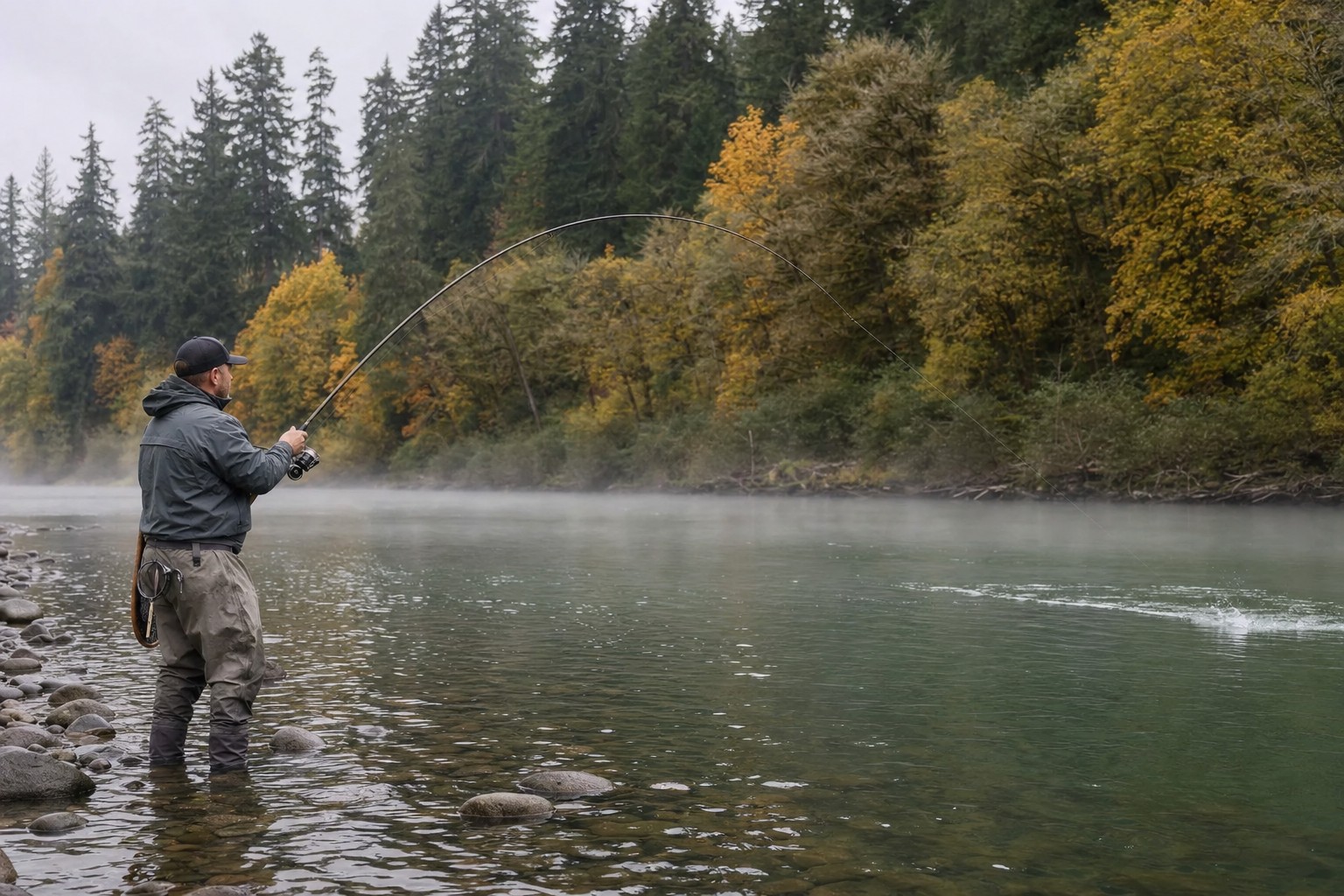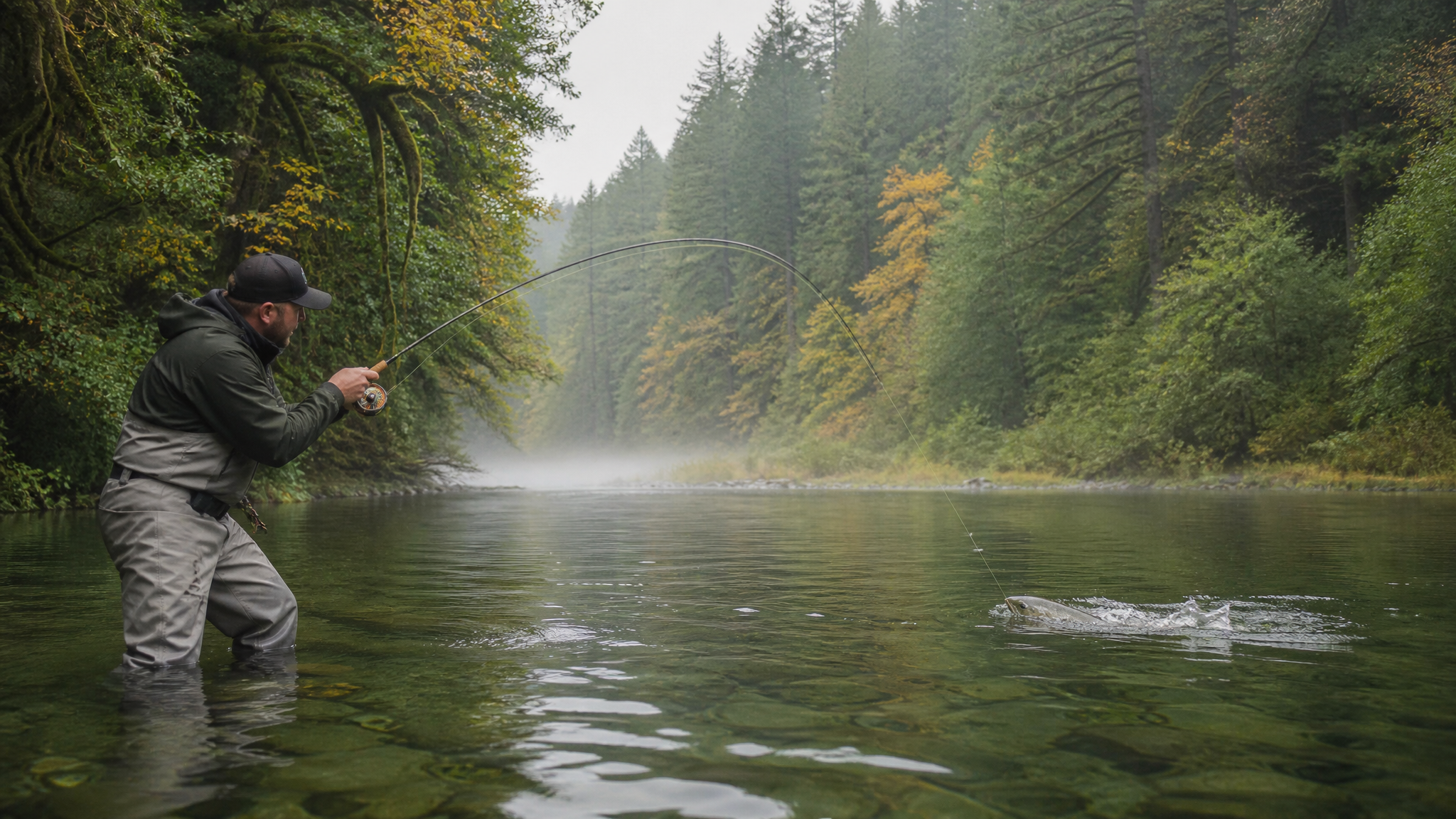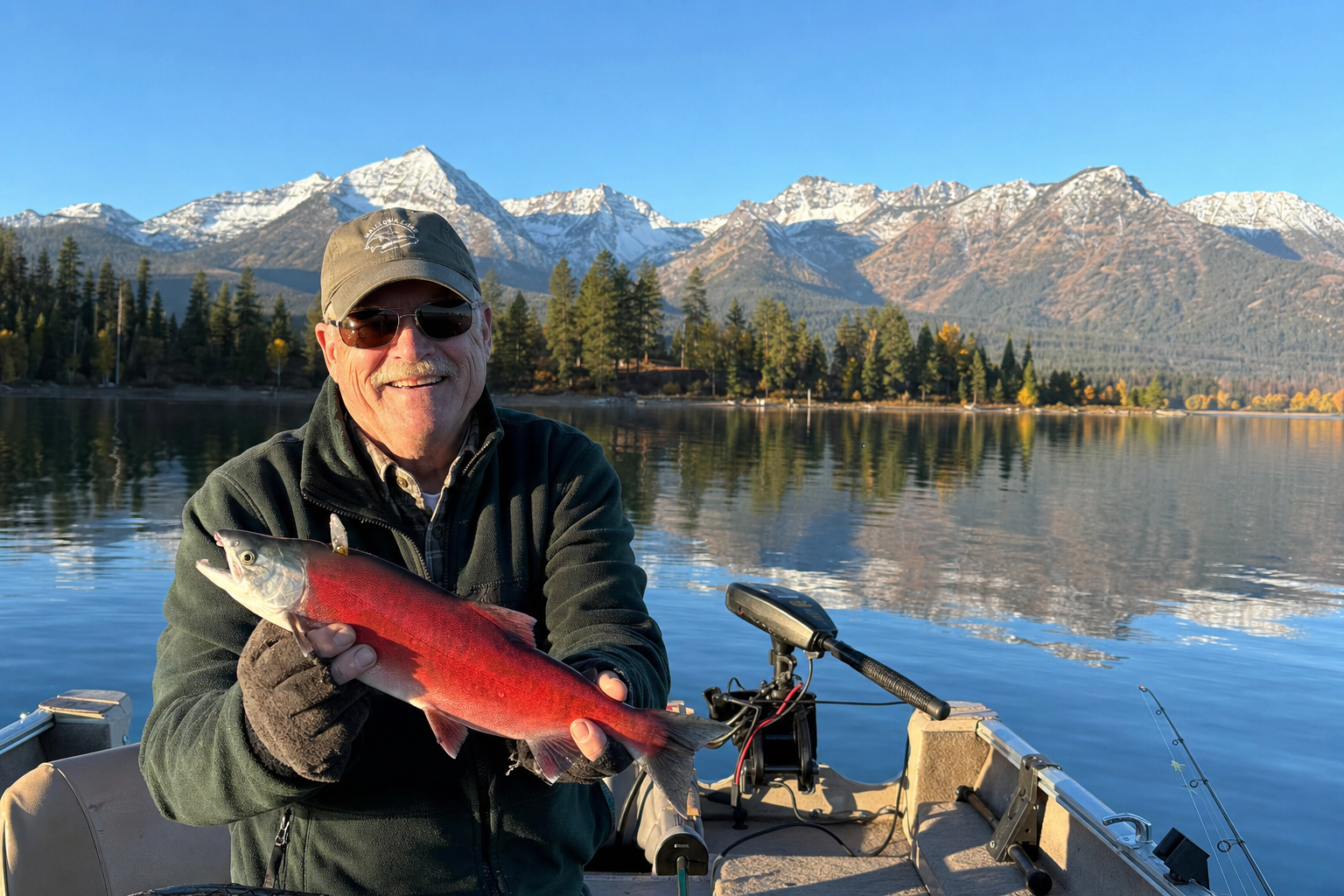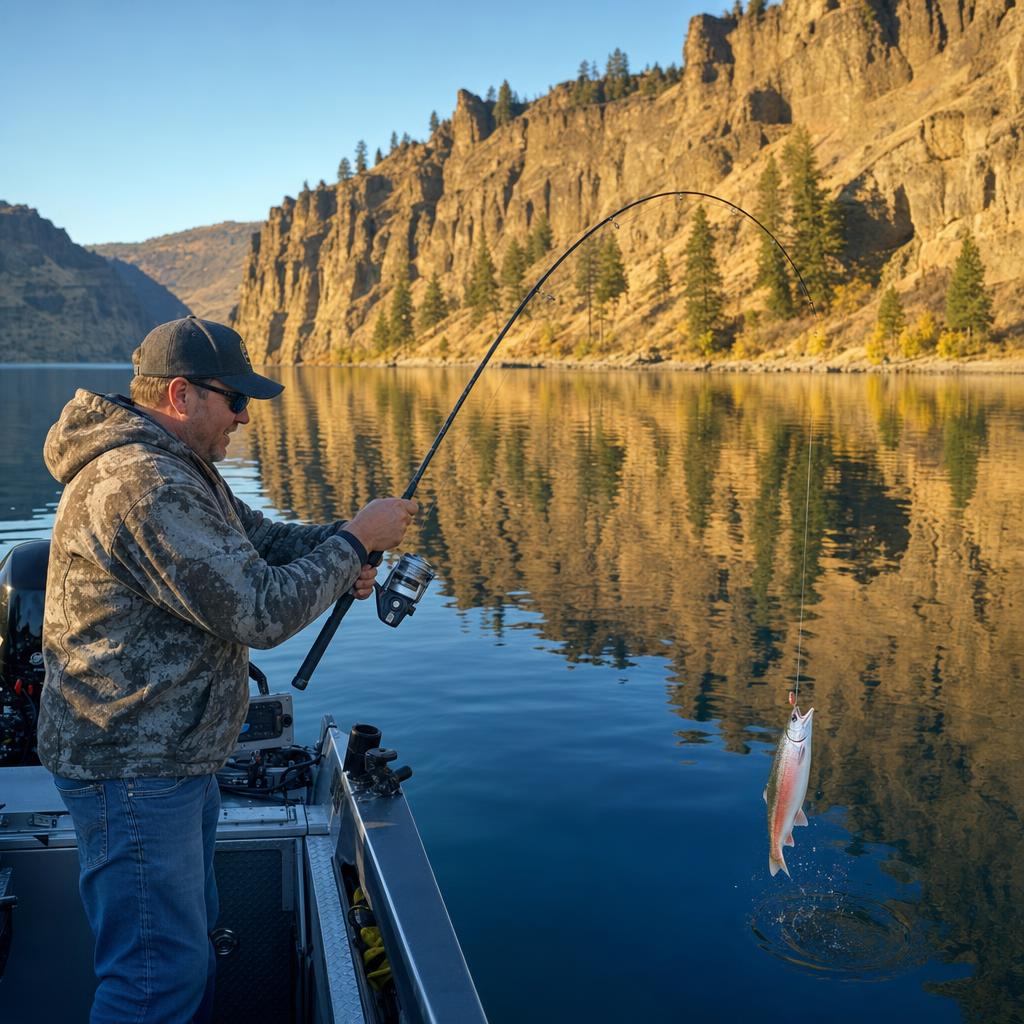
Lake Billy Chinook sits in the heart of central Oregon's high desert canyon country, where the Deschutes, Metolius, and Crooked Rivers converge behind Round Butte Dam. Most anglers think of it as a summer fishery, but come September and October, the kokanee — landlocked sockeye salmon — stage one of the most exciting freshwater biting windows in the state. If you've been overlooking this reservoir once the temperatures cool, you're leaving chrome-bright, hard-fighting fish in the water.
Understanding Kokanee in Lake Billy Chinook
Lake Billy Chinook holds a self-sustaining kokanee population that typically runs 10 to 14 inches, with fish pushing 16 to 18 inches caught regularly during the fall feed. As water temperatures drop from summer highs into the mid-50s and low 60s°F, kokanee begin staging in schools, aggressively feeding on zooplankton and small baitfish to build energy reserves for their spawning run. This feeding frenzy — combined with reduced boat pressure compared to the July crowds — makes September and October prime time.
The reservoir has three main arms. The Metolius Arm is consistently the top producer for fall kokanee, with fish suspending at 25 to 45 feet over 80 to 120 feet of water. The Deschutes Arm produces well early in the season but tends to fish better near the face of the dam as the season progresses. The Crooked River Arm is shallower and warms faster, typically holding fewer fish in autumn but worth a pass if the main arms are crowded.
Tackle and Trolling Rigs
Kokanee are notoriously light biters, so rod sensitivity and terminal tackle selection matter. Use 6- to 8-pound monofilament or fluorocarbon mainline on a light-action trolling rod rated for 4 to 10 pounds. Many veteran Billy Chinook anglers run a Wedding Ring spinner behind a small dodger — the 4-inch Sling Blade or Kokanee King dodger is the local standard. Tip your hook with a single white or pink corn kernel, or a piece of white shoepeg corn. Orange, red, and cerise Wedding Rings tend to outperform in the Metolius Arm; pink and chartreuse are reliable in low-light conditions.
- Speed: 1.8 to 2.4 mph over the bottom is the sweet spot — use a GPS to stay consistent
- Depth: Start at 30 feet and work deeper until you mark fish on the sonar
- Dodger spacing: 18 to 24 inches of leader between dodger and lure is standard
- Scent: Kokanee Magic or Pro-Cure Kokanee anise scent applied to the lure tip increases hook-ups noticeably
- Downriggers: Essential here — the canyon depth makes lead core less precise
Reading the Canyon Structure
Lake Billy Chinook's canyon walls drop sharply off the shoreline, creating sheer underwater cliffs and ledge systems that concentrate baitfish and, by extension, kokanee schools. In October especially, look for fish staging near underwater points where tributary canyon walls meet the main reservoir channel. These structural intersections consistently hold fish from late September through early November. The boat ramp at Cove Palisades State Park puts you in the middle of the action — Deschutes and Metolius Arms are both within a 10-minute idle from the launch.
Watch your sonar for arching fish marks between 25 and 55 feet. In clear water, kokanee will often be visible as dense clouds on a good graph unit. When you find a school, work back and forth across the concentration rather than trolling away from it. Circle patterns over productive water extend your time in the strike zone significantly.
Boat Access and Launch Info
Cove Palisades State Park is the primary launch facility, offering a paved multi-lane ramp, fish cleaning station, and full marina with fuel. Day-use and camping fees apply. The park entrance is 15 miles southwest of Madras on SW Culver Highway. Arrive early on fall weekends — the ramp fills quickly with bass anglers and jet skiers through September, though the crowds thin dramatically by mid-October.
There is no public bank fishing access for kokanee at Billy Chinook — this is strictly a boat fishery. A basic 14-foot aluminum with a small outboard gets the job done, though a deeper-V hull handles the afternoon canyon winds more comfortably.
Regulations and Limits
Oregon's Lake Billy Chinook kokanee limit is 25 fish per day with no size restriction — one of the most generous freshwater limits in the state, reflecting the dense population and ODFW's management goals for the fishery. A standard Oregon angling license is all you need; no additional tags or endorsements are required. Verify current rules with the ODFW Regulation Viewer before heading out, as emergency orders can adjust limits during peak run years.
Cooking Your Catch
Kokanee are table fare royalty. Their red-orange flesh has a richer flavor than most trout but isn't as oily as ocean-going salmon. For fish kept on ice immediately after landing, a simple preparation is best: olive oil, lemon, fresh dill, and 10 minutes on a medium-hot grill skin-side down. For a larger haul, hot smoking kokanee with alder wood is arguably the best way to enjoy any Pacific Northwest salmon, and a limit of Billy Chinook fish will fill a smoker beautifully.
Bleed your fish immediately by cutting the gill plate and placing them in an ice slurry. Kokanee flesh softens fast in warm water — proper chilling from the moment of landing is the difference between firm, clean fillets and mushy disappointment. Bring more ice than you think you need.
Plan Your Trip
The window for peak fall kokanee at Lake Billy Chinook typically runs from late September through the end of October. By November, many fish have moved into spawn mode and the fishery slows. September and early October offer the best combination of aggressive feeding behavior and prime meat quality. Set up camp at Cove Palisades, launch at first light, and be ready for steady action all morning. This is central Oregon fishing at its finest — and most fishermen don't even know it exists.