Oregon's south coast doesn't get the foot traffic of the Columbia River Gorge or the Three Sisters, and most backpackers driving US-101 through Curry County never look inland. That's fine. It means Grassy Knob Wilderness — all 17,200 acres of it — stays remarkably quiet throughout the summer hiking season. For anyone willing to peel off the highway and earn a few miles of trail through some of the most biologically rich old-growth forest in the state, Grassy Knob is a legitimate reward.
Where Is Grassy Knob Wilderness?
Grassy Knob Wilderness sits in the Siskiyou National Forest about 12 miles inland from Port Orford — roughly 250 miles south of Portland and 90 miles north of the California border. The wilderness is small by Oregon standards, but it encompasses the western slopes of the Coast Range above the Elk River drainage, with elevations ranging from around 1,200 feet in the lower drainages to 2,529 feet at Grassy Knob summit.
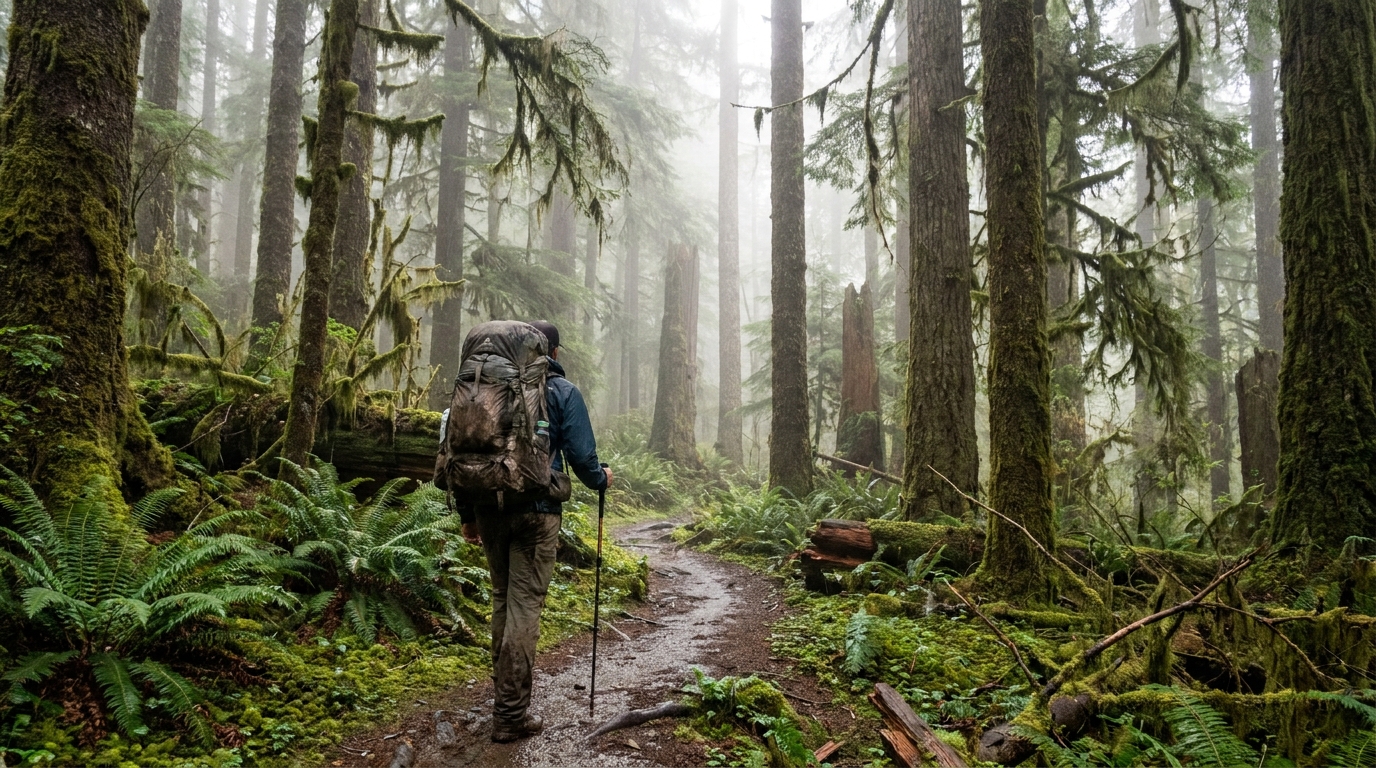
The terrain is quintessential Oregon south coast: steep, wet, heavily forested ridges draped in Sitka spruce, western hemlock, Douglas fir, and western red cedar, with a thick understory of sword fern, oxalis, and salal. Rainfall in this part of the coast range can exceed 100 inches per year — which is exactly why the old growth here is so extraordinary. This is temperate rainforest, and in July, when much of eastern Oregon is baking under desert sun, Grassy Knob sits in cool, misty green light.
Getting There
The primary trailhead for Grassy Knob Wilderness is accessed via Elk River Road, which heads east from US-101 about 4 miles north of Port Orford. Follow Elk River Road for approximately 14 miles to the road end at the Butler Bar Campground area, then continue on USFS Road 5325 to the Grassy Knob Trailhead (roughly 18 miles total from US-101). The last several miles are gravel two-track — passable in a standard vehicle but more comfortable in a high-clearance rig.
Port Orford is your last fuel and supply stop. Gold Beach to the south is the nearest larger town with full services. There is no cell service on Elk River Road or in the wilderness.
The Grassy Knob Trail
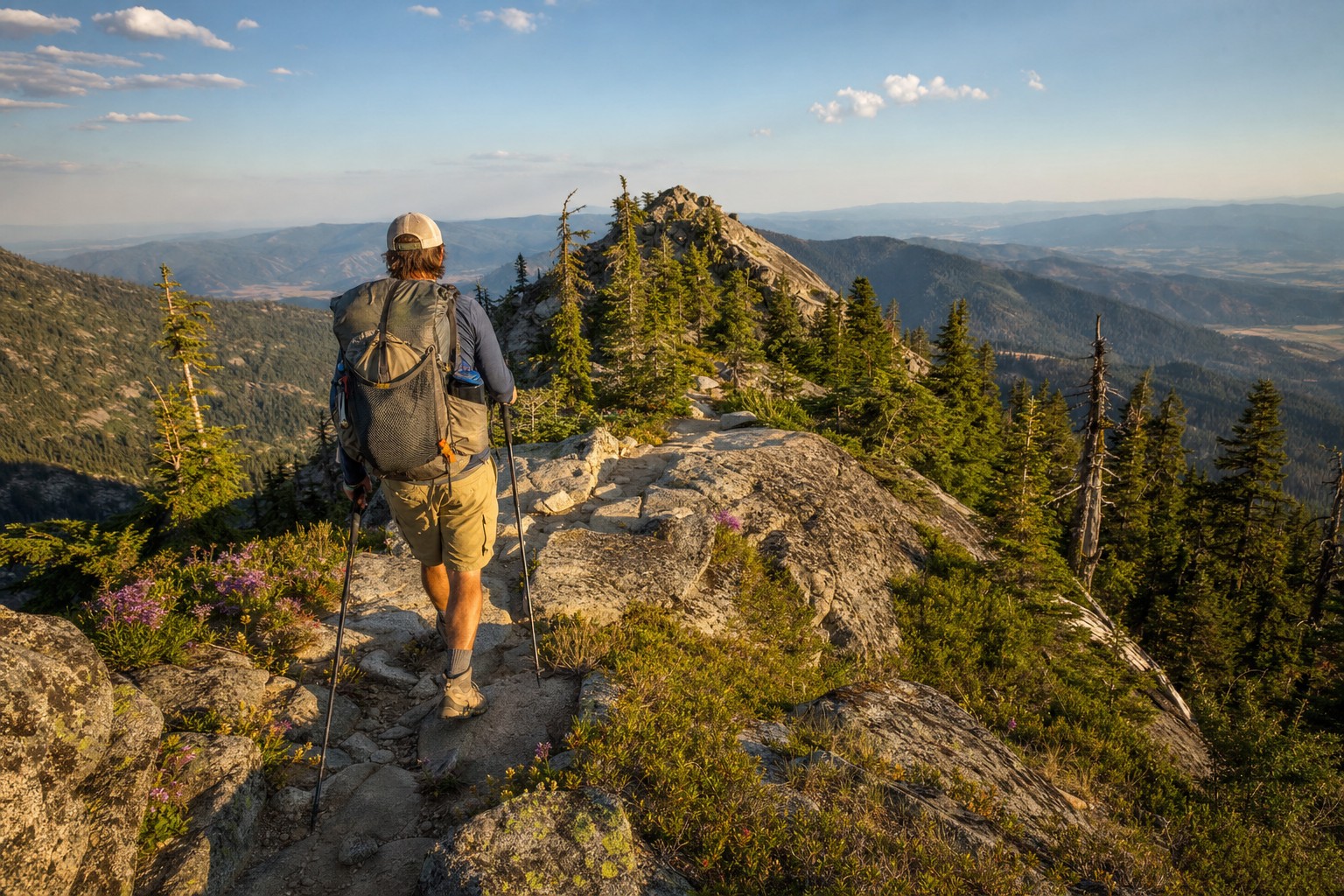
The main trail in Grassy Knob Wilderness climbs steadily from the trailhead at approximately 1,600 feet to the Grassy Knob summit at 2,529 feet — a gain of roughly 900 feet over about 2 miles. The trail is generally well-maintained but can be overgrown with brush in the summer months, particularly in the lower sections. Gaiters are useful.
At the summit, a historic fire lookout site (the original structure is long gone) opens up views of the Pacific Ocean to the west, the Elk River valley below, and the ridgeline of the Coast Range running north and south. On a clear July day, this view is extraordinary. On a foggy morning — which is equally likely on the Oregon coast in summer — you'll be standing in the clouds with old-growth fir rising out of the mist around you. Both versions are worth the climb.
Camping Options
Dispersed camping is permitted within the wilderness; there are no designated campsites with infrastructure. Water is available from small seasonal streams in the lower drainages — treat all water with a filter or chemical treatment. Good flat tent sites exist along the ridge below the summit and in the saddles between knolls. The summit area itself is exposed and can be windy overnight even in summer.
- Best summer camp: Saddle just below the summit ridge, approximately 1.7 miles from the trailhead — sheltered from wind, morning views toward the coast
- Water: Small creek crossings at miles 0.4 and 0.9; both reliable through late summer in most years
- Permits: No permits or fees required for overnight camping in Grassy Knob Wilderness
- Campfires: Check current USFS fire restrictions before your trip — fire bans typically apply in August in this district
Wildlife and What to Expect
Grassy Knob Wilderness is excellent habitat for black-tailed deer, black bear, Roosevelt elk, and a full suite of coast range birds including Steller's jays, varied thrushes, Pacific wrens, and marbled murrelets — one of the old-growth indicator species that make intact coastal forest like this ecologically significant. Elk sign is common on the ridge trails, particularly in the early morning hours.
In midsummer, the forest understory is extraordinary — giant Sitka spruce with bases six to eight feet across, nurse logs 80 feet long bristling with hemlock seedlings, and carpets of oxalis and bunchberry that turn the forest floor into a seamless green. Mushroom hunters will find the area productive in fall, but in summer, the draw is purely the forest itself.
Seasonal Considerations for July
July is an excellent month to visit Grassy Knob. The persistent coastal fog keeps temperatures moderate — typically 55–70°F at the trailhead and cooler at the summit. The heavy rains of winter and spring have typically passed, trails are in good condition, and the old-growth canopy is at its most lush. However:
- Always pack rain gear regardless of the forecast — coastal weather changes without warning
- Evening fog is common and can reduce visibility to near zero at the summit
- Mosquitoes and biting flies are present in the lower drainages; bug protection is worth packing
- The trail sees almost no maintenance traffic — a recent windstorm can create blowdown that requires careful route-finding
Why Grassy Knob Deserves a Trip
In an era where Oregon's popular wilderness destinations see thousands of visitors on summer weekends, Grassy Knob offers something genuinely rare: an old-growth temperate rainforest experience with almost no other people. The wilderness designation has protected this forest from logging for decades, and what remains is a window into what much of the Oregon coast range once looked like — massive trees, complex understory, and the kind of deep-forest quiet that's hard to find anywhere close to the Pacific Coast highway. If you've never backpacked Oregon's south coast interior, Grassy Knob is the introduction it deserves.