If you fly fish Oregon and you haven't been on the Deschutes River in September, you're missing what many anglers consider the best trout fishing of the entire year. The fall caddis hatch — dominated by the giant October caddis (Dicosmoecus gilvipes) alongside the smaller tan caddis (Hydropsyche species) — turns the lower canyon into a dry fly paradise from late August through October. Here's what you need to know to capitalize on it.
Understanding the Fall Caddis Hatch
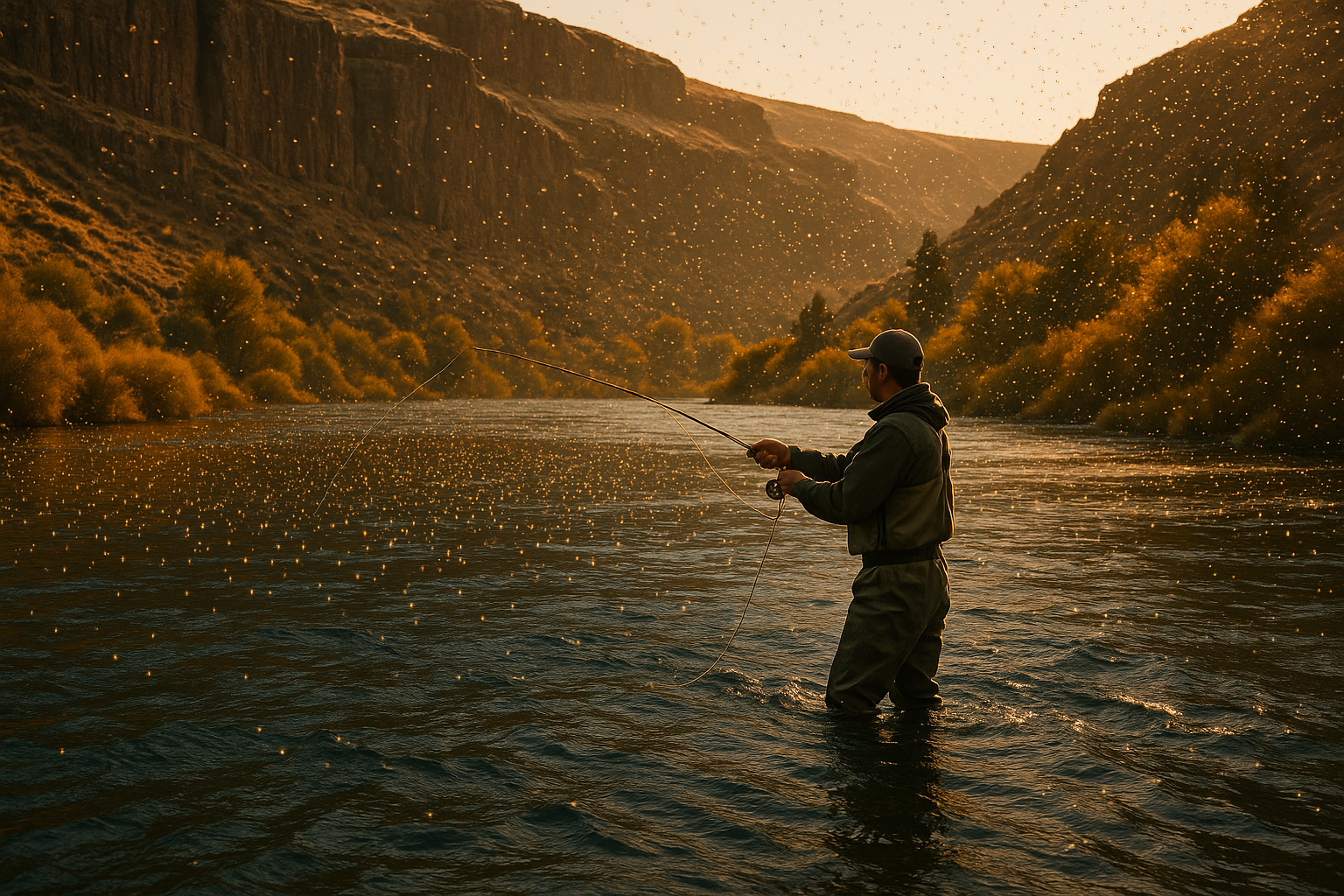
The Deschutes hosts multiple caddisfly species, but the fall transition is defined by two major events happening simultaneously. First, the smaller tan caddis (size 14–16) continue emerging from riffles throughout daylight hours, providing consistent feeding opportunities. Second, and most dramatically, the giant October caddis — one of the largest caddisflies in North America — hatches in the evening and lays eggs in spectacular orange-winged swarms that can darken the river canyon.
October caddis adults are enormous by fly fishing standards, running hook sizes 6–10. When they're bouncing on the surface in the evening light, the redband trout that populate this river go absolutely berserk. Fish that were holding tight to the bottom on a hot August afternoon suddenly seem to forget they've ever been afraid of anything.
When to Be There
Plan your trip for mid-September through early October for the heart of the hatch. The lower Deschutes — from Macks Canyon down to the Columbia confluence — sees the most consistent action. The hatch timing shifts throughout the day as the season progresses:
- Morning (7–10 AM): Look for tan caddis skating and spinning on slower water behind boulders and along foam lines. Fish are often actively rising.
- Midday lull: The canyon heats up and surface activity drops. Nymph or swing soft hackles in deeper runs.
- Late afternoon into dusk: The October caddis emergence begins. This is the money hour. Be on the water by 5 PM and stay until it's too dark to see your fly.
September also coincides with the summer steelhead run on the Deschutes, so you may find yourself switching between a dry fly rod for trout and a swung fly setup for steelhead within the same afternoon. Bring both rigs.
Access Points on the Lower River
The most productive fall caddis fishing happens in the lower 100 miles of canyon. Key access points include:
- Macks Canyon Recreation Site: The end of the road for vehicle access, about 24 miles below Sherars Falls. Walk-in fishing below here is exceptional, with far less pressure than the upper accesses.
- Beavertail: A popular campsite and wade-fishing area with good runs on both banks. The glide above camp holds large fish during the evening hatch.
- Locked Gate area: Between Macks Canyon and Beavertail, several pullouts access canyon pools that rarely see weekend anglers.
- Trout Creek: The upper boundary of the lower canyon for most wade anglers. Wide, gravelly structure with excellent caddis water.
Fly Selection for September
Keep your box simple. The Deschutes doesn't require an encyclopedic fly selection — it requires the right flies fished with confidence.
Dry Flies
- October Caddis (size 6–10, orange body): Stimulator in orange, October Caddis Elk Hair patterns, or Norm Wood Special. Fish these in the evening with authority — dead drift, then let it swing and skate at the end of the drift.
- Tan Elk Hair Caddis (size 14–16): Workhorse pattern for morning and midday rising fish. Add a small trailing soft hackle emerger for doubles.
- Goddard Caddis: Excellent in choppy water where visibility is low — high-floating deer hair sits up perfectly in riffles.
Wet Flies and Nymphs
- Soft Hackle Partridge and Orange (size 12–16): Swung on a downstream angle through the transition zone between riffles and pools. Deadly when the adults are in the air but fish aren't rising yet.
- Caddis larvae (size 12–14, tan/green): During midday, bounce these through riffles under an indicator. October caddis larvae are a primary food source all season.
- Copper John, hare's ear: Standard nymphing fare when fish aren't keyed on caddis specifically.
Presentation Tips
The Deschutes is notoriously technical despite its appearance as a freestone river. The multiple current seams created by boulder gardens mean drag sets in fast. Use these strategies:
- Reach casts and pile casts: Throw slack upstream of your fly to extend the drag-free drift into foam lines where fish hold.
- Skate it: During the October caddis hatch, the real adults skitter across the surface. Let your fly swing at the end of the drift and hold on — strikes on the skate are violent.
- Fish the edges: Large redband trout move shallow during heavy evening hatches. Wade quietly and look for rises within a rod length of the bank, especially in softer water beside boulder piles.
- Short-line nymphing: In runs where wade-in access puts you close, high-stick nymphing through the strike zone beats indicator fishing for depth control.
Regulations and License Requirements
The lower Deschutes is designated a wild and scenic river with specific regulations. Carry your Oregon Combined Angling License and a Two-Rod License if you plan to fish two rods simultaneously. The Deschutes is open year-round for trout below Pelton Dam, but check the current ODFW regulations for any hatchery retention rules — the redbands are all wild and must be released. Camping within the canyon requires a Deschutes River Boater and Hiker Permit when staying overnight.
Gear for the Canyon
The Deschutes is a wade fishery for most anglers, and the canyon demands respect. Felted wading boots or rubber-soled boots with studs are essential — the basalt substrate is slippery. Pack a wading staff for high-water crossings. A 9-foot 5-weight rod handles the majority of fall caddis situations; bump to a 6-weight if you plan to swing for steelhead. A clear monofilament leader (9–12 feet, tapering to 4X or 5X) is standard for dry fly work.
The fall caddis hatch is one of those rare fishing events that deserves a special trip. Clear September skies, golden canyon light, and wild trout eating off the top — the Deschutes River in fall is as good as it gets in the Pacific Northwest.