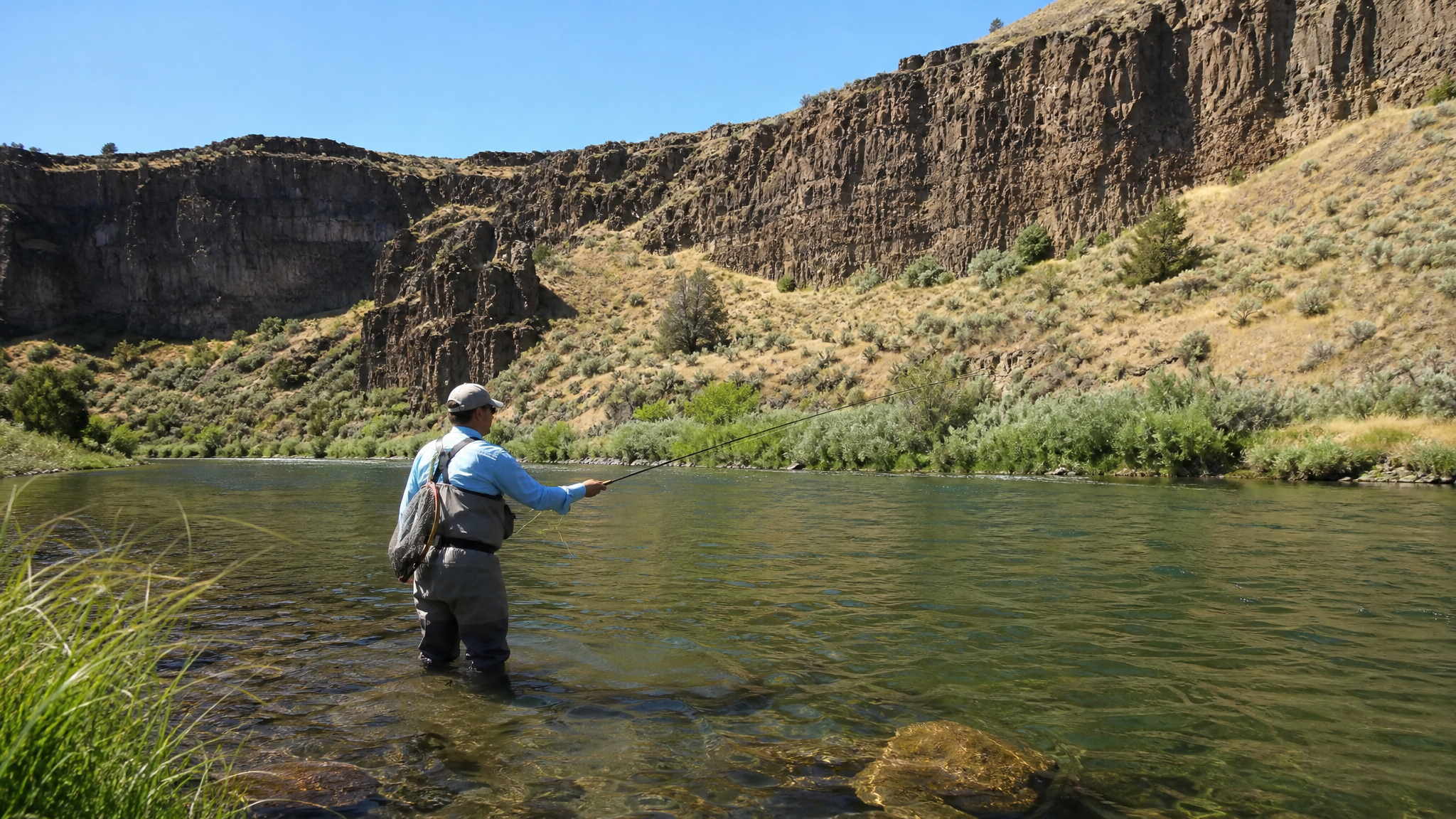
There's no river in Oregon that holds the same mythic weight as the Deschutes. Its basalt-carved canyon, gin-clear green water, and the chrome-bright wild steelhead that pour through its lower reaches from summer into fall have made it the defining experience of Pacific Northwest fly fishing. August is when the first serious push of summer-run steelhead — primarily B-run fish from Idaho-bound populations — begins moving through the lower river in earnest. If you've been waiting for the right time to wade this river, this is it.
Understanding the Deschutes Summer Run
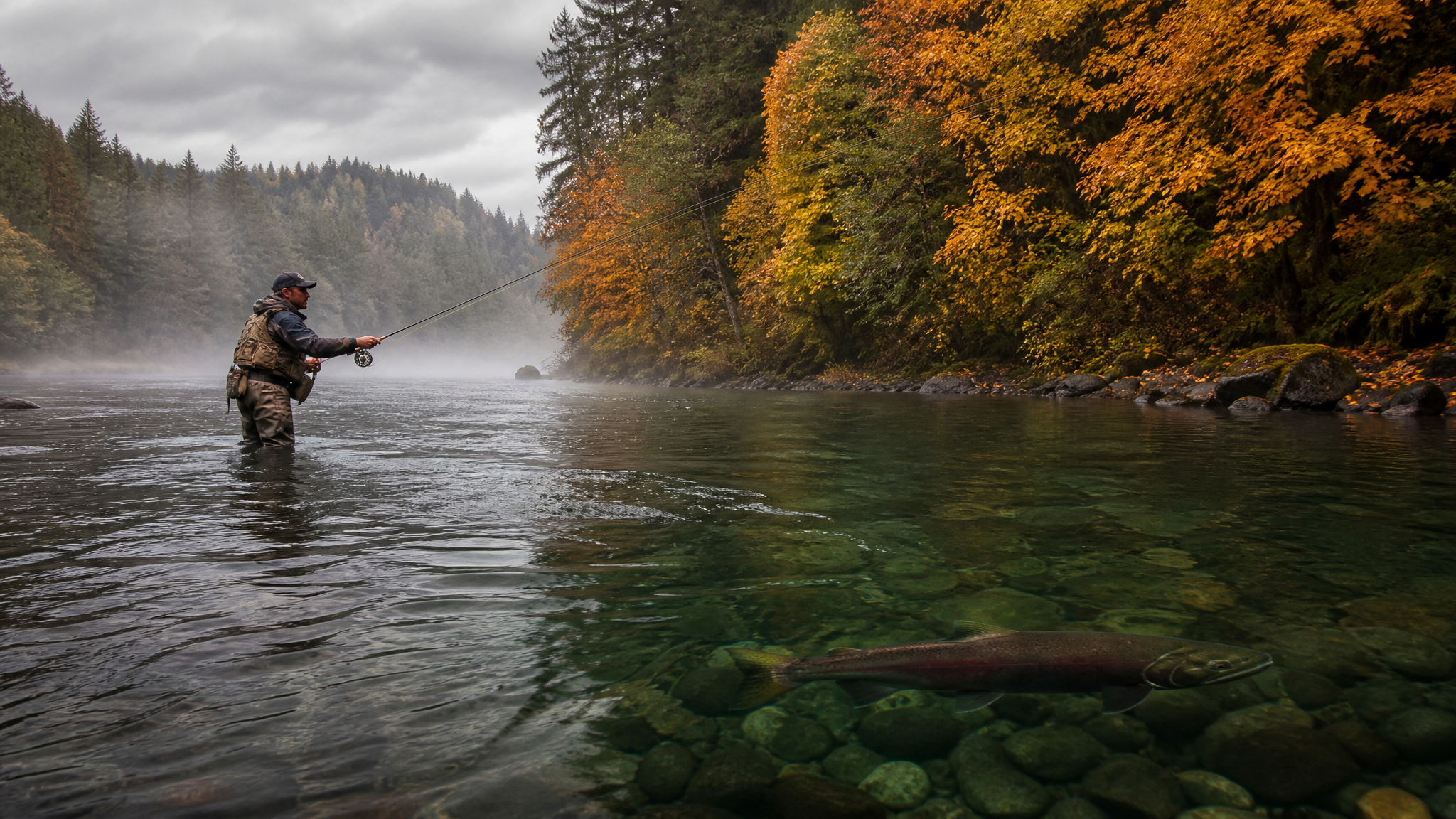
Deschutes summer steelhead are a mix of A-run and B-run fish. A-run steelhead (smaller, ocean-age 1.1) begin entering the river in late June and peak in July. By mid-August, B-run fish (larger, ocean-age 1.2 or 1.3, often 8–15 pounds) are moving through the lower canyon in solid numbers. These are wild, unclipped fish — the Deschutes is largely a wild steelhead river, and regulations reflect that. Check current ODFW rules carefully before you go; retention rules for wild steelhead change frequently.
The lower Deschutes — from the mouth at Mack's Canyon to the Columbia — sees the most consistent summer action. Above Mack's Canyon, the river is accessible primarily by foot or raft, limiting crowds while offering some of the most pristine wade fishing in the Pacific Northwest.
Access Points and Road Structure
The Deschutes River Access Road runs along the east bank from the Columbia River confluence to Mack's Canyon (about 25 miles). This gravel road allows drive-in access to numerous named runs. Key spots include:
- Harris Canyon: Classic steelhead water with a long, broken riffle perfect for swing fishing.
- Locked Gate area (near mile 12): Walk-in access beyond the gate filters pressure significantly. Excellent holding water.
- Mack's Canyon Campground: Productive early-morning water right from the campground bank; fills quickly on weekends.
- Beavertail area: Deep slots and tailouts that hold fish through midday heat.
On the west bank, the Deschutes River Trail provides hike-in access from the Deschutes State Recreation Area. This is serious pack-in fishing — miles from the road — and rewards the effort with light pressure and fish that haven't seen a hundred flies.
August Tactics: Swinging Flies
The Deschutes is a swinging river. While nymphing and indicator fishing work, the tradition here is the swung wet fly — a technique that is both deeply effective and genuinely satisfying. In August, steelhead are aggressive and will move significant distances to take a well-presented fly.
For swing fishing, the two-handed spey rod has become standard: a 12.5–13.5-foot, 7 or 8-weight switch or two-hander covers water efficiently and reduces physical fatigue over a long day of casting. Single-handed 8 or 9-weight rods work in the tighter runs but leave water on the table in the Deschutes' wide, open tailouts.
Recommended Fly Patterns for August
Water temperatures in August run 58–68°F in the lower canyon — warm enough that flies fished near the surface produce. Focus on waking/riffle hitched patterns in low, clear water, and switch to subsurface swings in faster, deeper runs.
- Purple Peril (size 4–6): A Deschutes classic. Works in any conditions.
- October Caddis (riffle hitched, size 4): Early caddis activity in late August makes this deadly near the surface.
- Intruder-style articulated flies (3–4 inches): Best in the broken, fast water where fish are holding deep.
- Green Butt Skunk: Never fails. Fish it through every run at least once.
Water Temperature and Fish Behavior
In August, afternoon water temperatures can push into the upper 60s°F in the lower canyon. Steelhead become sluggish and stressed in water above 68°F. Focus your fishing on the first three hours after daylight, when the canyon is still cool and fish are most active. By midday, concentrate on shaded slots, deep tailouts, and canyon bends where cold water seeps enter the river. The evening bite — the final two hours before dark — can rival the morning.
Carry a stream thermometer. If the water hits 68°F or above, stop fishing and rest the river. This isn't just ethical practice — it's the law under many Oregon steelhead emergency regulations. The Deschutes' wild steelhead are worth protecting.
Wade Safety on the Deschutes
The Deschutes demands respect from waders. Its rocky basalt bottom is notoriously slippery, and currents in the main channel are powerful. Felt-soled boots have been banned in Oregon — use rubber-soled wading boots with metal studs (carbide aluminum studs are the standard). A wading staff is not optional; it's mandatory for anyone fishing this river seriously. A wading belt on your waders can be the difference between a dunking and a drowning in August's higher-than-normal flows.
Gear Summary
- Rod: 12.5–13.5-foot spey or switch rod, 7–8 weight
- Reel: Large arbor with solid drag, minimum 150 yards backing
- Line: Skagit or Scandi shooting head matched to rod; long leader (10–14 feet) for clear low water
- Wading: Studded rubber-soled wading boots, wading belt, staff
- Fly selection: Range of wets, size 4–8, including surface patterns
- Sun protection: Mandatory — the Deschutes canyon offers little shade and full sun from 9 AM to 6 PM
The Deschutes in August is an experience that defines Oregon fishing. The canyon walls glow orange at dusk, ospreys work the riffles, and somewhere in that green water a wild steelhead is about to change the direction of your line. Make the drive. Earn the miles. This river delivers.