Most backpackers planning a coastal Oregon overnight reach for the Oregon Coast Trail or make the long drive to the Kalmiopsis. The Cummins Creek Wilderness, tucked into the Coast Range just east of Cape Perpetua on the central Oregon coast, gets overlooked almost entirely. That's its greatest asset. This 9,173-acre wilderness — managed by Siuslaw National Forest — protects one of the finest remaining stands of old-growth Sitka spruce and western hemlock on the Oregon coast, and the hiking here is some of the most atmospheric you'll find anywhere in the state.
Getting There
The Cummins Creek Wilderness sits roughly 23 miles south of Newport and about 10 miles north of Florence, immediately east of US-101 near the small community of Yachats (pronounced "YAH-hots"). The Cape Perpetua Scenic Area visitor center, operated by the Siuslaw National Forest, sits at the edge of the wilderness and serves as the logical starting point. From the visitor center parking area off US-101 at milepost 168, you can access both the Cummins Creek and Cummins Ridge trail systems.
From Eugene, the drive runs about 65 miles northwest on OR-126 to Florence, then north on US-101. From Corvallis or the Portland metro, plan for roughly 90 minutes to 2.5 hours. No reservations are required for wilderness camping in Cummins Creek, though the Cape Perpetua day use areas charge the standard Northwest Forest Pass fee ($5/day or annual pass).
The Trails
Cummins Creek Trail
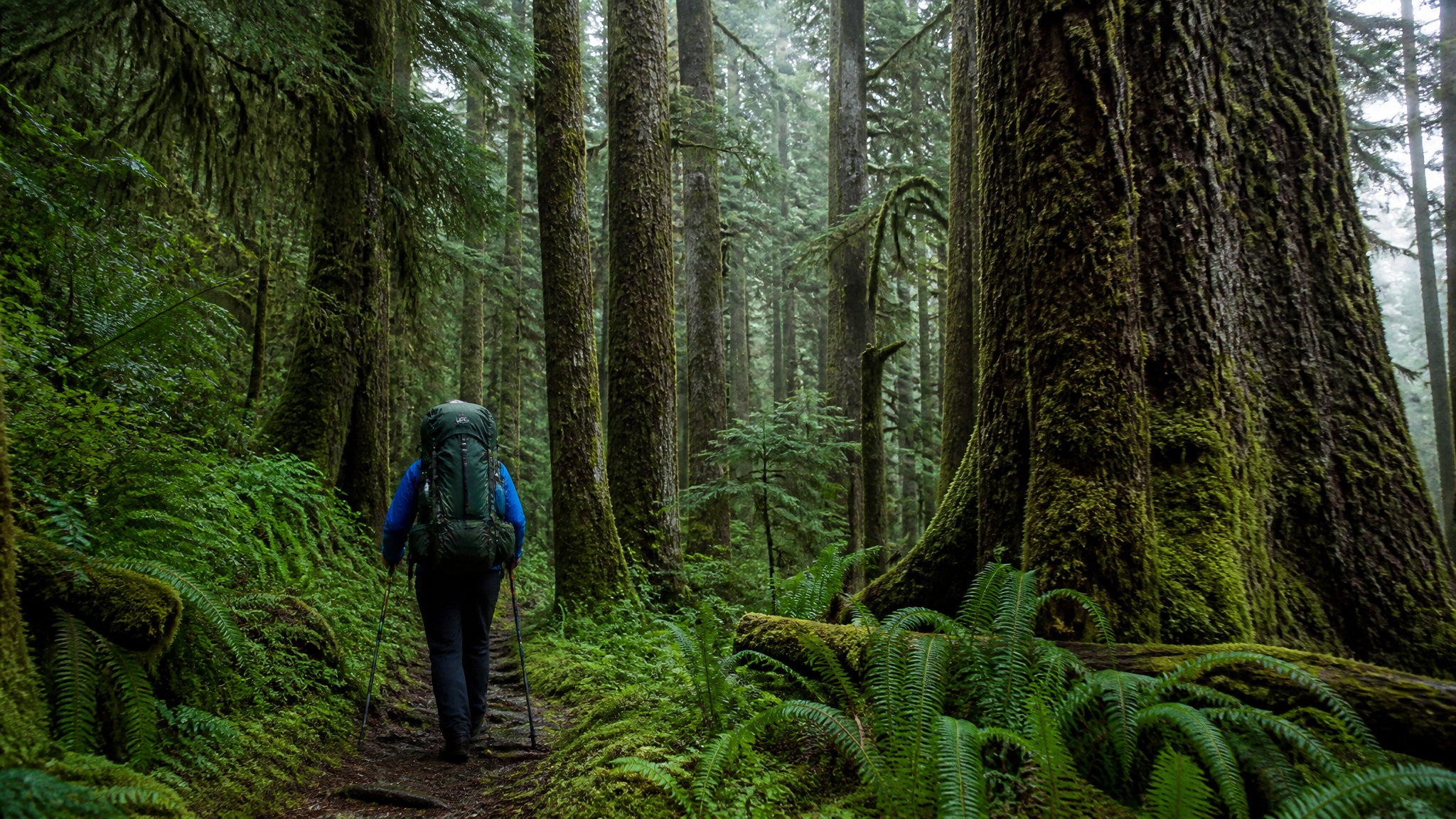
The primary route into the wilderness follows Cummins Creek upstream from the Cummins Creek trailhead on US-101 (a separate access point 1 mile south of the visitor center). The trail runs roughly 4 miles through the creek drainage, gaining elevation gradually as it climbs into the old-growth interior. The lower creek section is flat and lush — Douglas fir, Sitka spruce, red alder, and bigleaf maple draped in moss. As you gain elevation, the canopy shifts to old-growth hemlock and Sitka spruce with trunks 6–8 feet in diameter.
Cummins Ridge Trail
The ridge trail climbs steeply from the visitor center area to the wilderness boundary and follows the ridgeline for approximately 4 miles, offering occasional ocean views through the forest canopy when the coastal fog lifts. The ridge trail connects with the Cummins Creek Trail to form a loop, making a 2-day out-and-back or a 1-night loop with a car shuttle straightforward to plan.
Camping
Dispersed camping is permitted throughout the Cummins Creek Wilderness. There are no designated sites, no water hookups, and no fees beyond the trailhead parking requirement. Look for flat ground set back from the creek (minimum 200 feet from water, as required by LNT principles). The creek drainage offers the most practical camping for backpackers — water is available but should be filtered. Bring a Sawyer Squeeze or similar filter; the coastal watershed is clean but not potable without treatment.
A one-night camp at approximately 3 miles up the Cummins Creek Trail puts you deep in the old-growth interior and positions you for a leisurely return in the morning. This is not a high-mileage destination — it's an immersion destination. Plan to slow down, look up often, and let the forest work on you.
What You'll Find
The Old Growth
The Cummins Creek Wilderness contains some of the last old-growth Sitka spruce on the Oregon coast that wasn't logged in the 20th century. These trees are 300–600 years old, often 200+ feet tall, and the forest floor beneath them is a world unto itself: sword fern, oxalis, vanilla leaf, and countless species of moss and lichen covering every surface. Standing beneath a 500-year-old Sitka spruce in coastal fog while rain drips from branches 150 feet above you is one of Oregon's genuinely moving outdoor experiences.
Wildlife
Roosevelt elk are year-round residents of the Cummins Creek drainage — look for fresh tracks in soft creek bank mud and beds in the fern understory. Black bear sign (claw marks on bark, diggings for grubs in rotting logs) is common. The marbled murrelet, a threatened seabird that nests exclusively in old-growth coastal forest, breeds in the Cummins Creek Wilderness — if you hear a fast, high-pitched keer call in the dark, that's likely one flying to and from the sea to feed its chick. Spotted owls are present; you may hear them at dusk.
Coastal Fog and Weather
The Oregon coast generates its own microclimate, and the Cummins Creek Wilderness is fully within it. Coastal stratus rolls in most nights and mornings through July and August — expect the "Oregon coast summer pattern" of gray mornings that burn off by noon, if they burn off at all. This keeps the wilderness cool and green when the Willamette Valley is 95°F. It also means your gear needs to be waterproofed. Wet weather gear is not optional here, even in August. A silnylon tarp or a waterproof tent with a good rain fly is mandatory.
What to Pack
- Waterproof gear throughout — rain jacket, rain pants, pack cover or dry bags
- Water filter — Sawyer Squeeze or similar
- Trekking poles — the ridge trail is steep and roots are slick in wet conditions
- Gaiters — the lower trail can be wet and brushy
- Bear canister or hang system — black bears are active in the Coast Range
- Headlamp — the forest canopy blocks light quickly; sunset in old growth feels like full dark
- Camp shoes — your boots will be wet; dry feet in camp make a huge difference
Combine with Cape Perpetua
The Cape Perpetua Scenic Area sits at the doorstep of the wilderness and is worth a stop before or after your overnight. The Thor's Well and Devil's Churn tidal features are spectacular at high tide, and the Cape Perpetua overlook provides one of the most expansive ocean views on the Oregon coast. Combine a night in the wilderness with a morning at the tidal pools and you have a full Oregon coast weekend that most visitors to this stretch of highway completely miss.
The Cummins Creek Wilderness doesn't require a multi-day commitment, technical gear, or a long approach. It requires a willingness to trade cell service and dry ground for 9,000 acres of ancient forest that most Oregonians have never set foot in. That's a trade worth making.