Most Oregon anglers drive right past it on the way to somewhere else. The Crooked River below Bowman Dam — the tailwater stretch running roughly nine miles from the dam face to Prineville Reservoir — is one of the state's best kept secrets in warm-weather trout fishing. Clear, cold water pumped from the depths of the reservoir keeps temperatures fishable even in August, and a healthy population of wild brown trout makes it worth your time from any season you can legally fish it.
Know the Water
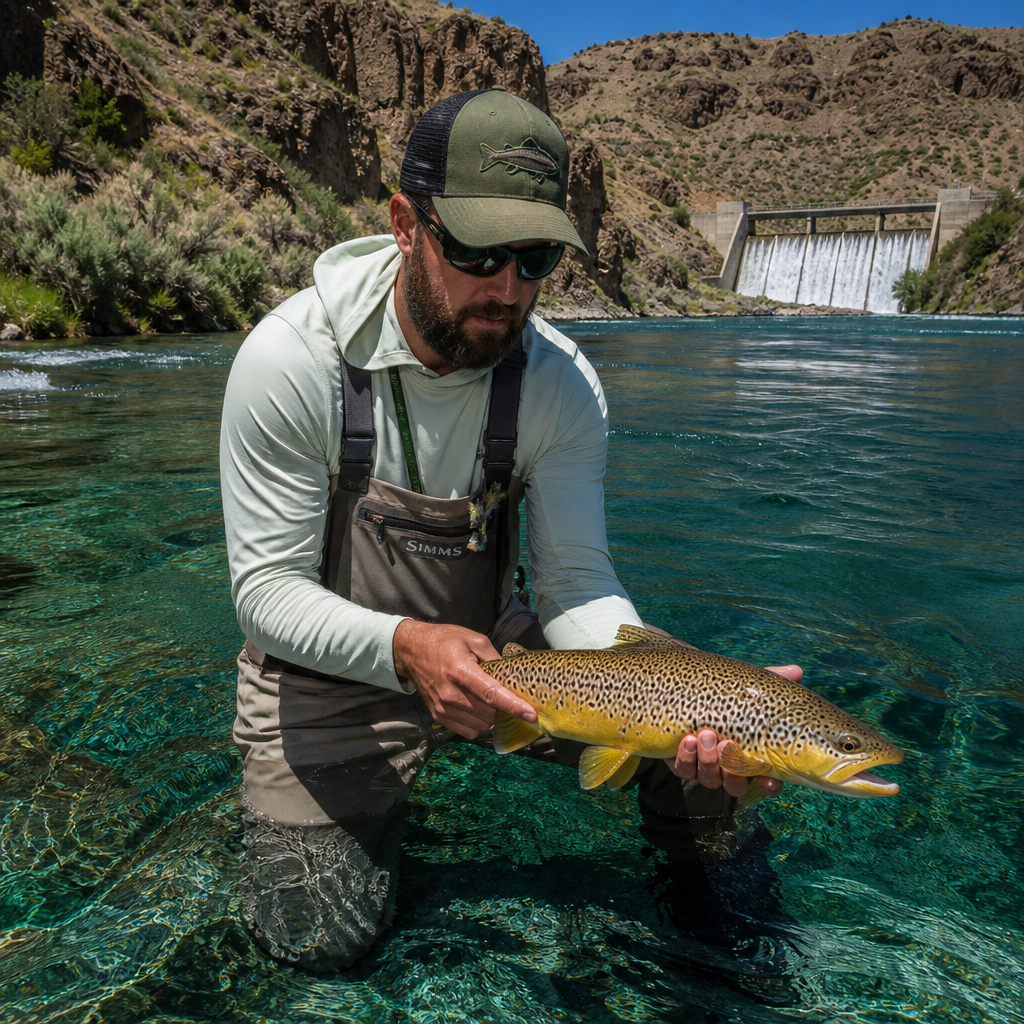
The fishable tailwater begins just below the dam face and flows through a narrow basalt canyon before flattening into the Ochoco lowlands approaching Prineville. The most productive water — and the most accessible — runs between the dam and the Lone Pine Road area, roughly the first three miles. This stretch features classic pool-riffle structure, undercut basalt ledges, and gin-clear runs where you can spot fish with polarized glasses on calm days.
Water temperatures stay in the low-to-mid 50s even through July and August, which is the reason this stretch is so productive when the rest of central Oregon's streams are too warm for trout. Check USGS stream gauge data before heading out — flow releases from the dam can vary significantly based on irrigation demand, and higher flows push fish tight to cover while low, clear flows demand a longer, finer approach.
The Brown Trout Population
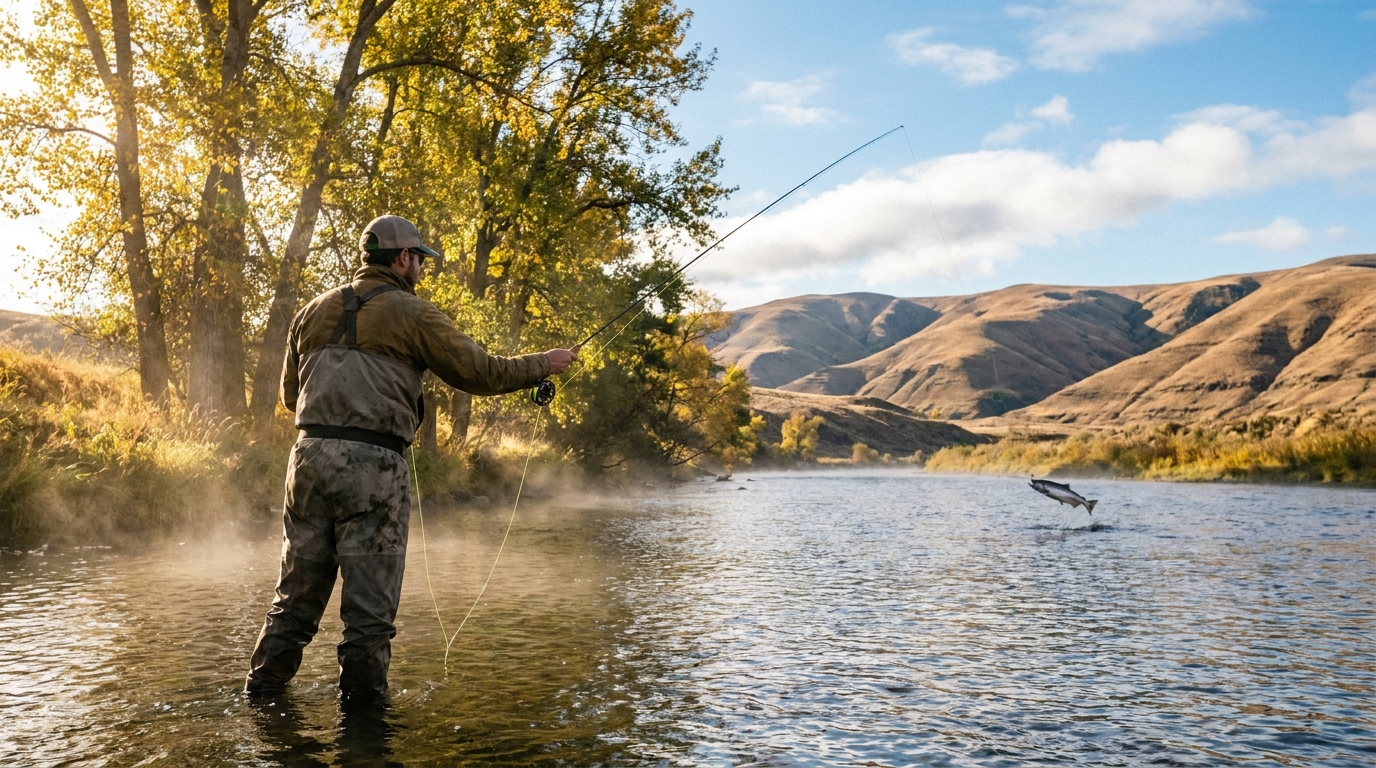
Browns dominate this stretch. ODFW surveys have documented wild browns up to 20 inches in the deeper pools, with the typical fish running 10–14 inches. These are not hatchery fish — they're wild, leader-shy, and conditioned by heavy fishing pressure near the dam. The further you walk from the parking areas, the less pressure and the larger the average fish.
Rainbows are present but far less common. If you hook a fish that runs hard and jumps, congratulations — you found one of the few resident rainbows. Most fish here are brown trout that will test your patience and reward your technique.
Tactics and Presentation
The Crooked River tailwater fishes like a spring creek: flat light, long leaders, and drag-free drifts are the difference between success and frustration.
Dry Fly Fishing
Summer hatches on the Crooked are modest but reliable. Pale Morning Duns (PMDs) in sizes 16–18 come off on warm afternoons from late June through August. Blue-Winged Olives appear on overcast days in mornings. Carry a selection of CDC Duns, Sparkle Duns, and parachute patterns. When fish are actively rising, work upstream on your knees to avoid spooking them.
Nymphing
A two-nymph rig under a small indicator accounts for more fish than any other method on most days. Copper Johns, Pheasant Tails, and Hare's Ears in sizes 14–18 are bread-and-butter patterns. Add a small midge larva or zebra midge as the trailing fly and fish the seams along the basalt ledges. Use 5X or 6X tippet — the water is clear enough that anything heavier gets refused.
Streamers
Big browns move for streamers in low-light conditions. Early morning and the last hour of evening are prime times to throw a weighted Sculpzilla, Slumpbuster, or Zoo Cougar on a sink-tip line. Cast tight to the undercut banks and strip slow — these fish aren't chasing, they're ambushing.
Access and Regulations
The most popular access point is the parking area directly below the dam off Juniper Canyon Road northeast of Prineville. Additional access exists along Lone Pine Road as it parallels the river downstream. Much of the land adjacent to the river is BLM, making it legally fishable, but check current ODFW regulations before each trip. The tailwater has specific rules — check for any special regs on gear type and bag limits that differ from general trout rules.
Gear Recommendations
- Rod: 9-foot, 4-weight or 5-weight fly rod. A longer rod helps mend over multiple current seams.
- Leader: 9–12 feet tapered to 5X, with 6X tippet for dry flies and technical nymph situations.
- Waders: Breathable waders are comfortable in summer; the water is cold enough that wet wading gets old fast.
- Polarized sunglasses: Non-negotiable. You'll spot fish, read the bottom, and avoid spooking the pool ahead.
The Best Times to Go
Summer is counterintuitively excellent here because the tailwater stays cold while other central Oregon streams cook. August afternoons see reliable PMD hatches and aggressive fish in the evening. Spring and fall see larger fish moving more actively, and BWO hatches can be spectacular on gray days in October and November. Winter fishing is permitted and can produce large fish with midge patterns, though flows can be low and fish sluggish.
This is a pressured fishery near the parking areas, but a half-mile walk separates the serious angler from the crowds. The Crooked River tailwater rewards patience, skill, and a willingness to walk. It's one of Oregon's finest warm-weather escapes for technical trout fishing — and most anglers still haven't found it.