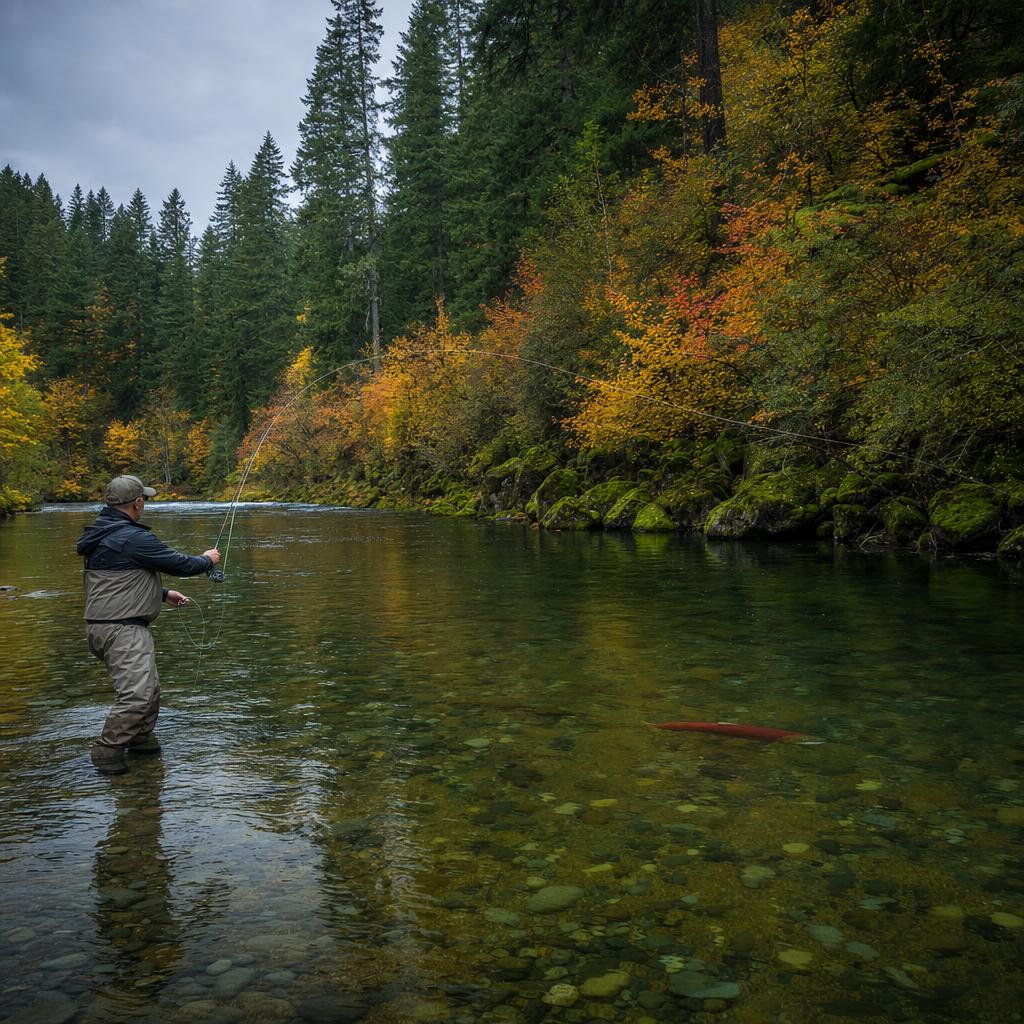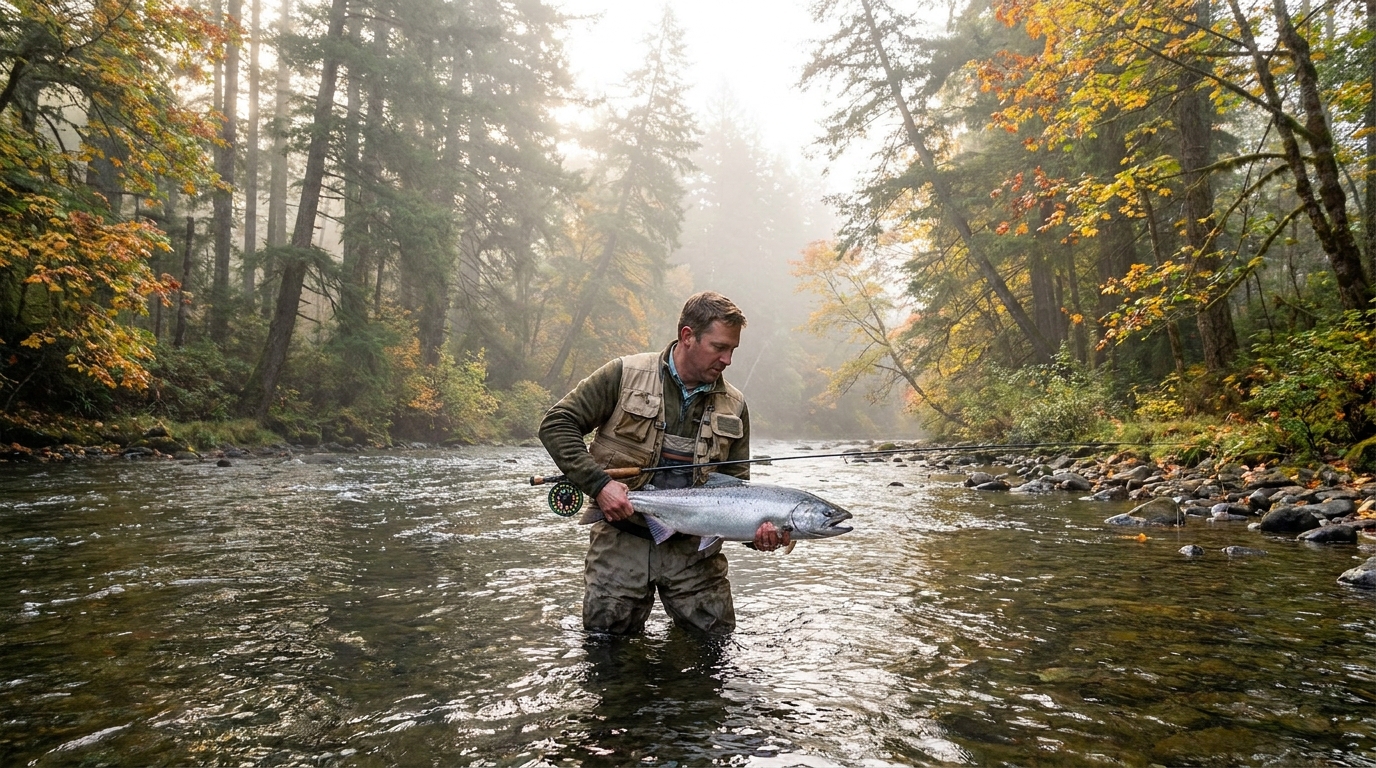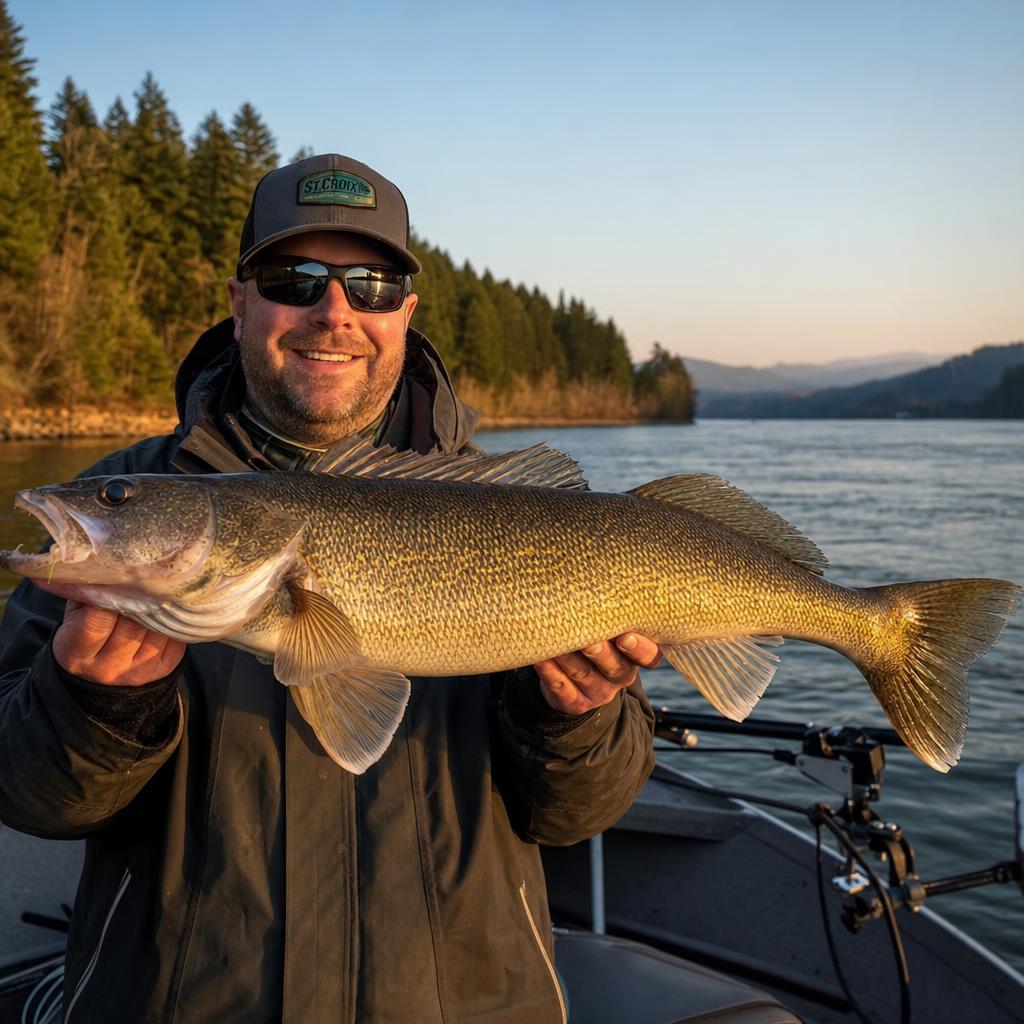
Oregon is legendary for its salmon runs and steelhead rivers, but there's another trophy hiding in the Columbia that most anglers drive right past. Walleye — the prized freshwater predator of the Midwest — have established a thriving population in the Columbia River, and they're bigger, more numerous, and more accessible than most Oregon anglers realize. If you've never chased Oregon walleye, September is one of the best months to start.
Where Columbia River Walleye Live
Oregon's best walleye water runs from the John Day Pool upstream through the McNary Pool, covering roughly 200 miles of the mid and upper Columbia. Key areas include the water near Umatilla, Irrigon, and Boardman — small eastern Oregon towns that sit right on the river and give you excellent public access.
The John Day Dam Tailrace
The stretch immediately below John Day Dam near Rufus, Oregon consistently produces the largest walleye in the state. The turbulent, oxygen-rich tailrace concentrates baitfish year-round, and walleye stack up to ambush them. Bank fishing the rocky riprap below the powerhouse is productive, but a boat lets you work the full breadth of the current seams.
Irrigon and Umatilla Area
The Columbia through Morrow County is walleye central. The gravel bars, submerged rock piles, and gradual depth transitions between Irrigon and Umatilla host dense populations of 2- to 6-pound fish, with legitimate 8- to 10-pounders showing up every season. Irrigon Marina provides boat launch access, and the town's city park offers bank anglers direct access to productive water.
Hat Rock State Park
Just east of Umatilla, Hat Rock State Park includes a boat launch and excellent bank fishing on a backwater bay. Walleye move in and out of this protected water during low-light periods, especially around sunrise. The slower current and soft bottom hold good numbers of fish through summer and into fall.
September Walleye Behavior
By September, Columbia River walleye have finished their summer doldrums. Cooling water temperatures — typically dropping from the mid-70s into the mid-60s Fahrenheit — trigger increased feeding activity. Fish that scattered across shallow flats through July and August begin concentrating on structure as they bulk up ahead of winter.
Low-light periods are prime time. Dawn and dusk produce the most action, with walleye moving shallow to feed on perch, squawfish, and other forage. On overcast September days, midday fishing can be surprisingly productive — walleye are light-sensitive fish, and cloud cover lets them stay shallow longer.
Tackle and Techniques
Jigging
A 1/4- to 3/8-oz jig head tipped with a 3-inch paddle-tail swimbait is the most versatile Columbia walleye presentation. Work it along the bottom on a slow drag-and-lift retrieve, pausing frequently. Chartreuse, white, and natural shad colors all produce. In heavier current near dam tailraces, go up to 1/2 oz to stay in contact with the bottom.
Trolling Crankbaits
Trolling is the most efficient method for covering water and finding fish. Shad-profile crankbaits in the 3- to 5-inch range — Rapala Shad Raps, Berkley Flicker Shads, and Strike King KVD crankbaits — all work well. Target depths of 8 to 20 feet along channel edges and gravel transitions at 1.5 to 2.5 mph. Snap weights or lead-core line help you reach fish holding deeper in warm weather.
Nightcrawler Rigs
Old-school rigging still produces Columbia walleye, especially for bank anglers. A spinner-tipped nightcrawler harness behind a 3-way rig or bottom bouncer is nearly foolproof. Drag it slowly along rocky points and current breaks. Use size 4 or 6 hooks and a fresh crawler, and you'll have action.
Oregon Regulations — Know Before You Go
- Walleye are classified as non-game fish in most of the Columbia River — no bag limit, no size limit in many zones. Check ODFW's current regulations for the specific pool you're fishing.
- A valid Oregon fishing license is required for all anglers 12 and older.
- In some Columbia River zones, you'll need a Combined Angling Tag (CAT) — the same tag used for salmon and steelhead. Verify your zone's requirements at myodfw.com.
- Some areas near tribal fishing zones have additional restrictions. Check boundary markers carefully.
Gear Up Right
A medium-action spinning rod in the 6'6" to 7' range spooled with 10-lb braided line and a 10-lb fluorocarbon leader covers most Columbia walleye situations. Add a quality polarized lens and you'll spot fish in shallower water. Bring a cooler — walleye are excellent table fare, and a limit of fish from the Columbia is a meal worth keeping.
Plan Your Trip
Irrigon, Boardman, and Umatilla all offer RV parks and motels within minutes of the river. September weather in eastern Oregon is outstanding — warm, dry days and cool nights make for comfortable camping and excellent fishing. It's worth combining a Columbia walleye trip with a dove hunt or early goose season; eastern Oregon in early fall doesn't get much better than that.
Oregon's Columbia River walleye fishery is one of the great sleeper opportunities in Pacific Northwest fishing. Fewer crowds than the salmon rivers, no punch cards, and fish that fight hard and eat even better. If you've been ignoring walleye, this is the year to stop.