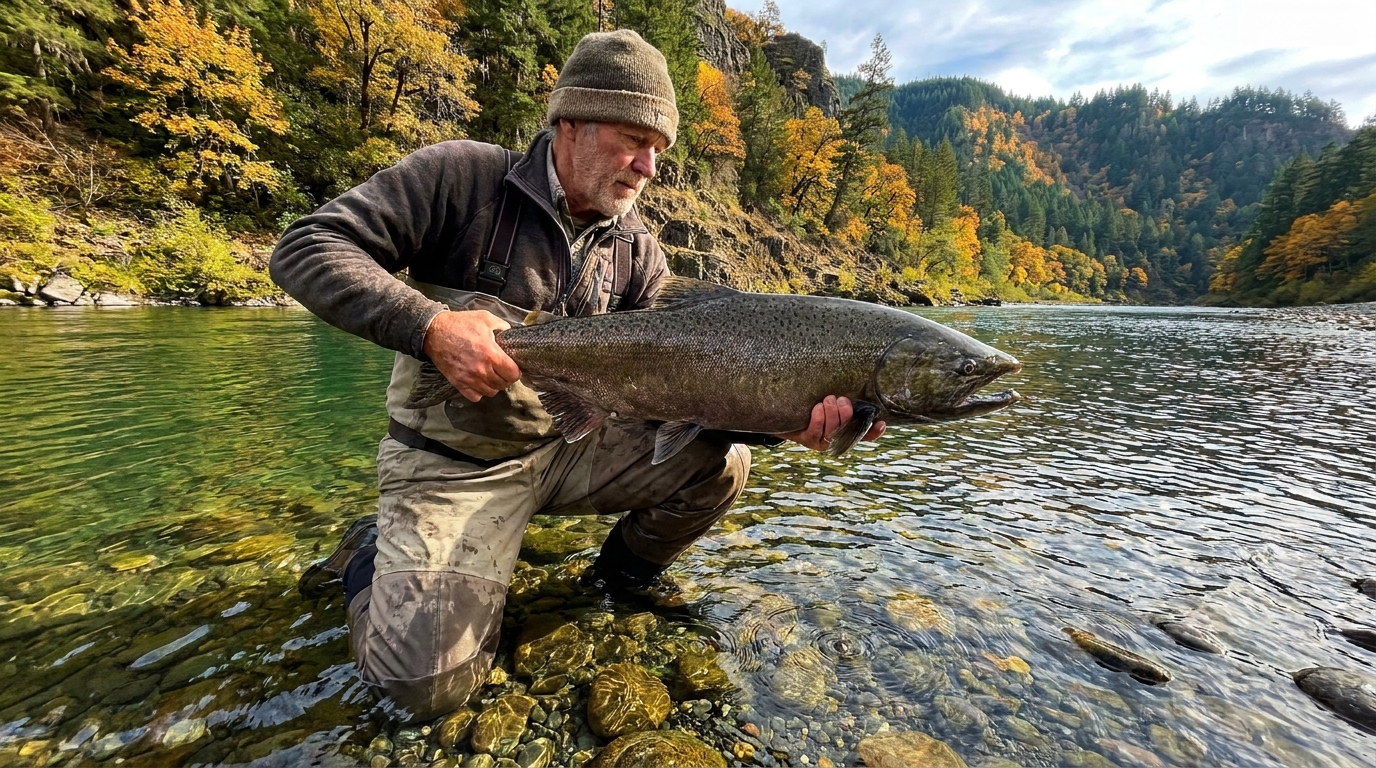
If you want to catch a true trophy fall chinook salmon in Oregon, the Chetco River should be at the top of your list. This small, gin-clear river draining the Siskiyou Mountains into the Pacific at Brookings consistently produces some of the largest wild king salmon on the entire Oregon coast — fish in the 40- to 60-pound class that will test your gear, your patience, and your nerve.
Why the Chetco is Different
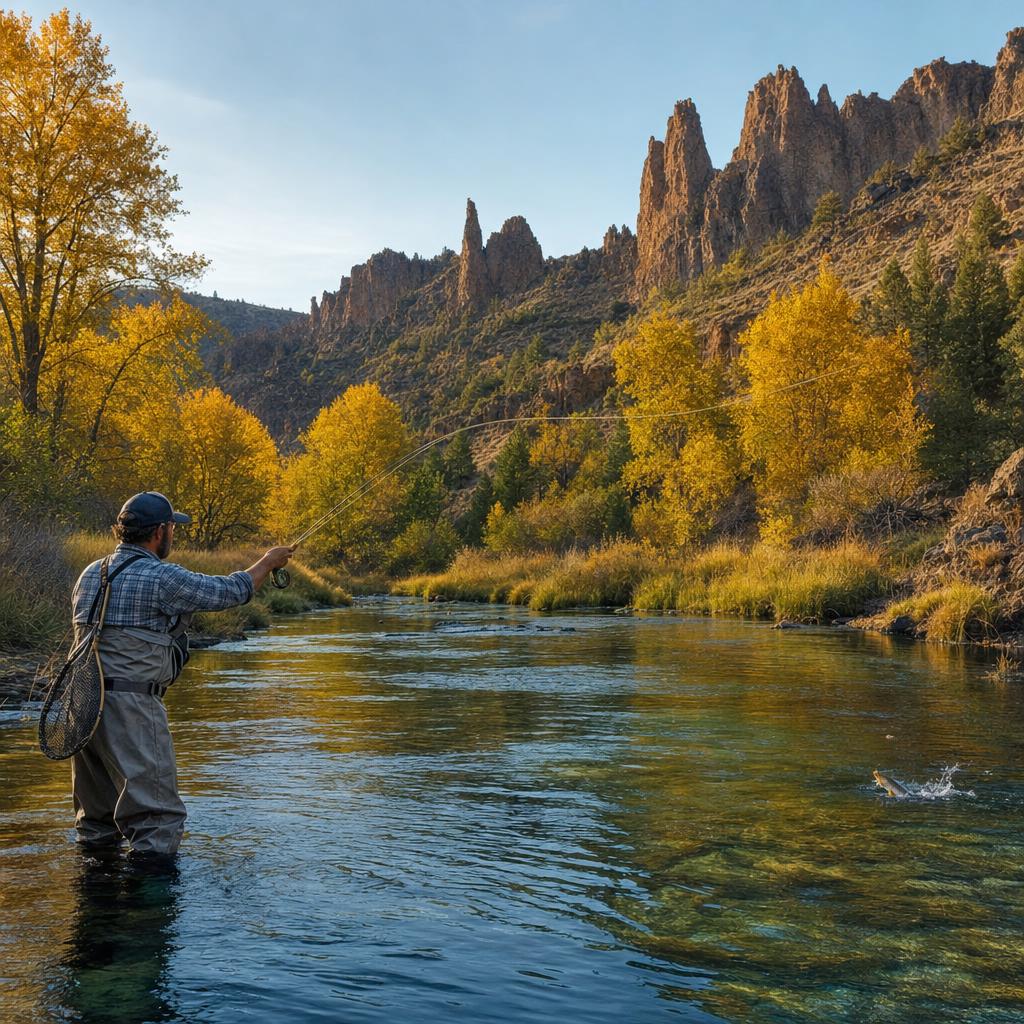
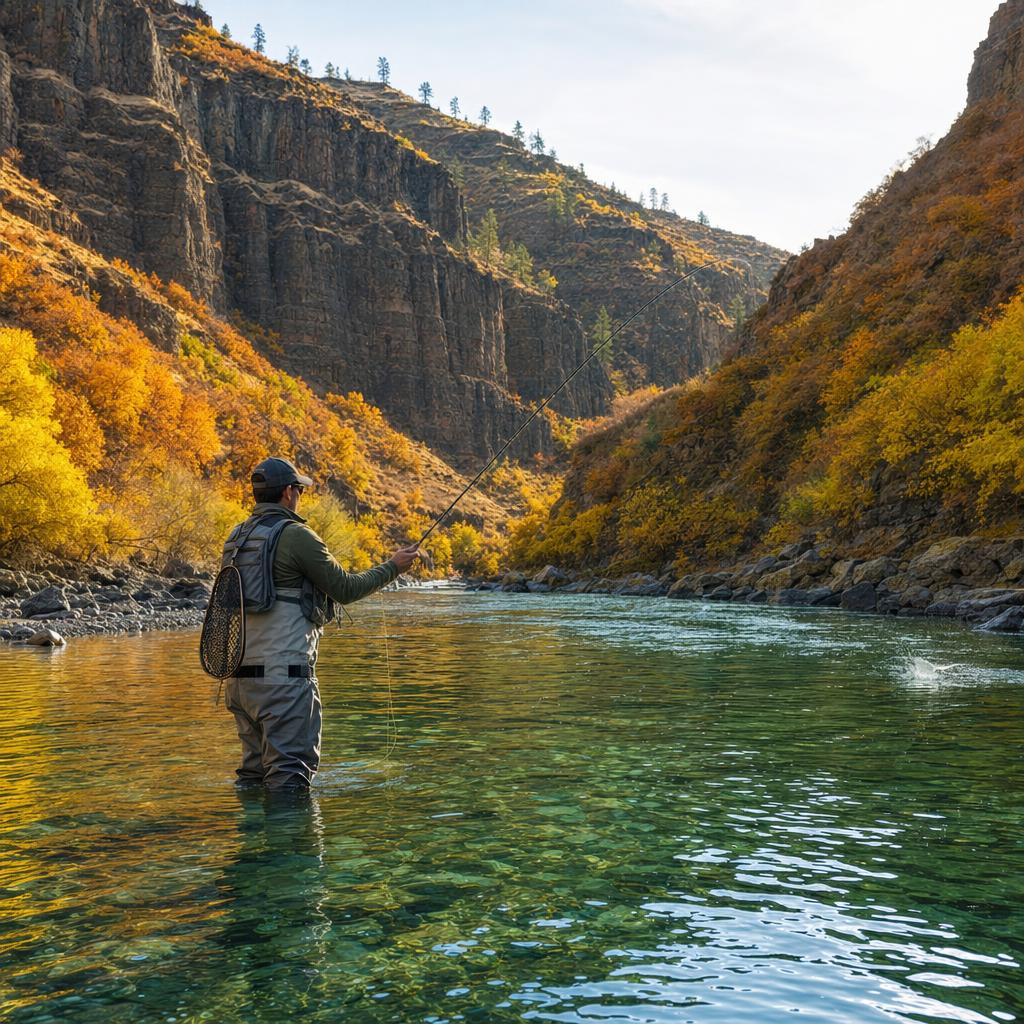
The Chetco is unlike any other coastal salmon river in Oregon. At barely 55 miles long, it drains an exceptionally steep, rocky watershed with almost no agricultural runoff. The result is water clarity that rivals a mountain trout stream, even during the salmon run. You can watch 50-pound chinook holding in the green depths of a tailout pool and watch them inspect — and often reject — your offering. It's humbling, and it's addictive.
The river also has one of the latest run timings on the Oregon coast. While most coastal rivers are winding down by November, the Chetco often peaks in October and November, sometimes extending well into December on strong years. This makes it a prime late-season destination when other options have closed or washed out.
Run Timing and What to Expect
The fall chinook typically begin showing in tidewater at Brookings in September, with fish staging in the bay and lower river. The bulk of the run moves upriver in October as fall rains raise water levels and cool temperatures. The river's peak — the window when the most fish are in and conditions are optimal — usually falls between mid-October and mid-November, though this varies considerably with rainfall.
Low-water years are the Chetco's most notorious conditions. When September and October are dry, fish stack in the tidewater and lower river sections in extraordinary numbers, and the fishing can be incredible — but so can the pressure. Dozens of boats working a few hundred yards of water is not unusual during a low-water hold. When the rains finally arrive and the river rises two to three feet, the fish move fast and the bite can erupt before it shuts off as quickly as it started.
Access Points and Wading Water
The most popular access is along the lower river between the Chetco River boat launch at the Port of Brookings Harbor and Social Security Bar, a well-known holding pool about four miles upstream. Boat anglers work this stretch heavily during peak season.
For bank and wade anglers, the upper river above South Fork Road offers better access and far less pressure. Fish that make it to the middle river sections are typically fresher than tidewater fish and more willing to bite. The hike-in bars between South Fork Road and Nook Bar can be excellent when fish are moving, especially in the 24 to 48 hours following a rain event.
Gear and Tactics
Drift fishing with fresh roe is the traditional and consistently most effective Chetco method. The river's exceptional clarity means presentation matters enormously. Fresh, tied roe in a small mesh bag — tied tight with one to two rows — outperforms loose clusters. Scent is important; anise oil and shrimp-based attractants draw strikes in clear conditions.
- Rod: 9 to 10.5 foot medium-heavy drift rod rated for 15–30 lb test
- Reel: Level-wind or baitcaster with a quality line counter
- Main line: 30 lb monofilament or braid with a fluorocarbon leader
- Leader: 15–20 lb fluorocarbon, 18–24 inches
- Weight: Pencil lead, 1–3 oz depending on flow
- Bait: Fresh king roe, sand shrimp, or a combination of both
Plugs are the second go-to tactic, particularly for boat anglers holding position and back-bouncing plugs through deeper runs. Brad's Wigglers and Kwikfish in metallic chartreuse, orange, or gold are the standard palette. Wrapping plugs with fresh sardine fillet adds both scent and action and can make the difference on clear-water days when fish are pressured and lock-jawed.
Regulations You Need to Know
The Chetco is managed under ODFW's Chetco River Wild and Hatchery Salmon regulations, which change annually. In most years, only adipose-clipped hatchery chinook may be retained; wild fish must be released unharmed. Check the current Oregon Sport Fishing Regulations for the Chetco specifically — this river sometimes has separate retention rules from other coastal streams, and they can change mid-season based on run strength assessments.
The daily bag limit is typically two hatchery chinook per day, but the Chetco's wild fish retention restrictions have historically been strict. Always verify before you go. ODFW's coastal fishery hotline is updated weekly during the season.
Where to Stay and Gear Up
Brookings is a small coastal town with good amenities for anglers. Harris Beach State Park offers excellent camping with easy river access nearby. Several guide services operate on the Chetco during the season — hiring a local guide for your first trip is worth every dollar on a river this technical. Local bait shops on the south coast carry fresh roe when the run is in; call ahead to confirm availability.
If you want one last great salmon fishing experience before winter locks the Oregon coast down, put the Chetco on your calendar. There's nothing quite like watching a 50-pound wild king surge through water so clear you can count its spots — and then finding the right drift to finally get it to eat.