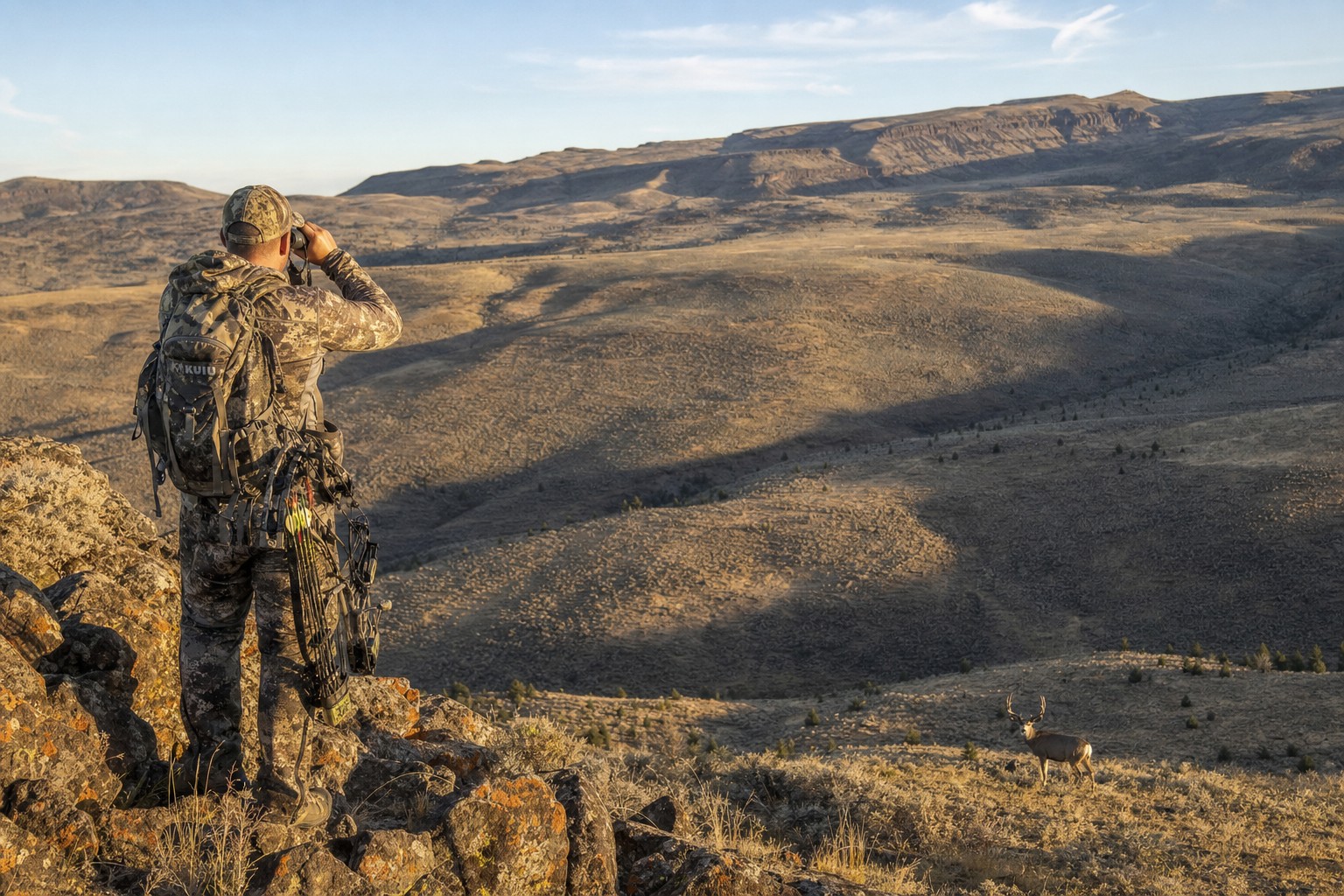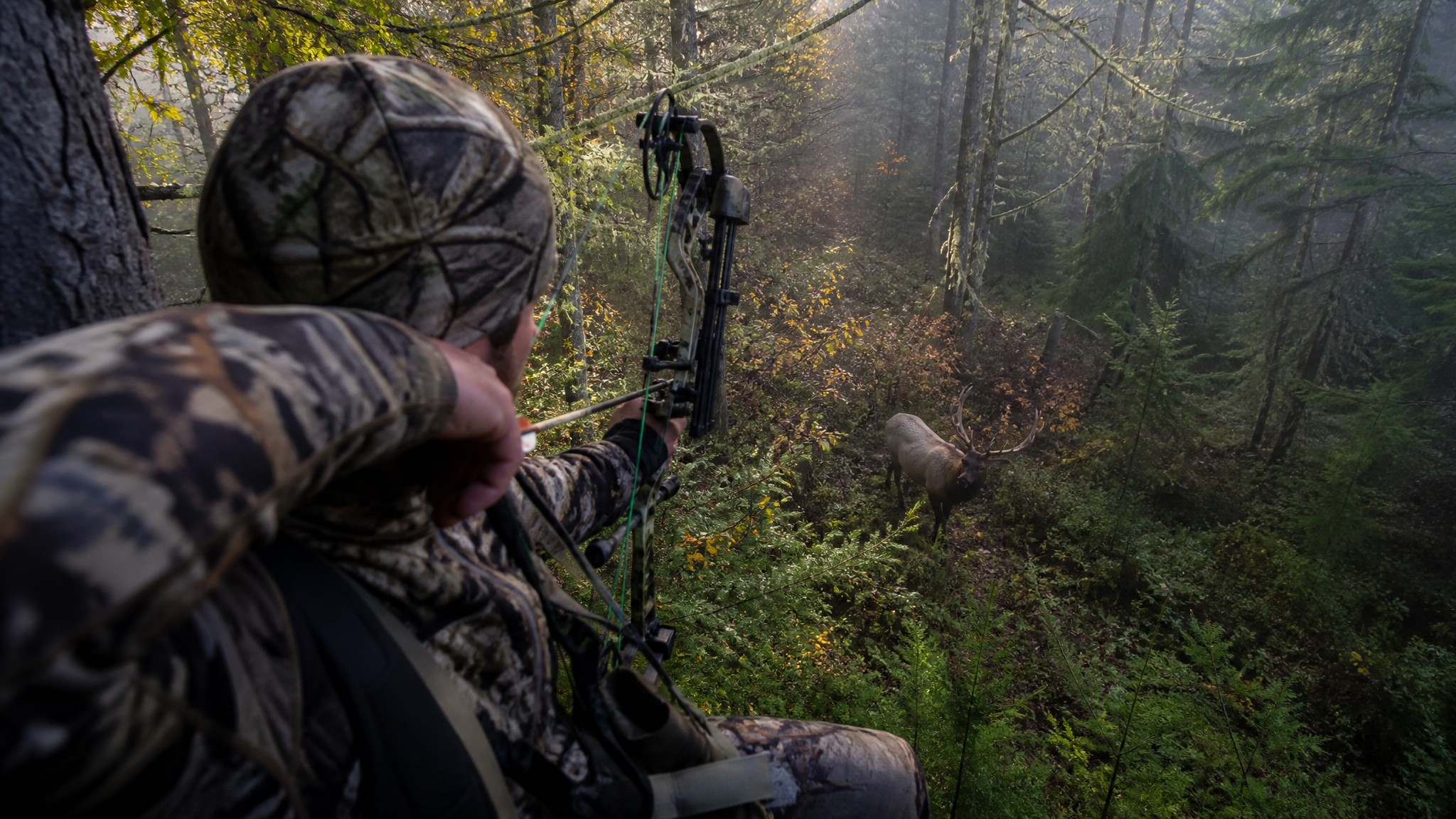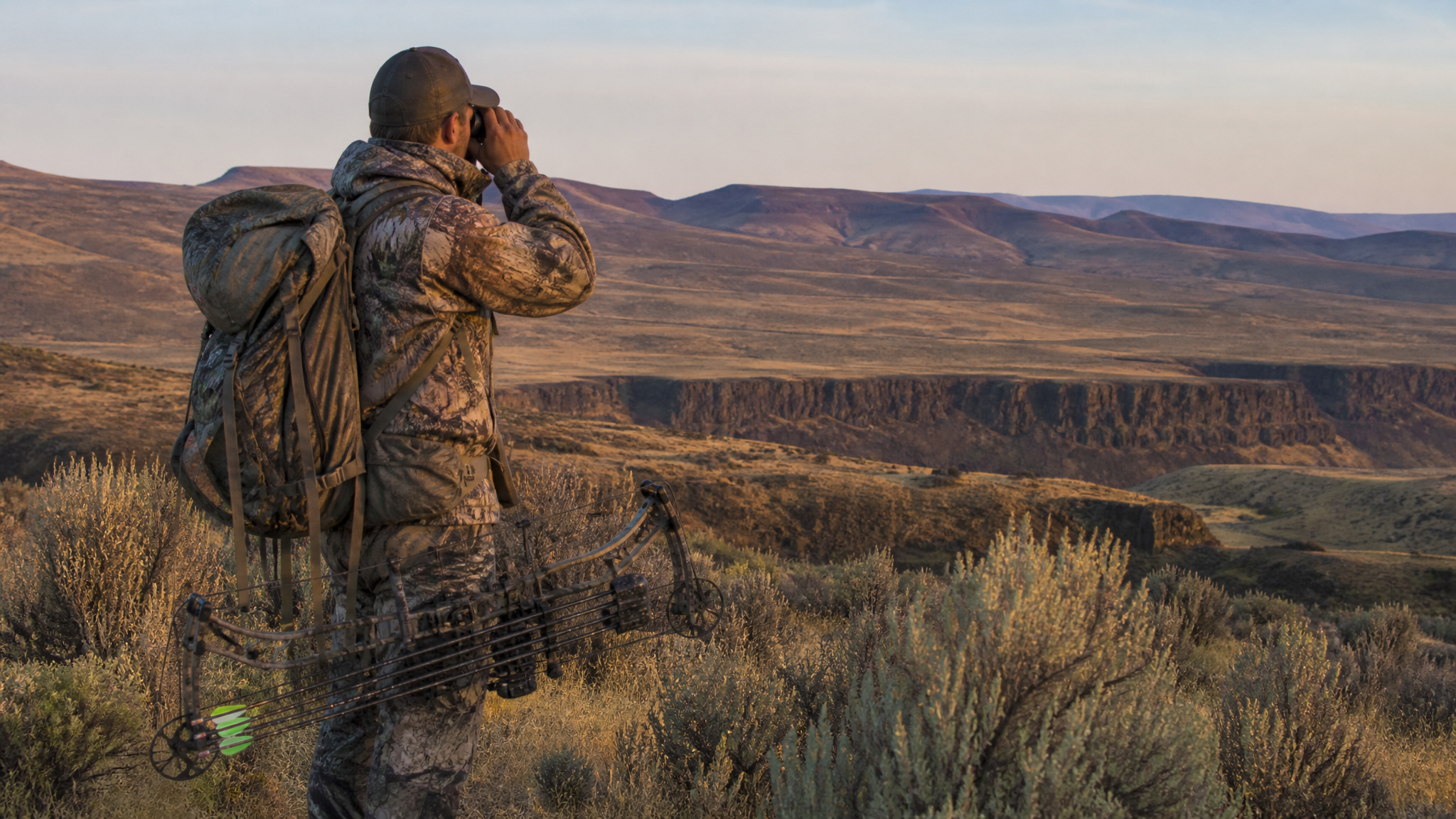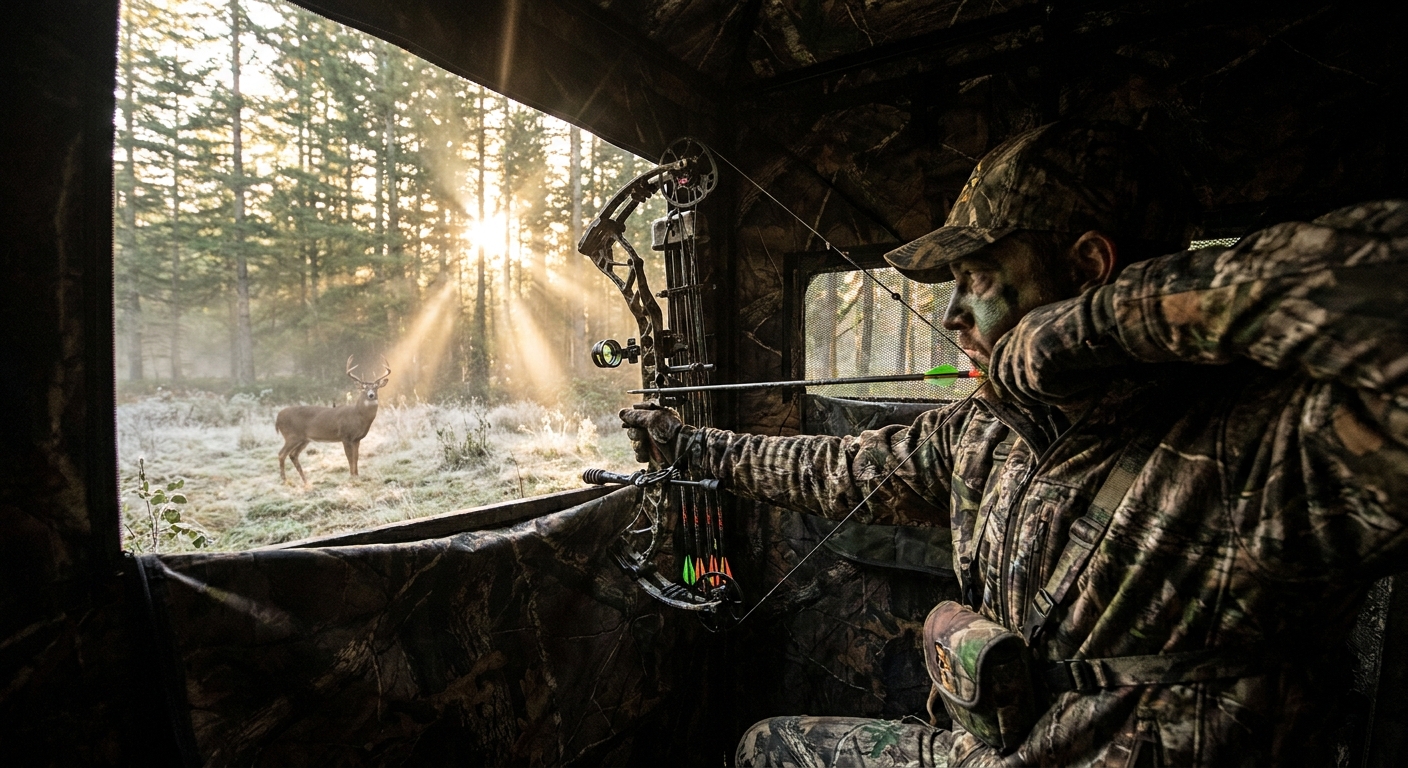
Treestands get most of the press in bowhunting media, but ground blinds have quietly become the go-to platform for an increasing number of serious bowhunters. They're handicapped-hunter-friendly, warmer in cold weather, easier to set up in timber country where straight trees are scarce, and genuinely effective when used correctly. Oregon's mix of thick Coast Range timber, open eastern desert, and high Cascade terrain makes ground blind hunting a tactical fit across the state.
Blind Selection: Hub-Style vs. Panel vs. Natural
The hub-style blind — think Ameristep Brickhouse, Primos Double Bull, or the industry-standard Rhino — dominates the market for good reason. They pop up in under two minutes, pack small, and provide 360-degree coverage with multiple shooting windows. For deer hunting over a water source, mineral lick, or food plot, a quality hub blind is the best overall choice.
Panel blinds (essentially camouflage fabric panels on a frame) are lighter and more packable for backcountry applications but offer less coverage and take more time to configure properly. For elk hunters doing short spike camps in Oregon's Cascades, a packable panel or pop-up stake blind saves critical weight.
Natural blinds — brush, deadfalls, and terrain features used without a manufactured structure — are the most stealthy option but require skill and time to build effectively. For recurring setups near a known wallow or travel corridor, a natural blind built two to four weeks before the season opener is extremely effective on elk that have time to accept it.
Site Selection: Where to Put the Blind
The most common ground blind mistake is poor placement. Consider these factors:
- Background cover: Never set a blind in the open. Back it against a dark background — brush, a tree trunk, a rock face, a cedar hedge. The blind disappears when it's not skylit or exposed in an open field.
- Wind direction: Scent control from the ground is harder than from a treestand. Identify the dominant wind direction during shooting hours and position the blind so shot opportunities present themselves with wind in your favor. In Oregon's mountains, thermals reverse — downhill in the morning, uphill in the afternoon. Time your setup accordingly.
- Shot lanes: At ground level, you have roughly 30 degrees of arc through most shooting windows. Scout your setup distance before committing — the blind should sit where you can shoot 15 to 35 yards into the most likely animal approach zone. Don't set up too far back from the action.
- Entry and exit: You need a route to and from the blind that doesn't blow your shooting area. In dense Coast Range timber, this often means using creek drainages, log roads, or ridge spines to approach without crossing the wind into your kill zone.
Blind Conditioning: Don't Skip This Step
A new hub blind smells like a factory — solvents, rubber, synthetics. Deer will blow at 60 yards on a fresh blind if you skip conditioning. Before the season:
- Set the blind up outside and leave it open for one to two weeks to air out
- Rub the exterior with natural vegetation from the hunting area — fir boughs, sage, juniper. This transfers local scent and breaks up the uniform look.
- Eliminate shine — any reflective surface on the blind exterior will alert animals. Matte fabric blinds age better, but new seams can catch light
- Set the blind at your hunting site two to four weeks before opening day when possible — animals habituate to new objects faster than most hunters realize
Scent Control from the Ground
The ground blind creates a scent chamber — your scent pools inside and leaks through every window seam and zipper. This is the platform's primary limitation. Address it aggressively:
- Wear rubber-bottom boots to your blind and store them outside or in a sealed bag before entering
- Use activated carbon clothing inside the blind — it's most effective in enclosed spaces
- Keep all windows zipped that aren't in your shooting lane
- Use Ozonics or a similar ozone generator hung inside the blind — these units work exceptionally well in the enclosed environment and are worth the investment for serious ground blind hunters
- Check wind every time you exit — don't walk through your shooting zone on the way out
Shot Execution from a Ground Blind
Drawing a bow in a ground blind is fundamentally different from a treestand. Lack of vertical clearance and the close quarters of a hub blind create real challenges:
- Practice in your blind before the season. Draw your bow in the exact position you'll shoot from — seated, half-kneeling, or standing with a bent shooting lane. Know where your limbs clear the ceiling and windows.
- Use a chair with good back support at the right height. The Hawk Crawler or a low hunting stool positions you at the right draw height. Collapsible chairs work; lawn chairs do not.
- Shoot through black mesh windows. Modern blind windows allow you to shoot through dark mesh without animals seeing movement. Keep interior lighting low — dark inside, light outside. Wear dark clothing inside the blind to avoid silhouetting against bright windows.
- Know your shot angle. From the ground, shots are typically flatter than from a treestand, which simplifies point-of-aim on broadside and slightly quartering-away animals. The one tricky angle is quartering-toward — at close range from ground level, this presents a narrow margin. Pass on it if unsure.
Oregon-Specific Applications
Columbia Blacktail in the Coast Range
Ground blinds over active blacktail scrapes and rubs during October are deadly. The dense alder and vine maple understory of the Coast Range makes treestands difficult — the ground blind is often the better tool here. Set up over a fresh scrape line in late September and be in the blind before first light during the pre-rut through November.
Rocky Mountain Elk Wallows
Elk wallows in Oregon's Blue Mountains and Cascades are prime ground blind locations. Set up 20 to 30 yards downwind of an active wallow and you're within point-blank archery range of some of the state's best elk action. The wallow covers your scent to some degree — but don't rely on it alone. Position the blind in the timber edge where it blends and stays shaded.
Water Holes in Eastern Oregon
During dry years, isolated water sources in Eastern Oregon's mule deer and elk country concentrate animals during early archery season in August and September. A small pop-up blind positioned 20 to 25 yards from a spring or man-made tank, set weeks in advance, consistently produces close shots on animals that have fully accepted the blind as part of the landscape.
The Bottom Line
The ground blind is a legitimate, highly effective bowhunting tool — not a consolation prize for hunters who can't climb trees. Used with proper scent discipline, pre-season conditioning, and strategic placement, a good hub blind in the right location will produce more close encounters with Oregon deer and elk than a poorly placed treestand. Invest the prep time before the season and the blind will do the rest.