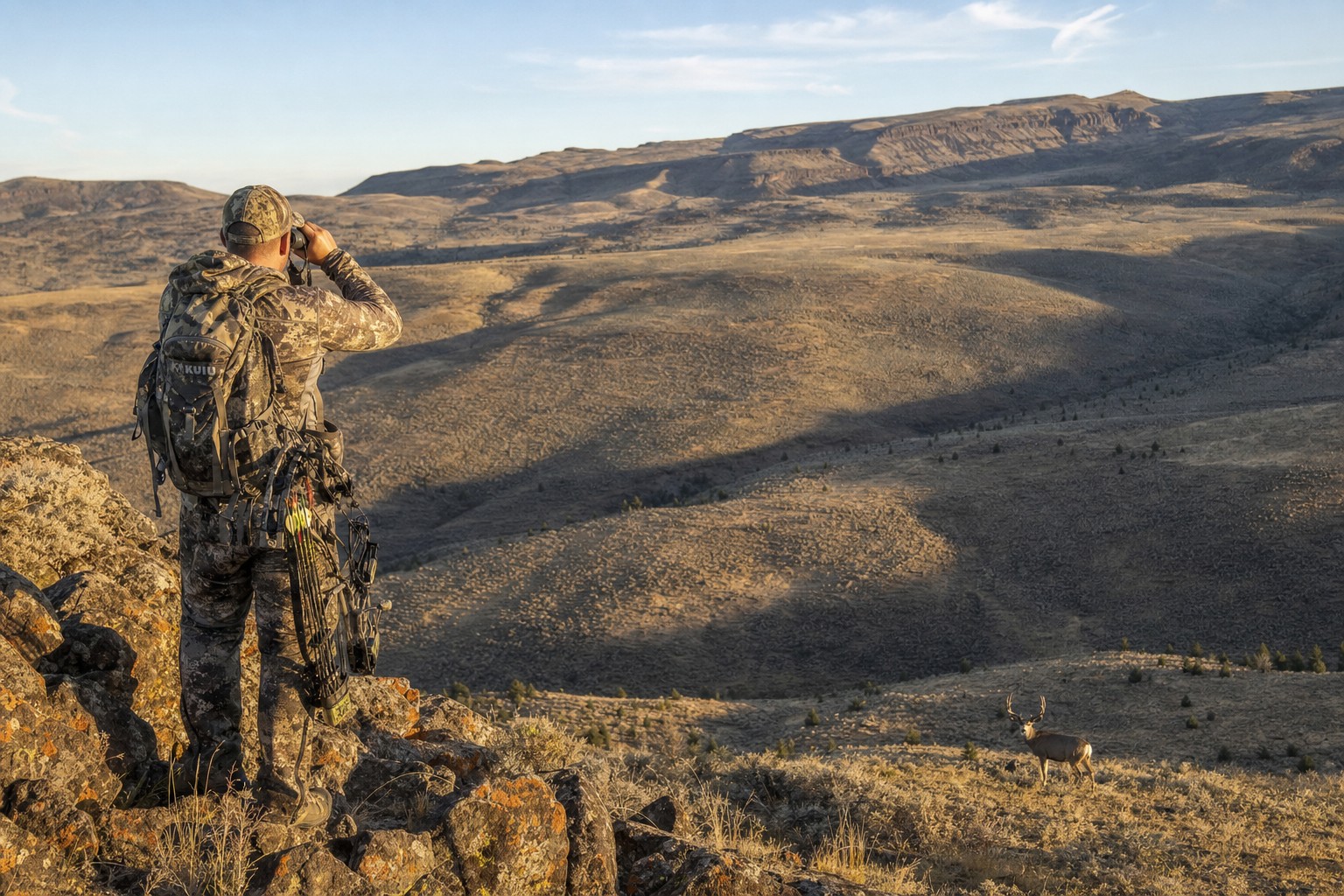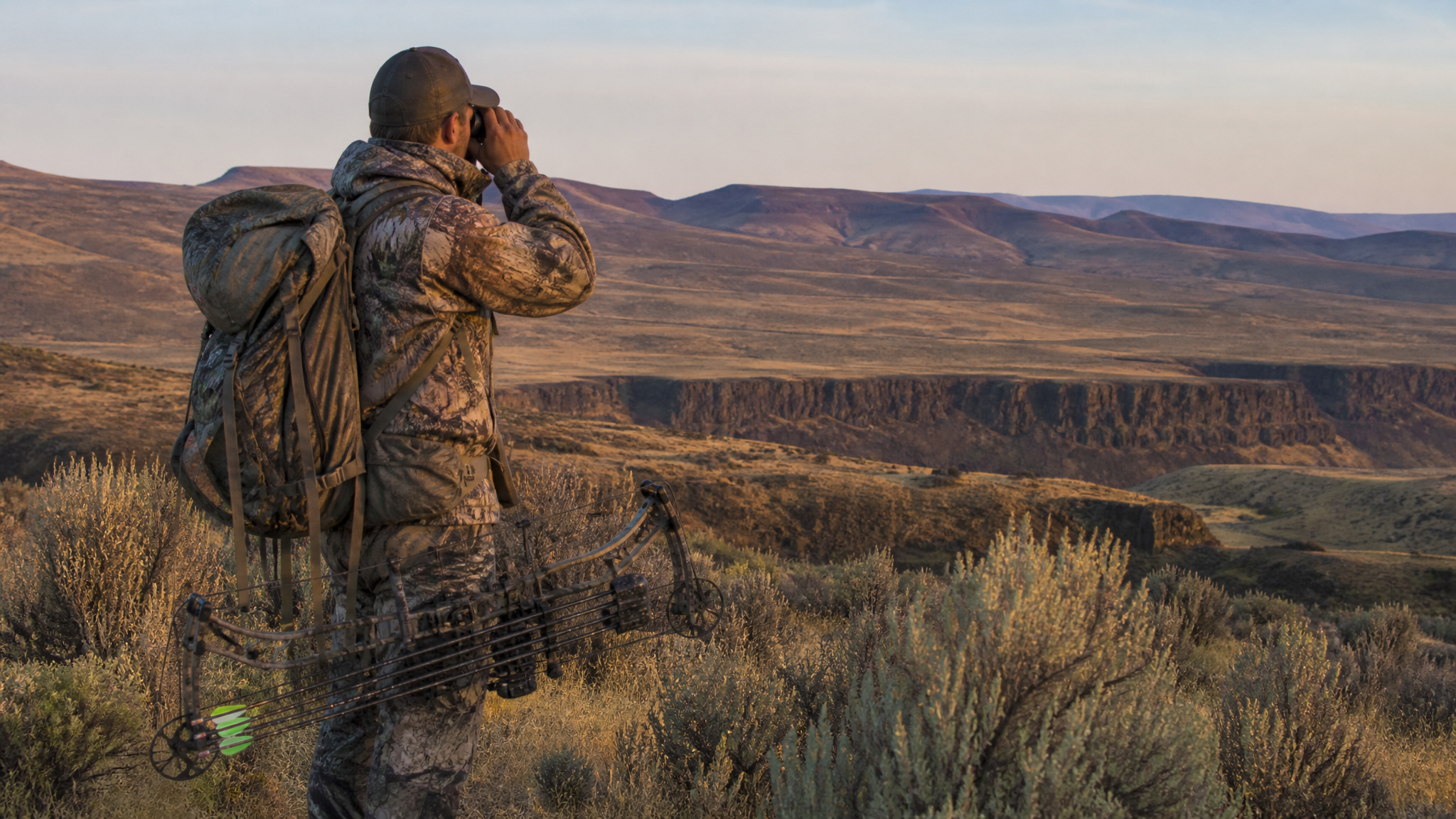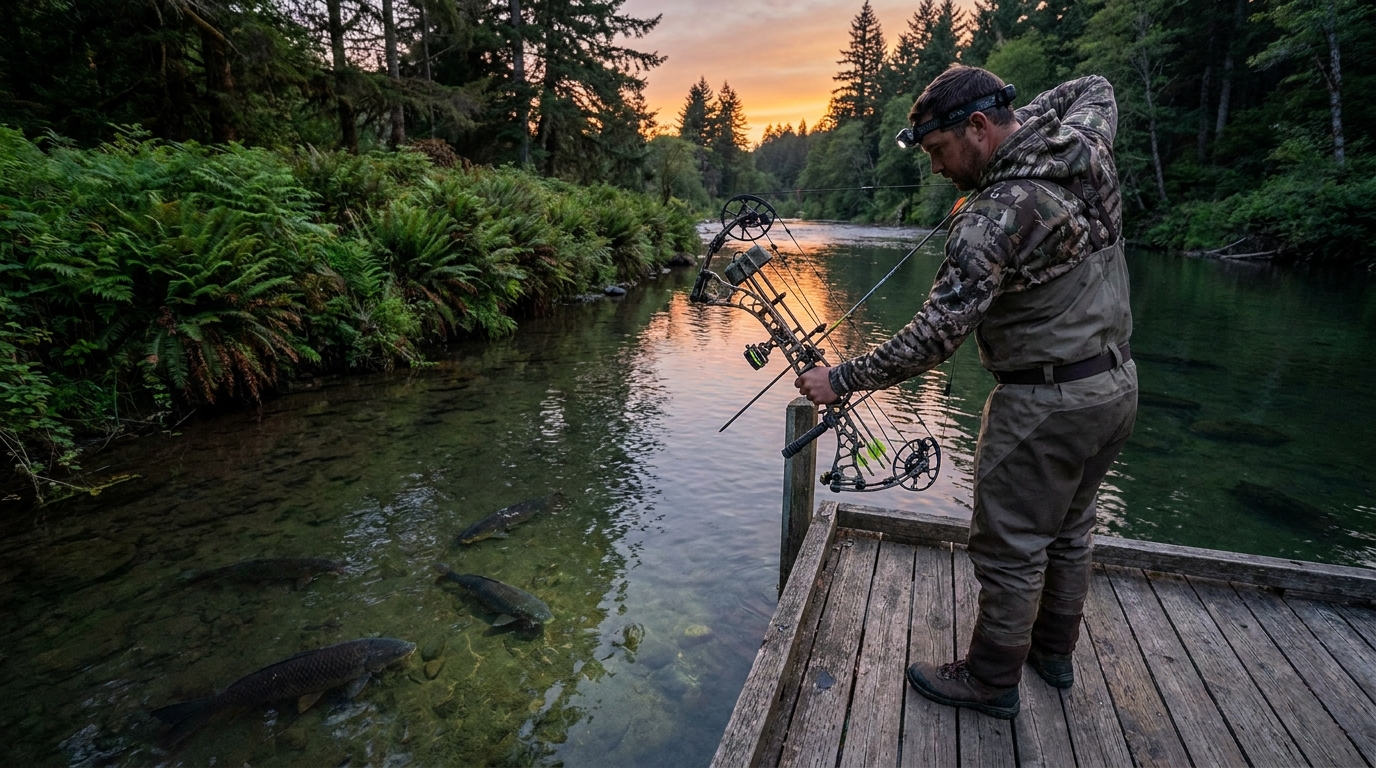
If you've never tried bowfishing, you're missing out on what might be the most entertaining thing you can do with a bow in the summer. It's fast, physical, requires zero waiting, and gives you a legitimate reason to be on the water with a weapon. Oregon's warmwater fisheries hold healthy populations of common carp and other bowfishable species, and the season is essentially year-round with no bag limits on most rough fish.
For archery hunters looking to stay sharp between seasons, bowfishing is exceptional cross-training. Target acquisition, instinctive shooting, drawing on moving targets, and close-range precision — it checks every box. And unlike 3D archery, there's actual fish involved.
Oregon Regulations for Bowfishing
Oregon allows bowfishing under your standard angling license in most waters. The key regulatory points:
- Legal species: Common carp, grass carp, white amur, bullhead catfish (check current regs), and other non-game/rough fish species designated by ODFW. You may NOT bowfish for any game fish species — no trout, bass, steelhead, salmon, sturgeon, or walleye.
- Equipment: A bow (compound, recurve, or longbow) fitted with an arrow attached to a line via a bowfishing reel is legal. No crossbows in some districts — check local rules.
- Retention: Once you shoot a carp or other rough fish, you must retain or properly dispose of it. Do not leave dead fish on the bank — pack them out or bury them away from water.
- Night bowfishing: Allowed in most Oregon waters with a standard license. Using lights (lanterns, submersible lights, bow-mounted LEDs) is legal. Night bowfishing for carp on warm, shallow flats is highly productive.
Always check the current ODFW Sport Fishing Regulations for specific water restrictions. Some reservoirs and rivers have seasonal closures or special rules that affect bowfishing access.
Equipment Setup
The Bow
Any compound bow works for bowfishing, but the ideal setup is different from a hunting rig. You want:
- Lower draw weight: 30–50 lbs is plenty. You'll be shooting hundreds of times in a session — heavy draw weights wear you out fast.
- Short axle-to-axle: A shorter bow is more maneuverable in a boat or on a bank.
- No fragile optics: Bowfishing is wet and rough. Remove your hunting scope or peep sight and shoot instinctively.
Many dedicated bowfishers use an inexpensive recurve (45–55 lbs) specifically for bowfishing. PSE, AMS, and Cajun all make recurve and compound packages designed for the sport. A dedicated bowfishing bow can be had for $150–$300 complete.
Bowfishing Reels and Line
Three types of reels are commonly used:
- Spin-cast (bottle) reel: The most beginner-friendly option. A simple enclosed reel mounted on the bow, like the AMS Retriever or Zebco 808. Line feeds out on the shot and retrieves manually. Fast and simple.
- Hand-wrap reel: A drum-style reel — line wraps around a spool that you hand-retrieve. Very fast, zero mechanical parts to fail, preferred by experienced bowfishers.
- Spincast reel (open-face): Like a fishing spinning reel adapted for bowfishing. More control but more complexity.
Use 80–200 lb braided spectra bowfishing line — standard monofilament is not adequate. It needs to handle the shock of an arrow hitting a fish at close range.
Bowfishing Arrows
Never shoot a standard hunting arrow bowfishing. Bowfishing arrows are heavy fiberglass or carbon shafts (usually 5/16" diameter), tipped with barbed points designed to hold fish. AMS, Muzzy, and Cajun all make solid bowfishing points with locking slide mechanisms that retain fish on retrieve. Carry 3–4 arrows minimum.
Where to Bowfish in Oregon
Willamette River
The Willamette Valley is ground zero for Oregon bowfishing. Common carp thrive in the warm, slow-moving sections between Eugene and Portland. The Santiam River confluence, Mission Lake near the Willamette, and any backwater slough or warm-water bay are prime spots. June through August, carp move into shallow flats to spawn and feed — sometimes in water less than 18 inches deep. This is prime bowfishing territory.
Columbia River Sloughs and Lakes
The Columbia River backwaters between Portland and the coast — including Sauvie Island wildlife area (check seasonal rules), Bachelor Island, and various sloughs along the Washington shore — hold massive carp populations. A kayak or flat-bottomed boat opens up access to areas bank fishers can't reach.
Eastern Oregon Reservoirs
Brownlee Reservoir on the Snake River and Owyhee Reservoir in Malheur County both have excellent carp populations in their warm upper arms and shallows. The high-desert setting makes for beautiful evening shoots.
Fern Ridge Reservoir
This shallow reservoir west of Eugene is one of the most consistently productive bowfishing spots in the Willamette Valley. Carp are abundant, the water is often clear enough to spot fish, and bank access is good around much of the reservoir.
The Refraction Factor
This is the #1 skill in bowfishing and what separates consistent shooters from those who come home empty. Light bends as it enters water — what you see is not where the fish actually is. As a rule of thumb:
- Aim 6 inches below where you see the fish for every foot of water depth
- The steeper your shooting angle, the more you need to aim low
- At very shallow angles (fish far away, 30+ feet), refraction is less significant
Most beginners shoot over fish. If you're consistently missing, aim lower. With practice, you'll develop instinctive compensation for refraction without thinking about it.
Night Bowfishing Setup
Night bowfishing is often better than daytime. Carp move into the shallows after dark, and lights draw them in. A basic setup:
- Bow-mounted LED light or a submersible green underwater light deployed from a small boat
- Headlamp for moving around safely
- Flat-bottomed boat, kayak, or paddleboard for access to flats
Idle your boat (or paddle) along shallow flats scanning with lights. When you spot the orange-gold shimmer of carp, move into position and shoot. The adrenaline of a close shot at a 15-pound carp in a foot of water at midnight is something you don't forget.
What to Do With the Fish
Carp are edible — smoked carp is genuinely good — but most bowfishers don't keep them for the table. Contact your local county extension office or ODFW to find out if there are fish composting programs or farmers who accept carp for fertilizer. Some wildlife areas accept carp donations for wildlife food. Whatever you do, don't leave them to rot on the bank. Pack them out.
Oregon's carp populations need the pressure. Grab a bow, get on the water, and help thin the herd — it's the most fun you'll have shooting all summer.