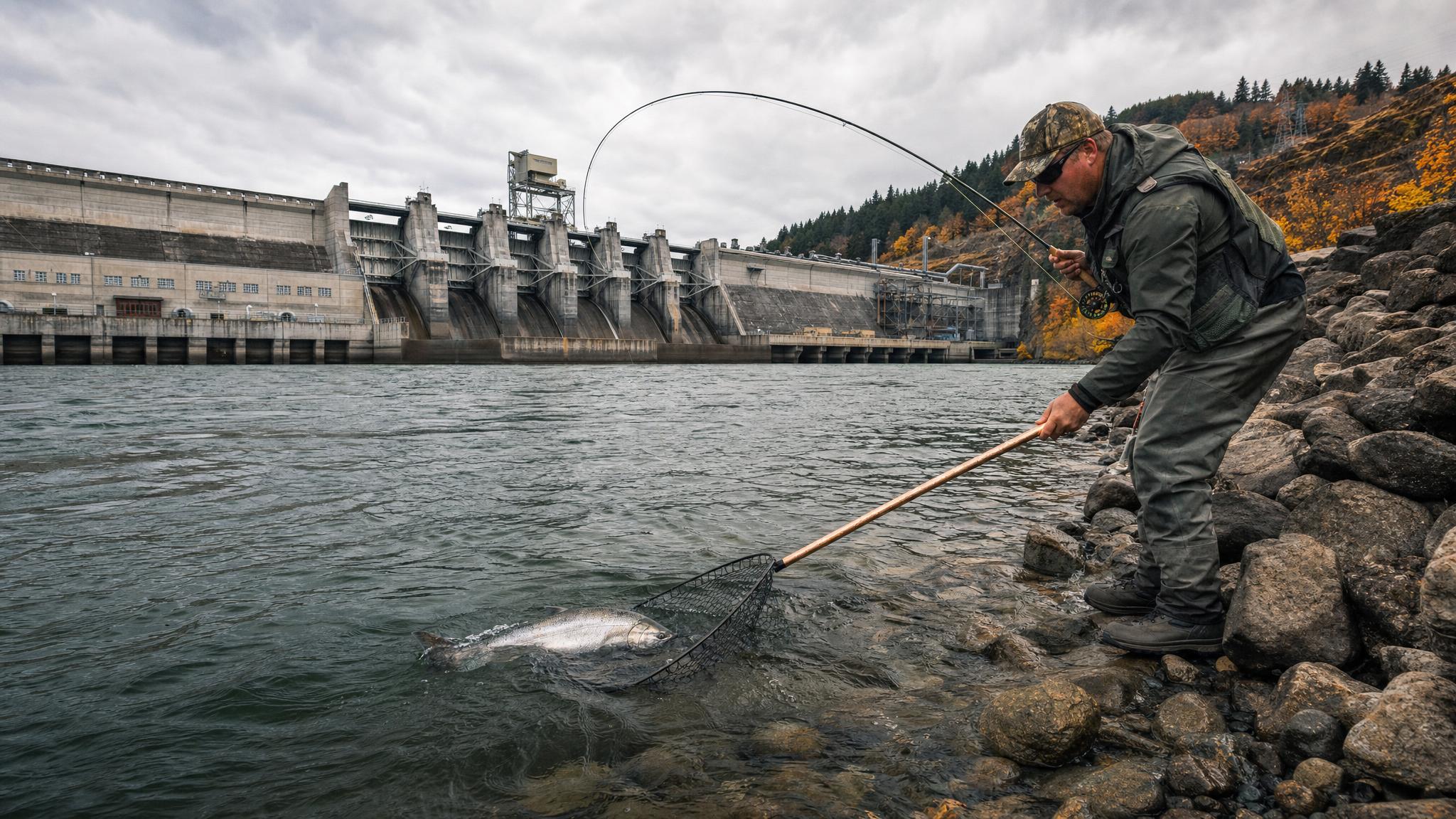
You don't need a drift boat, a charter captain, or a $400 fuel bill to catch fall Chinook salmon on the Columbia River. The Bonneville Dam tailrace, stretching from the base of the dam downstream through Bradford Island and into the Washington shore eddies, is one of the most productive — and most underutilized by bank anglers — salmon fisheries in the entire Pacific Northwest.
Every fall, tens of thousands of Chinook stack in the turbulent water below Bonneville, resting before making their upstream push. For bank anglers who know the water, September and early October offer legitimate shots at fish pushing 30 pounds or better, all from public-access shoreline on both the Oregon and Washington sides.
Understanding the Water
The tailrace isn't uniform — it's a complex mix of fast current seams, backeddies, and transition zones where the violence of the spillway gives way to slower holding water. Chinook don't fight current they don't have to. They find those seams and sit. Your job as a bank angler is to read where those lines form and put your presentation in the strike zone without hanging bottom constantly.
The Bradford Island shoreline on the Oregon side gives access to a long stretch of gravelly bank with several classic eddy seams. Start at the downstream end of the island where current lines converge — that's where fish transition from the fast water push into the calmer holding water. The Washington shore, accessible via the Bridge of the Gods at Cascade Locks, offers additional bank access and often sees less pressure.
Peak tide movement matters here even though Bonneville is far upstream from saltwater influence. Flows released through the dam's powerhouse and spillway fluctuate throughout the day, and fish movement responds accordingly. Check the Army Corps of Engineers flow data before you go. Rising water levels tend to activate fish; slack periods often go quiet.
Bank Fishing Tactics
Two primary methods work consistently for bank anglers in the tailrace: back-bouncing with eggs or fresh prawns, and side-drifting roe cures. Both require heavy terminal gear to get down in the current without dragging you to the bottom every cast.
Back-Bouncing
Back-bouncing means fishing from a stationary position and letting the current work your weight downstream in a controlled, lifted-and-dropped motion. It's normally a boat technique, but it translates to bank fishing in current seams where you can stand slightly upstream of holding water and drop straight down.
- Use a 3-way swivel rig with a 12–20 oz slinky weight on an 8–12 inch dropper
- Run 30 lb main line and 20 lb fluorocarbon leader, 18–24 inches
- Bait a 5/0–6/0 Gamakatsu Octopus hook with a fresh roe cluster or whole prawn tipped with Pautzke Fire Cure
- Let the weight tap bottom, lift 6 inches, pause, repeat — feel for the take
Side-Drifting from the Bank
At the downstream end of faster seams, you can side-drift by casting across-and-upstream, then mending to create a downstream drift through the zone. This works exceptionally well in the transition water where current slows from 8 mph to 3 mph — exactly where fall Chinook prefer to sit.
Use a pencil lead on a breakaway dropper so you lose the weight, not the whole rig, when you snag. A 9.5 to 10.5-foot medium-heavy rod rated for 1–4 oz gives you enough length to mend and manage the drift from the bank.
Timing Your Trip
The fall Chinook run at Bonneville peaks in late September through mid-October, but fish start stacking in earnest by the first week of September. ODFW fish counts are published daily on the Columbia River DART database — watch for counts pushing above 10,000 fish per day at Bonneville, which signals the run is peaking and fishing will be at its best.
Weekday mornings are worth the drive. Weekend crowds at the Bradford Island bank can be shoulder-to-shoulder, and Chinook in high-pressure water become lock-jawed. Early September often sees fewer anglers with comparable fish counts to peak-run weekends later in the month.
Regulations to Know
The Columbia River has a split-state license requirement — both Oregon and Washington licenses are valid depending on which bank you're fishing from. The Oregon side requires an Oregon sport fishing license with a Columbia River endorsement and a salmon/steelhead tag. Check ODFW's emergency regulation system before your trip, as daily bag limits and in-season closures can change on short notice based on real-time run numbers.
The Bonneville Dam tailrace is a special place. The sound of the spillway, the smell of the river, 40-pound kings running past your feet — you don't need a boat to experience it. You need good bait, heavy gear, and the willingness to read water most anglers walk right past.