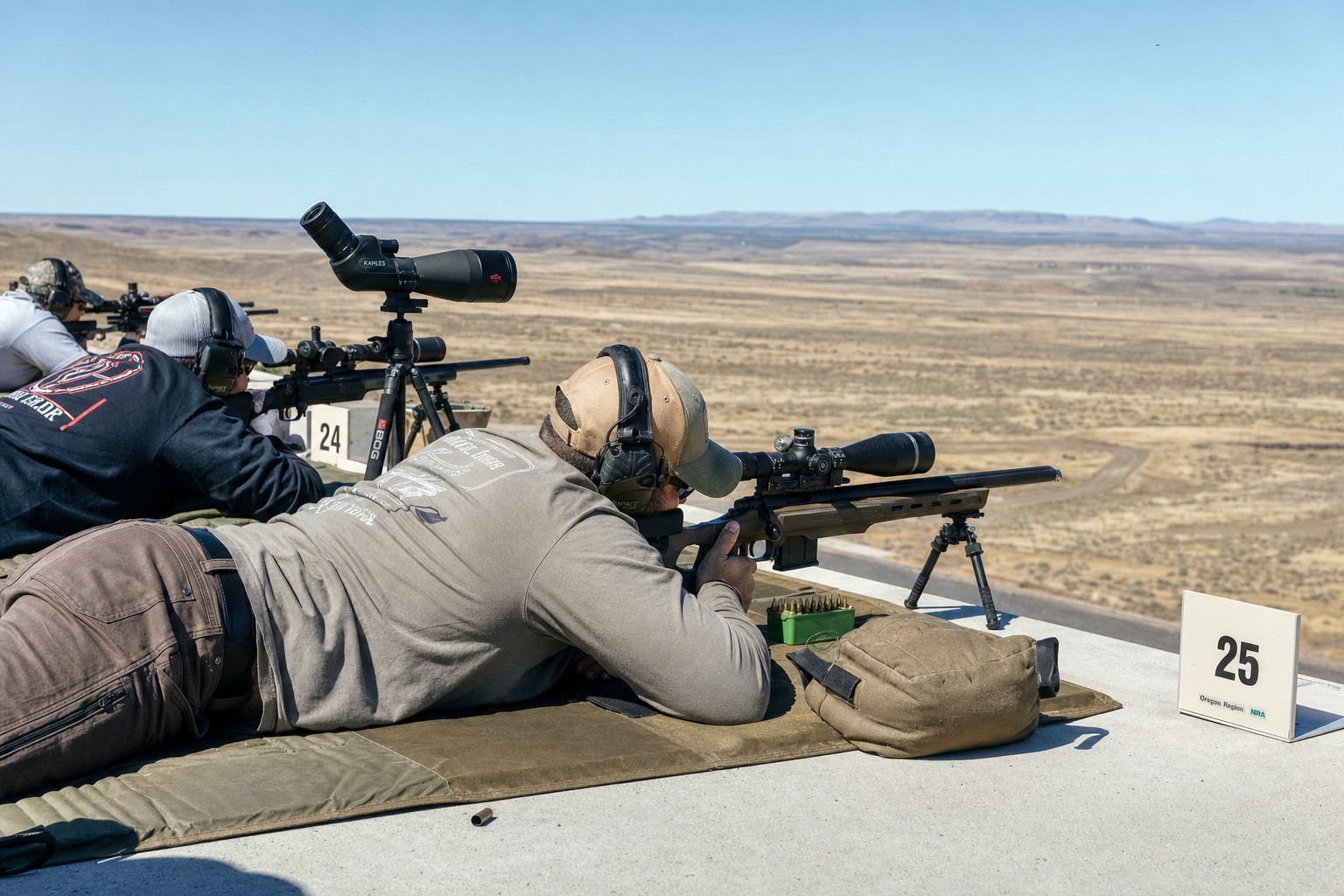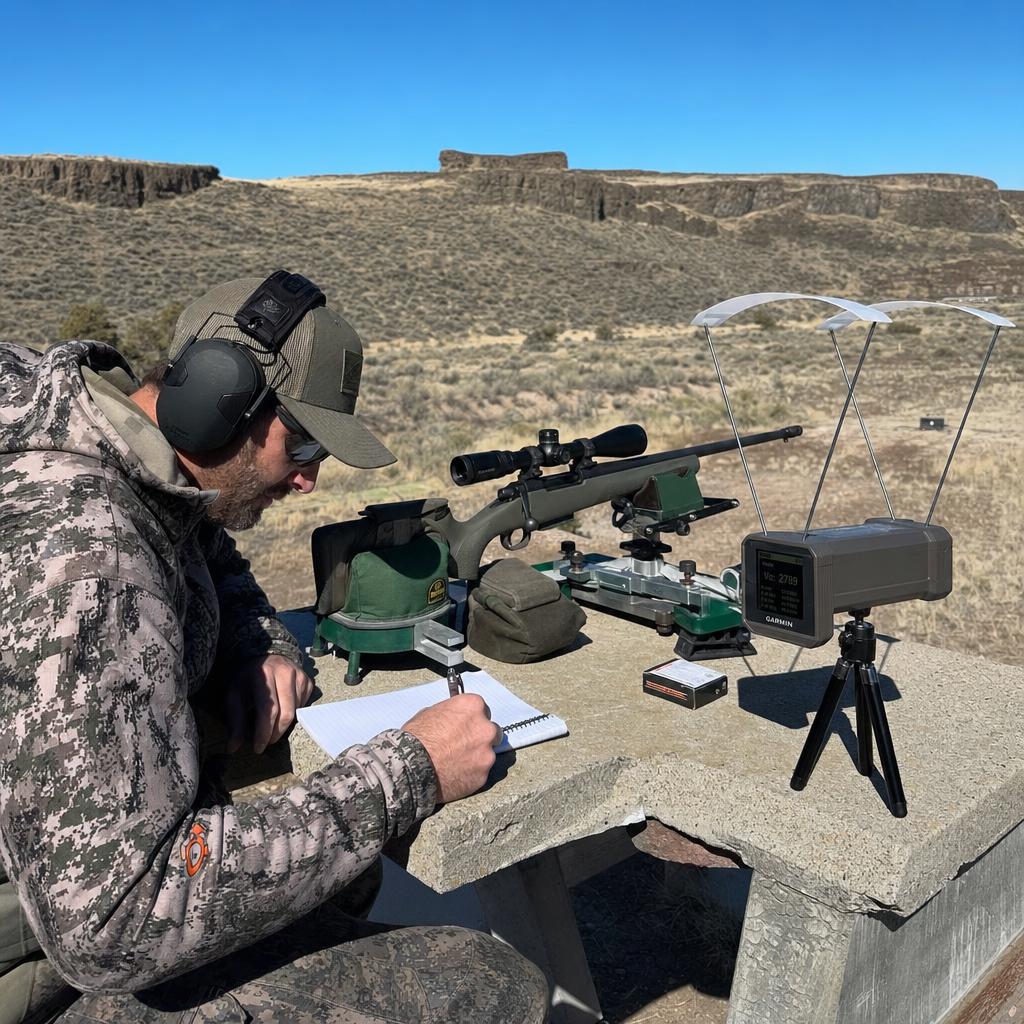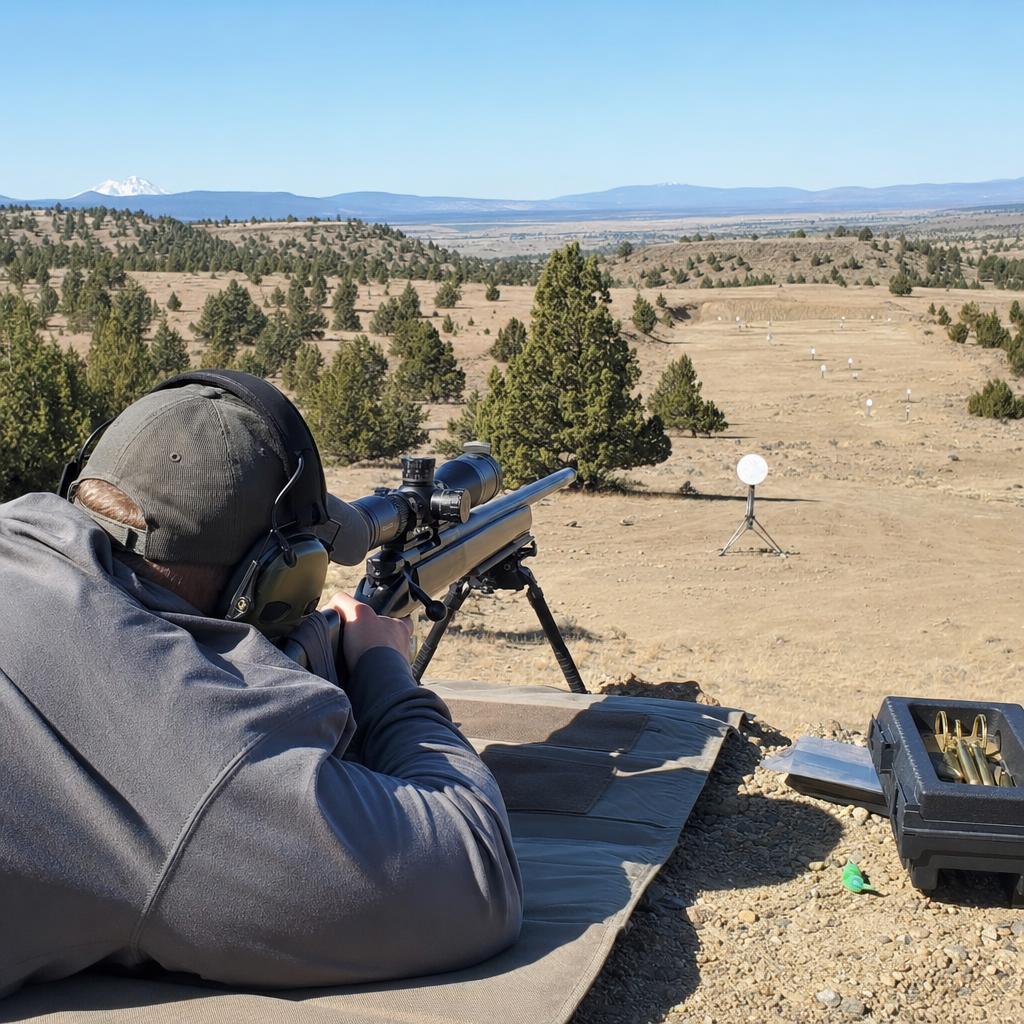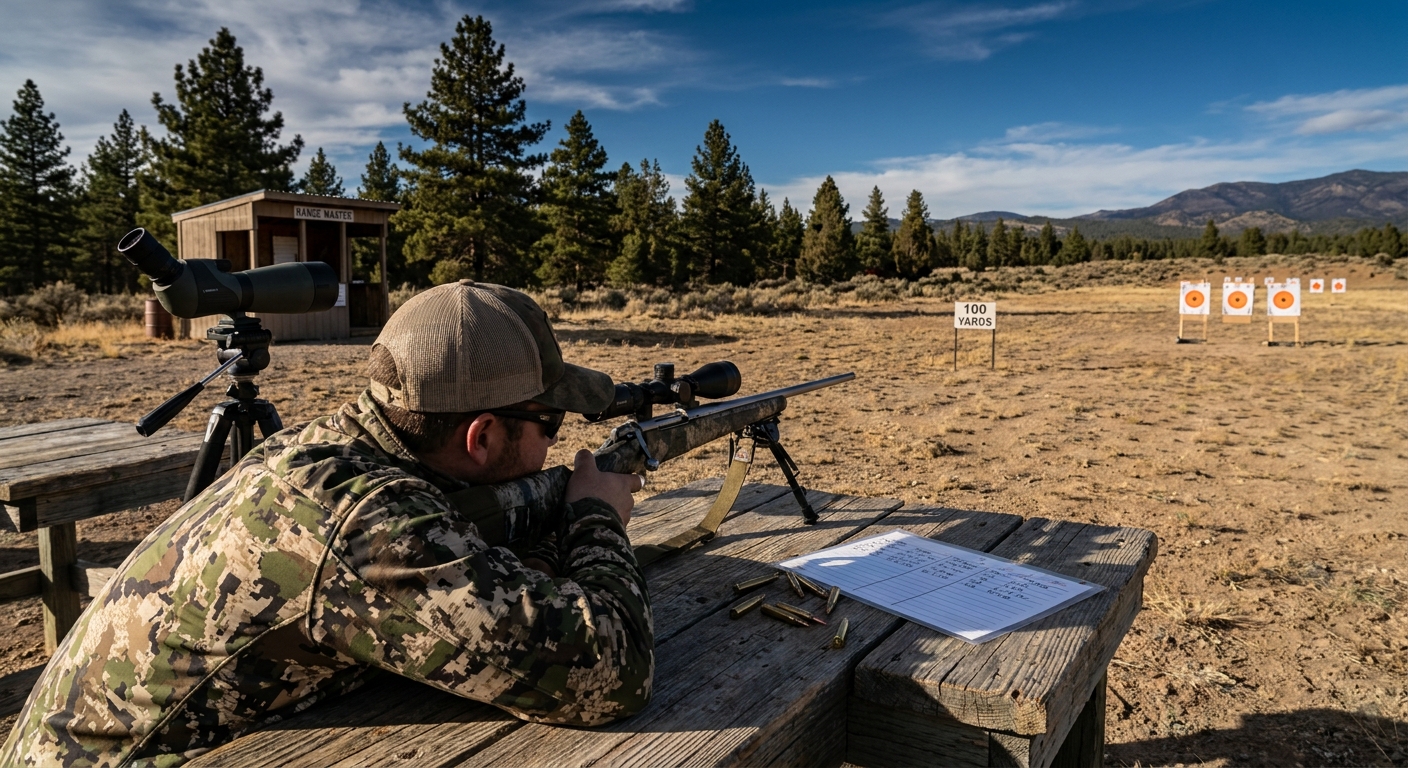
Most hunters zero their rifle at 100 yards because that is what the range offers and what everyone else seems to do. For eastern woodland whitetail hunting inside 150 yards, a 100-yard zero is practical. For western big game in Oregon and across the Intermountain West, where shots regularly stretch to 250, 300, or beyond, defaulting to a 100-yard zero leaves performance on the table and can introduce unnecessary holdover error in the field. This guide covers how to set a zero that actually serves you in western terrain.
What Is MPBR and Why Does It Matter?
Maximum Point Blank Range (MPBR) is the furthest distance at which you can hold dead-center on a target of a given size and still hit it, accounting for the full arc of the bullet trajectory. For a 10-inch vital zone (roughly the chest cavity of a mule deer or elk), MPBR represents the distance at which your bullet rises no more than 5 inches above your line of sight and drops no more than 5 inches below it.
The practical implication is this: within your MPBR, you can hold the crosshairs on the center of the chest and fire without calculating holdover. Past MPBR, you need to compensate. Maximizing MPBR through proper zero selection means you get the longest possible dead-hold range for ethical field shots.
MPBR Examples by Common Cartridge
- 6.5 Creedmoor, 143gr ELD-X at 2,700 fps: Zero at 230 yards, MPBR approximately 270 yards. At 100 yards, bullet is +2.2 inches high.
- 7mm Rem Mag, 160gr AccuBond at 3,000 fps: Zero at 255 yards, MPBR approximately 300 yards. At 100 yards, bullet is +2.5 inches high.
- .30-06 Springfield, 180gr AccuBond at 2,700 fps: Zero at 225 yards, MPBR approximately 265 yards. At 100 yards, bullet is +2.1 inches high.
- .308 Winchester, 168gr ELD-M at 2,650 fps: Zero at 215 yards, MPBR approximately 255 yards. At 100 yards, bullet is +2.0 inches high.
- .300 Win Mag, 180gr AccuBond at 2,960 fps: Zero at 245 yards, MPBR approximately 290 yards. At 100 yards, bullet is +2.3 inches high.
Notice a pattern: for most hunting cartridges, the MPBR zero falls between 200 and 260 yards, and the 100-yard impact is about 2 to 2.5 inches high. This is not random — it is the geometry of maximizing a flat arc through a defined window.
The 200-Yard Zero: A Practical Western Hunting Default
If you do not want to calculate your exact MPBR for each load, the 200-yard zero is an excellent default for most western hunting cartridges. Here is what it looks like in practice for a typical flat-shooting hunting round:
- At 50 yards: approximately +1.5 inches
- At 100 yards: approximately +2.0 to +2.5 inches high
- At 200 yards: dead-on
- At 250 yards: approximately -2.5 to -3.5 inches
- At 300 yards: approximately -7 to -10 inches (varies significantly by cartridge)
For a 10-inch vital zone, a 200-yard zero keeps you in the kill zone dead-hold to about 250 to 275 yards on most hunting cartridges. Past that, you need to compensate. But knowing that your zero gives you a free dead-hold to 250-plus yards eliminates one variable in the most common hunting shot distance range on Oregon public land.
Setting the Zero: Practical Steps at the Range
Step 1: Bore-Sight or Use a Laser Collimator First
Before burning expensive hunting ammo, get on paper at 25 yards using a bore-sighter or by removing the bolt and visually aligning the bore with a target. A proper bore-sight saves you from missing paper entirely at 100 yards with your first shot.
Step 2: Fire a Three-Shot Group at 100 Yards
With your chosen hunting load, fire a tight three-shot group from a stable rest. Identify the group center and measure its offset from point of aim. Adjust your scope accordingly. Most hunting scopes use 1/4 MOA per click (approximately 0.25 inches at 100 yards). Do the math: if your group center is 3 inches low and 1.5 inches left, you need 12 clicks up and 6 clicks right.
Step 3: Verify and Finalize at Your Intended Zero Distance
After adjusting at 100 yards, move to your intended zero distance — 200 or 225 yards — and fire a confirmation group. Make small adjustments as needed. A three-shot group with all shots within 1.5 inches of each other at 200 yards confirms your rifle and load are performing, and your zero is set.
Step 4: Record Your Dope Card
Once zeroed, shoot at 100, 200, 250, 300, and if possible 400 yards and record your actual impact data — not what a ballistic calculator predicts, but what your specific rifle, load, and optic actually deliver. Write it on a weather-resistant card and tape it to your stock or keep it in your pack. In the field, under pressure, you will be glad you have real numbers instead of estimates.
Cold-Bore Shots and Field Reality
One often-ignored element of zeroing: most hunting shots come from a cold barrel. If your rifle shoots the first cold-bore shot to a notably different point of impact than a warmed barrel, note this and account for it. Many rifles run 0.5 to 1 inch lower on the first cold shot. If that is consistent and repeatable, factor it into your field zero.
Also verify your zero in field conditions if possible. Shooting off shooting sticks or from a sitting or prone position with field gear on your back reveals a different zero picture than bench shooting with a front rest. Scope parallax settings matter more at close range than hunters realize — verify your parallax is set correctly for your intended zero distance before finalizing.
Dialing vs. Holding: Choosing Your System
A practical field zero works hand-in-hand with how you intend to manage distance. Two main approaches:
- Dead-hold: Zero for MPBR or 200 to 225 yards and hold dead-on to your maximum dead-hold range. Past that range, use a mil or MOA reticle holdover point. Faster and requires no scope adjustment in the field, but accuracy degrades beyond your maximum holdover confidence distance.
- Dial dope: Zero at 100 yards, build a confirmed dope card out to your maximum shooting distance, and dial the elevation turret to the distance before the shot. More precise at long range, requires more setup time, and requires quality turrets that return to zero reliably. Best for hunters who regularly make shots past 400 yards and invest in the practice time to be proficient.
For most Oregon hunters shooting inside 350 yards on public land elk and deer, a dead-hold MPBR zero is the practical choice. The dialing system pays dividends for hunters specifically pursuing open-country mule deer or pronghorn where 400-plus yard shots are part of the game plan and significant practice time has been invested.
The Most Important Variable
No zero, system, or optic replaces the fundamentals of knowing your exact range before the shot. A rangefinder is not optional equipment for western big game hunting. Zero for your terrain and shooting distances, confirm your dope at real range, carry a rangefinder, and practice enough that squeezing the trigger at 300 yards on a breathing animal is not the first time you have done it under pressure. That is the full picture.