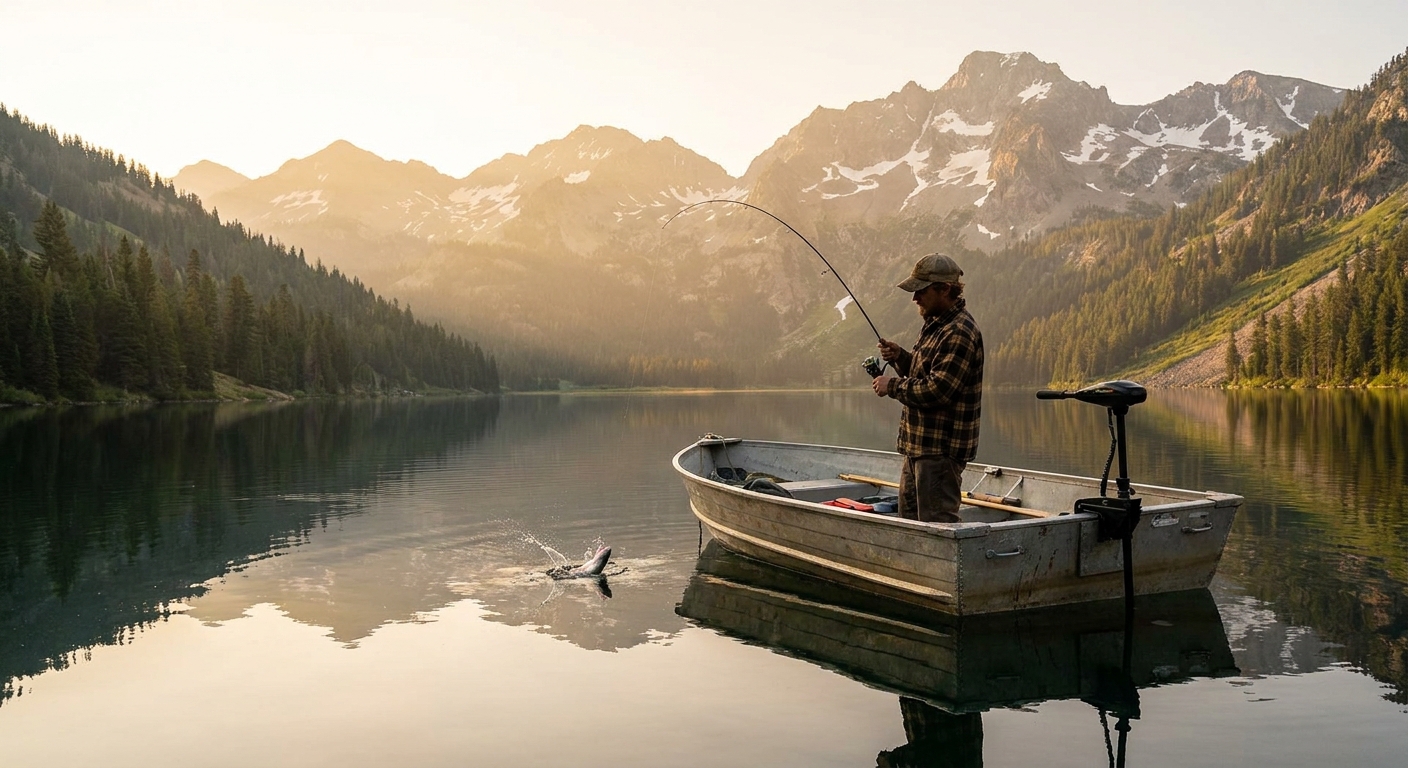
Tucked into the northeastern corner of Oregon at the foot of the Eagle Cap Wilderness, Wallowa Lake is the kind of place that makes you forget you drove five hours to get here. At 4,400 feet elevation, fed by snowmelt from the Wallowa Mountains, this 1,500-acre glacially carved lake holds some of the best rainbow trout fishing in the state — and it's criminally underrated outside of the locals who guard it jealously.
June through September is prime time. The ice is long gone, surface temperatures are climbing into the high 50s to low 60s, and the rainbows are active from early morning right through the evening rise. If you're willing to put in a little homework and troll a few hundred yards of lake, you'll find fish.
The Gear Setup That Works
Wallowa Lake is a deep, clear lake — think Crater Lake clarity, not the murky productive warmwater lakes you might be used to. That clarity means a few things for your approach:
- Light line is non-negotiable. Drop down to 6 lb fluorocarbon as your leader. The fish here see pressure from Memorial Day through Labor Day and will shy away from heavy gear. Eight-pound monofilament main line on a medium spinning rod works well, with a 4–6 foot fluoro leader.
- Lead core or a downrigger helps in summer. By mid-July, the rainbows have gone deep — typically 30 to 50 feet. A downrigger lets you dial in depth precisely. If you don't have one, a 1 oz inline weight 6 feet above your lure will get you in the zone at slow troll speeds.
- Speed matters. Target 1.5–2.0 mph. Any faster and the lure action goes chaotic; any slower and most spoons just flutter and sink.
Best Lures for Wallowa Lake Rainbows
The local preference runs heavily toward Needlefish spoons in the 1/12 oz size, particularly the frog and firetiger patterns. Followed closely by Kastmaster spoons in 1/4 oz gold or silver depending on light conditions. When the lake is glassy and bright, go silver. On overcast days or low-light mornings, gold and chartreuse produce well.
Flatfish lures in size F4 or F5 have a loyal following among longtime Wallowa regulars, particularly in the spring when fish are shallower and actively feeding. Thread a small piece of nightcrawler on the treble and you've got a combination that's hard to beat in May and early June.
Don't overlook fly fishing behind a string of trolling blades. A Woolly Bugger or Carey Special tied 18 inches behind a small Ford Fender produces on days when hardware doesn't. This rig works especially well along the western shoreline in 15–25 feet of water during the evening bite.
Where to Fish
The south end of Wallowa Lake, near the state park and marina, holds fish year-round and gets the most pressure. Fish here early — before 8 AM — or late in the evening when boat traffic drops off.
The north end, where the Wallowa River enters, warms up faster and attracts fish in spring. Troll parallel to the inlet current and you'll find active fish staging on the temperature break.
The western and eastern shorelines offer some of the best mid-summer trolling, particularly when you're running a downrigger at 35–50 feet along the drop-offs. The deepest parts of the lake hit 300+ feet — don't be afraid to go deep in July and August.
Regulations and Access
Wallowa Lake sits within Wallowa County and falls under Oregon Department of Fish and Wildlife (ODFW) regulations for the northeast zone. The lake is stocked annually with hatchery rainbows, but wild fish are present as well. Check ODFW's current regulations before you go — possession limits and gear restrictions can change year to year.
The Wallowa Lake Marina (open seasonally) rents boats if you didn't trailer yours out. They also carry basic tackle and can tell you what's been working in the last week — don't skip that conversation. Local intel is worth more than any fishing report you'll find online.
Camping at Wallowa Lake State Park puts you right on the water. Reserve early — this place books out in June and stays that way through August. If the park is full, dispersed camping in the Wallowa-Whitman National Forest is your backup, and honestly not a bad one.
A Few Final Notes
Get on the water by 6:30 AM. The flat calm before the afternoon winds kicks up is the most productive trolling window of the day, and the light on the Wallowas at that hour is worth the early alarm alone. Bring your camera — you're not just going to catch fish out here, you're going to have one of those trips you'll talk about for a while.