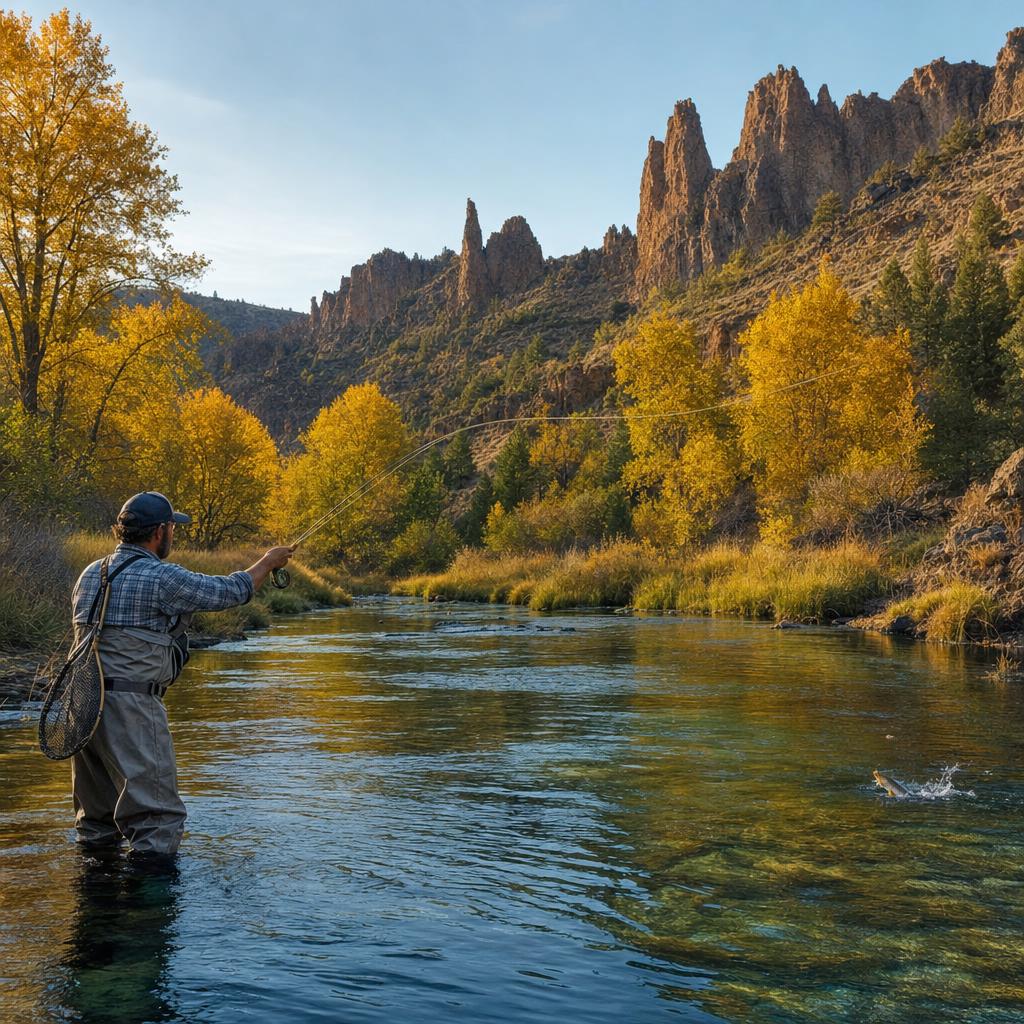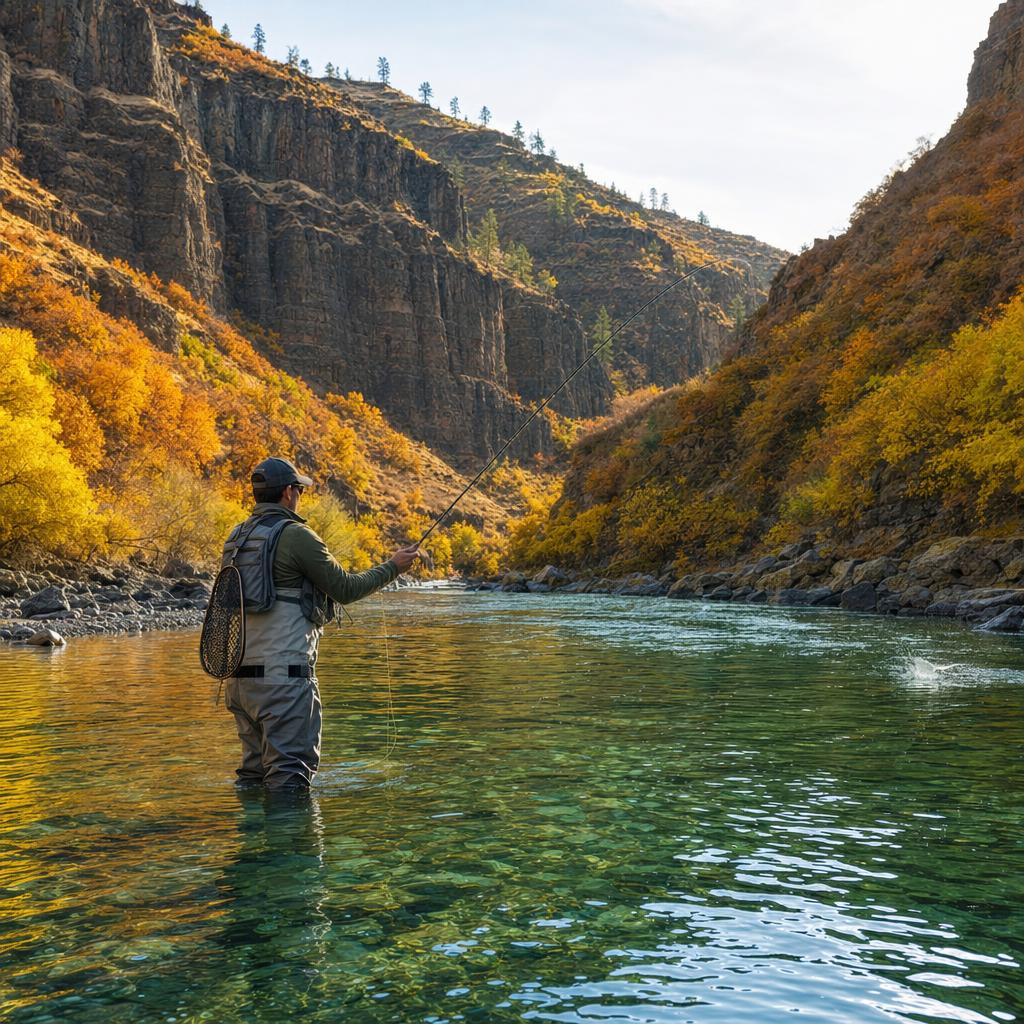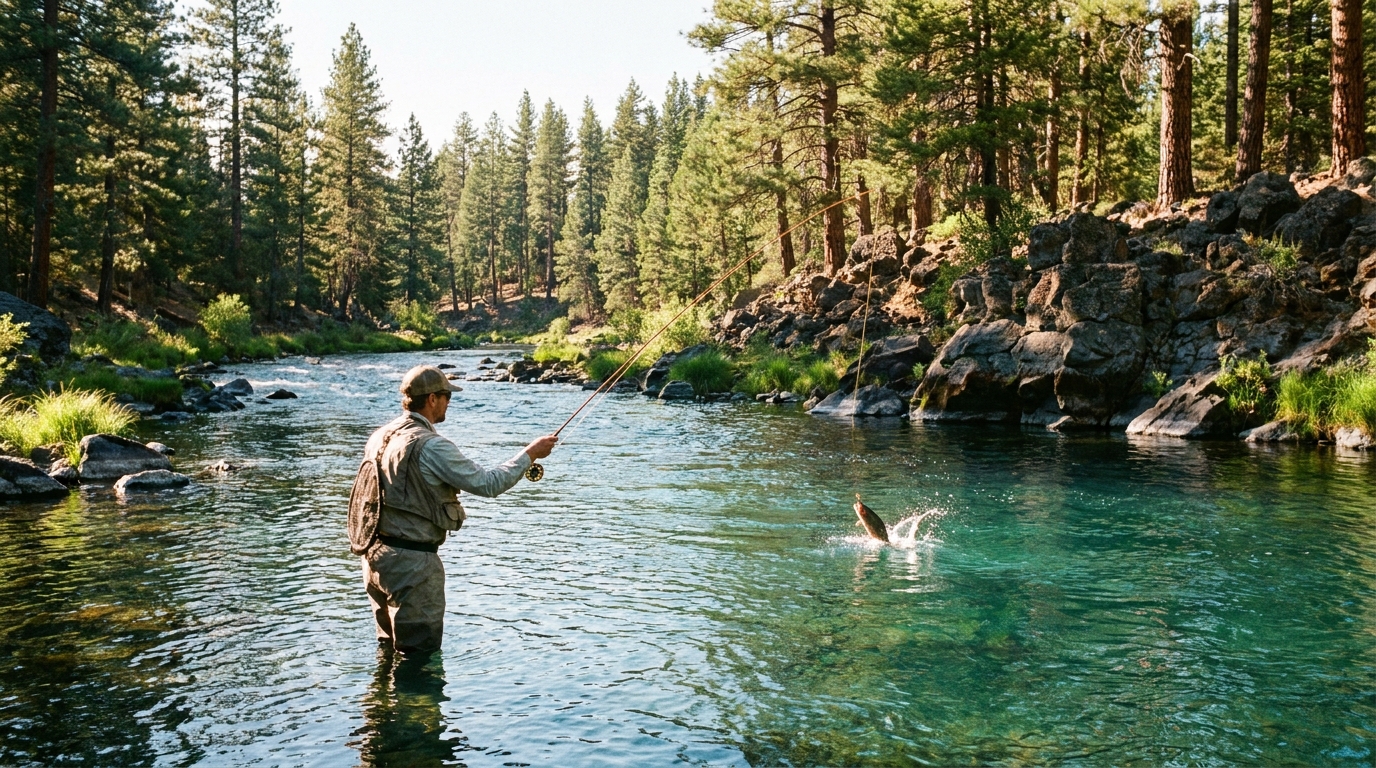
Oregon has no shortage of legendary trout rivers, but the upper Deschutes — the stretch from Crane Prairie Reservoir north through Sunriver and into Bend — deserves far more attention than it gets. While downstream crowds cluster at the Maupin corridor chasing summer steelhead, savvy fly anglers are quietly hammering wild redband trout in gin-clear spring-fed water with nothing but a dry fly and a pair of waders.
What Makes Redband Trout Special
Redband trout (Oncorhynchus mykiss gairdneri) are the native rainbow subspecies of the interior Pacific Northwest. In the upper Deschutes system, these fish have adapted to the high-desert environment — cold spring water, volcanic basalt substrate, and sparse insect hatches that demand selective feeding. They’re not the biggest fish in Oregon, but they are pound-for-pound some of the most technical and rewarding trout you’ll find on a fly rod.
Upper Deschutes redbands average 10–16 inches, with occasional fish pushing 20 inches in the deeper pools and undercut banks. What they lack in size they make up for in wariness. This is not a river where you can slap a Stimulator on the water and expect results. Presentation matters enormously.
Access Points and Best Reaches
The upper Deschutes is largely paralleled by paved roads and accessible at numerous pull-outs. A few key spots worth noting:
- Sunriver to Benham Falls: This stretch offers easy wading over basalt shelves, good bank cover, and consistent afternoon hatches through June and July. The Deschutes River Trail provides foot access to several miles of quality water.
- Lava Island Falls area: Short but productive pocket water above and below the falls. Park at the Lava Island Falls Trailhead (Deschutes National Forest) and work upstream. Less pressure than the Sunriver corridor.
- Big Eddy to Dillon Falls: Larger water with deeper pools — better for swinging soft hackles in the morning before switching to dries during afternoon hatches.
- Crane Prairie Outlet area: The river in this reach is slower and spring-fed. Fish rise freely but presentations must be drag-free and at distance. Longer leaders are a must.
Summer Hatch Calendar
June through August is the money window on the upper Deschutes. Expect the following:
- PMDs (Pale Morning Duns): June through mid-August. Size 16–18. Best hatches mid-morning from 9 AM to noon. Fish the emergers and cripples as much as the duns.
- Caddis: Brachycentrus and Hydropsyche both come off in force June through July, with evening caddis runs that can create chaotic surface feeding. Elk Hair Caddis size 14–16 is the standard. Don’t overlook a soft hackle swing just under the surface during the spinner fall.
- Yellow Sallies (Chloroperlidae): Small yellow stoneflies hatch throughout summer. Size 14–16 yellow elk hair or Stimulator patterns. Fish them near riffled edges where water breaks into slower runs.
- Tricos: Late July through September in the slower flats above Sunriver. Tiny — size 20–24 — and technical. Bring a 6X leader and your patience.
Tactics That Actually Work
The upper Deschutes rewards methodical anglers. Long leaders (12–15 feet), light tippet (5X minimum, 6X in flat water), and upstream or across-and-upstream presentations are the fundamentals. A few other things that consistently make a difference:
- Get low and stay back. These fish spook easily in clear, shallow water. Approach from downstream, crouch when possible, and cast from further than you think is necessary.
- Match the stage, not just the species. During PMD hatches, fish are often keying on emergers trapped in the film rather than fully hatched duns. A CDC loop-wing emerger outperforms a standard Comparadun when fish are sipping quietly without fully rising.
- Fish the edges. The most productive lies on the upper Deschutes are where fast water meets slow — the seams along current edges, behind mid-stream rocks, and the inside bends of the river’s numerous sweeping curves.
- Early morning terrestrials. By mid-July, ant and beetle patterns produce well early before the hatch starts, especially in reach where streamside grasses and brush overhang the water.
Regulations and Access Notes
Most of the upper Deschutes above Wickiup Reservoir falls within the Deschutes National Forest. The river is open year-round from Crane Prairie downstream. Check current ODFW regulations for bag limits and artificial lure restrictions — sections of the upper river require catch-and-release only and single barbless hooks. A valid Oregon fishing license with Combined Angling Tag is required.
Water levels are stable on most of the spring-fed upper river even during drought years, which makes it a reliable summer fishery when coastal rivers are running warm and low.
Gear Recommendations
A 9-foot, 4-weight rod covers the upper Deschutes beautifully. Floating line with a long leader is all you need for 95% of the fishing. Bring polarized sunglasses — spotting fish before you fish to them is half the game. Felt-soled wading boots are helpful on the slick basalt, but rubber lugs with metal studs work well too.
If you’ve been overlooking the upper Deschutes in favor of more famous Oregon trout waters, now is the time to give it a serious look. June and July are peak season, the crowds are manageable, and the fish — though not huge — are some of the most satisfying dry-fly targets in the Pacific Northwest.