Tillamook Bay sits at the mouth of five rivers — the Trask, Wilson, Tillamook, Kilchis, and Miami — and that multi-tributary system is exactly what makes it one of the most consistently productive salmon estuaries on the entire Oregon coast. When the fall run is peaking, you can anchor up in 12 feet of water off the main channel and watch anglers boat limits before the tide even turns. If you've never fished it, this is the season to start.
Run Timing: Know When to Go
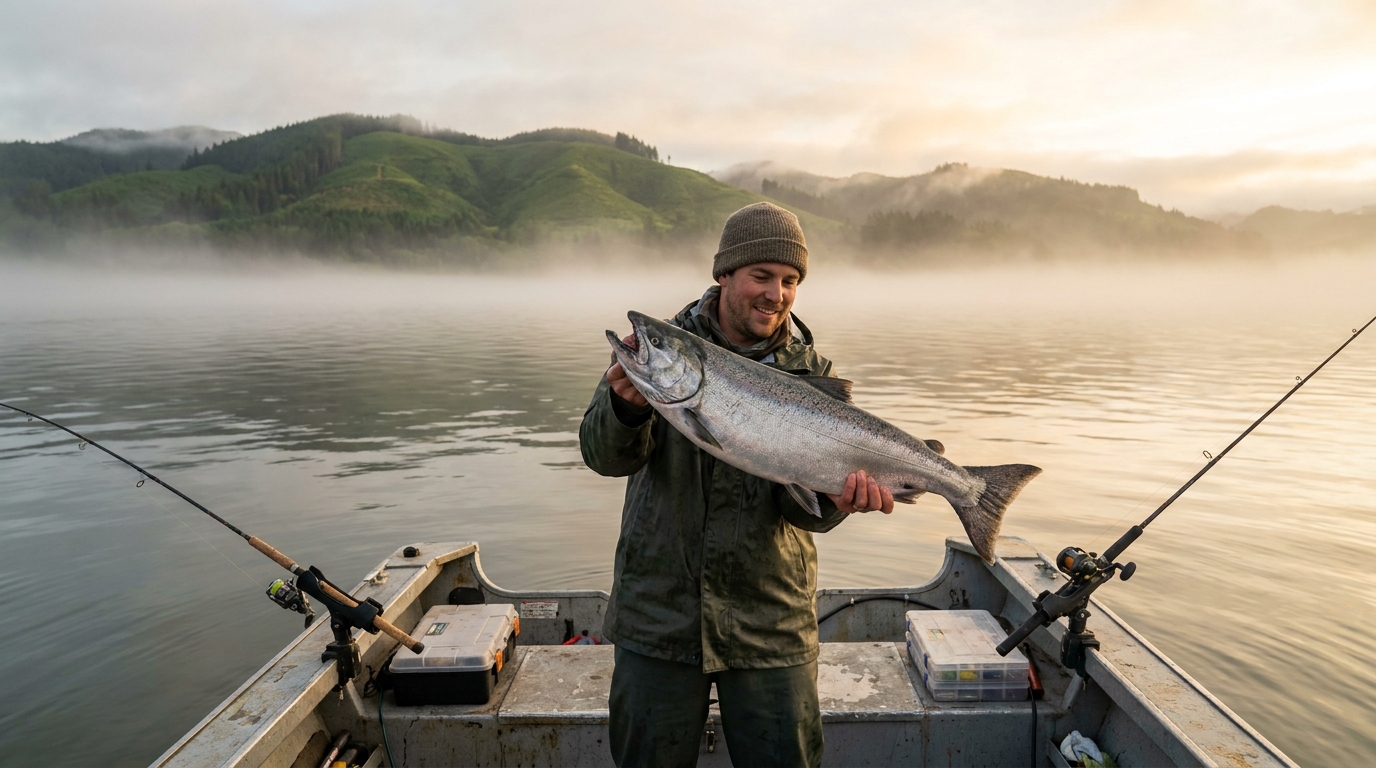
Fall Chinook typically begin showing in Tillamook Bay in late August, with peak fishing running from mid-September through mid-October. These are large fish — 20- to 40-pound kings are common — and they stage in the lower bay before moving upriver with big tides and fresh water pushes.
Coho (silver salmon) follow on the heels of the Chinook, usually arriving in force by late October and fishing well into November. Silvers in the 8- to 12-pound range are typical, and they're aggressive biters compared to the more finicky fall kings.
Pay close attention to ODFW's weekly run update reports. When counts at the Tillamook weir spike, the bay fishing heats up within a day or two. Don't wait for word-of-mouth — check the reports directly.
Boat Fishing: Anchoring and Back-Trolling
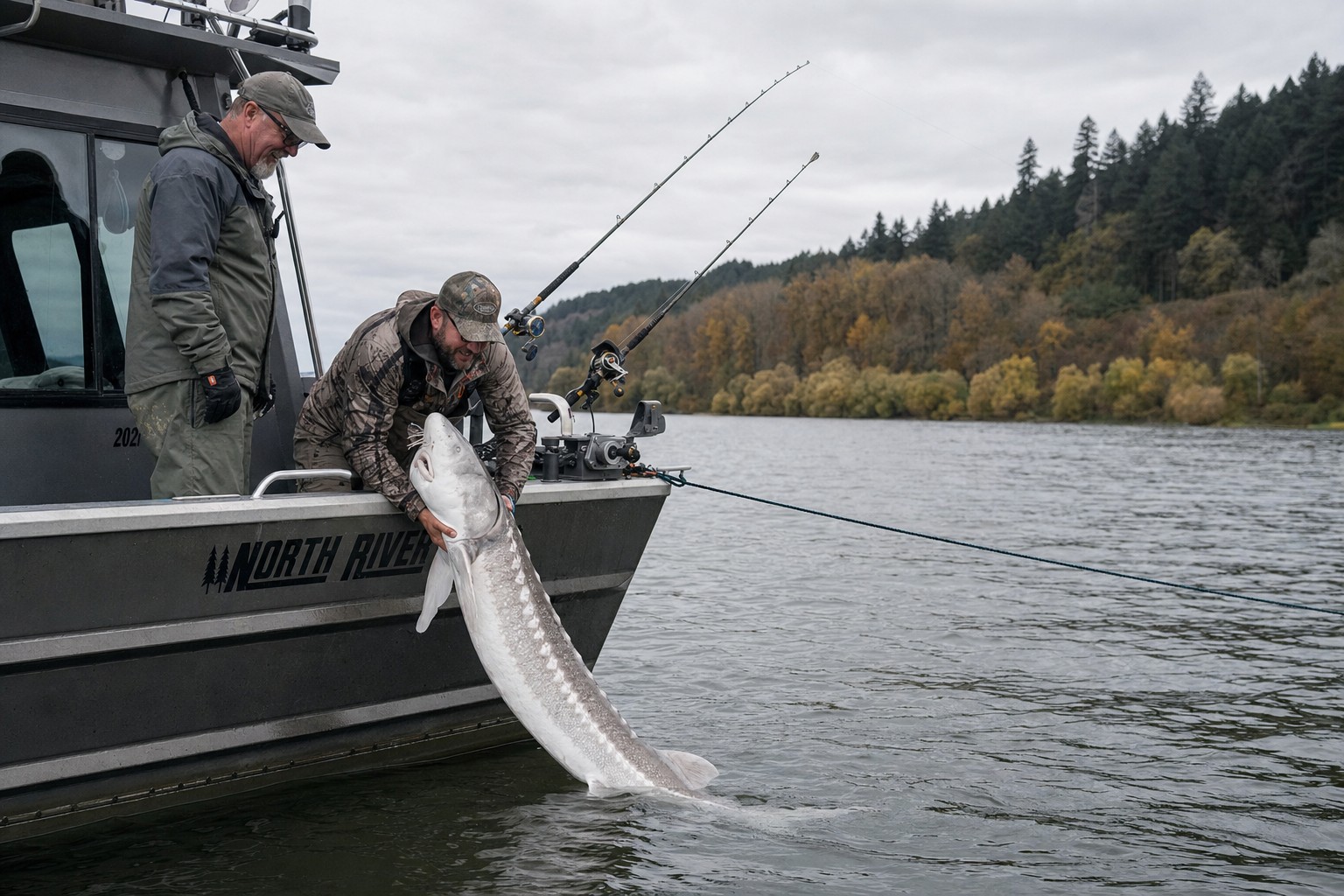
Most serious Tillamook Bay salmon anglers work from small boats — 14- to 17-foot aluminum river sleds or jet boats that can navigate the shallower upriver reaches. Two techniques dominate: anchor fishing near the main channel edges, and back-trolling herring or plug-cut bait up the tidal river sections.
Anchor Fishing in the Bay
The most productive anchoring spots in the lower bay are the deeper holes just off the main shipping channel, the edges of the Young's Bay arm, and the area near the Highway 101 bridge pilings. Drop anchor so your bait drifts back into the current seam where salmon hold while staging.
- Setup: 30- to 40-pound monofilament or braid main line, 3-way swivel, 18-inch dropper with a 4- to 6-ounce banana sinker, and a 30-inch fluorocarbon leader (20–25 lb) to a 3/0 or 4/0 octopus hook
- Bait: Whole herring, plug-cut herring, or cured salmon roe. Plug-cut herring is the workhorse bait — cut at a 45-degree angle, rig it to roll slowly in the current
- Scent: Brined herring loaded with Pro-Cure anise or shrimp oil regularly outperforms fresh bait. Tides move a lot of water through the bay; scent dispersion matters
Back-Trolling the River Mouths
As fish push into the Trask or Wilson River on incoming tides, back-trolling becomes deadly. Run your motor just fast enough to control the boat's position against the current — essentially letting the river do the work. Kwikfish or Flatfish plugs in fluorescent orange, chartreuse, or chrome are go-to choices. Wrap the belly hook with a sardine fillet using fine thread to add scent.
Bank Fishing: Getting It Done Without a Boat
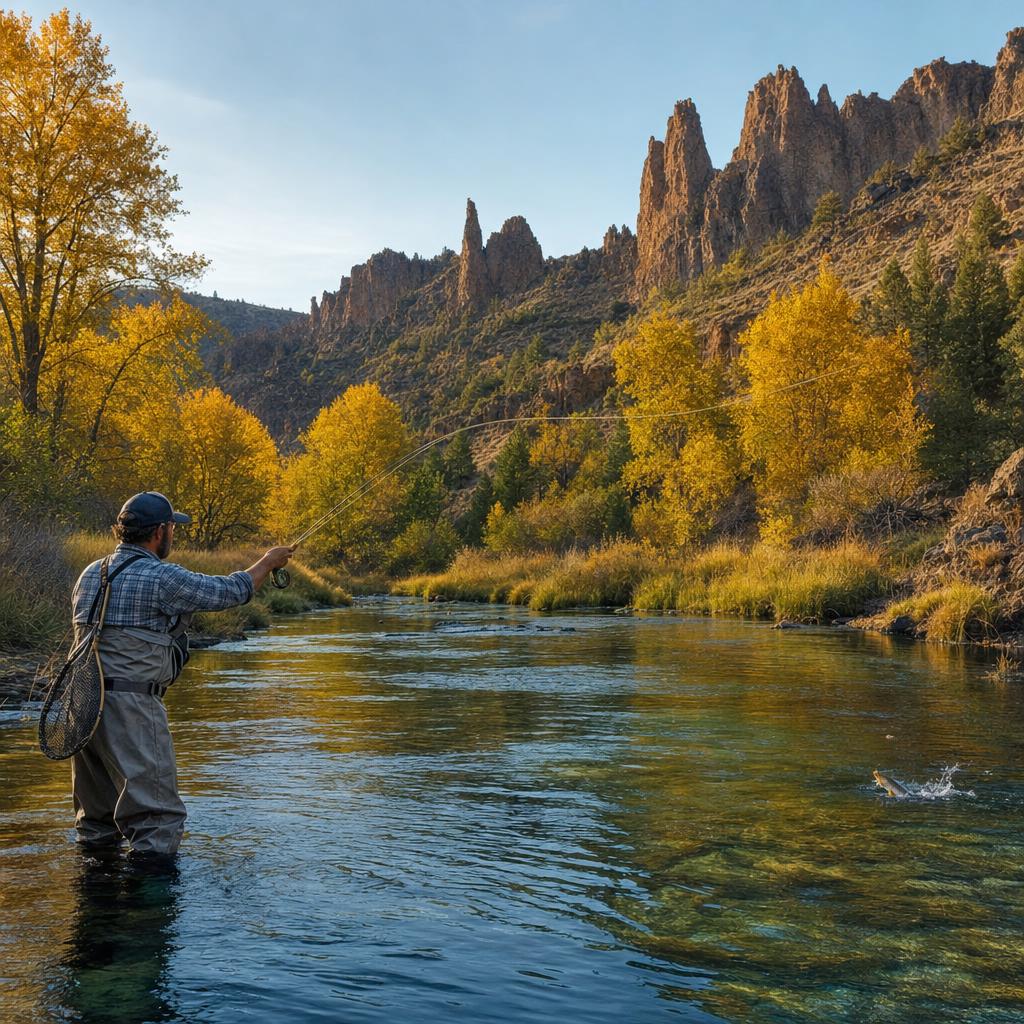
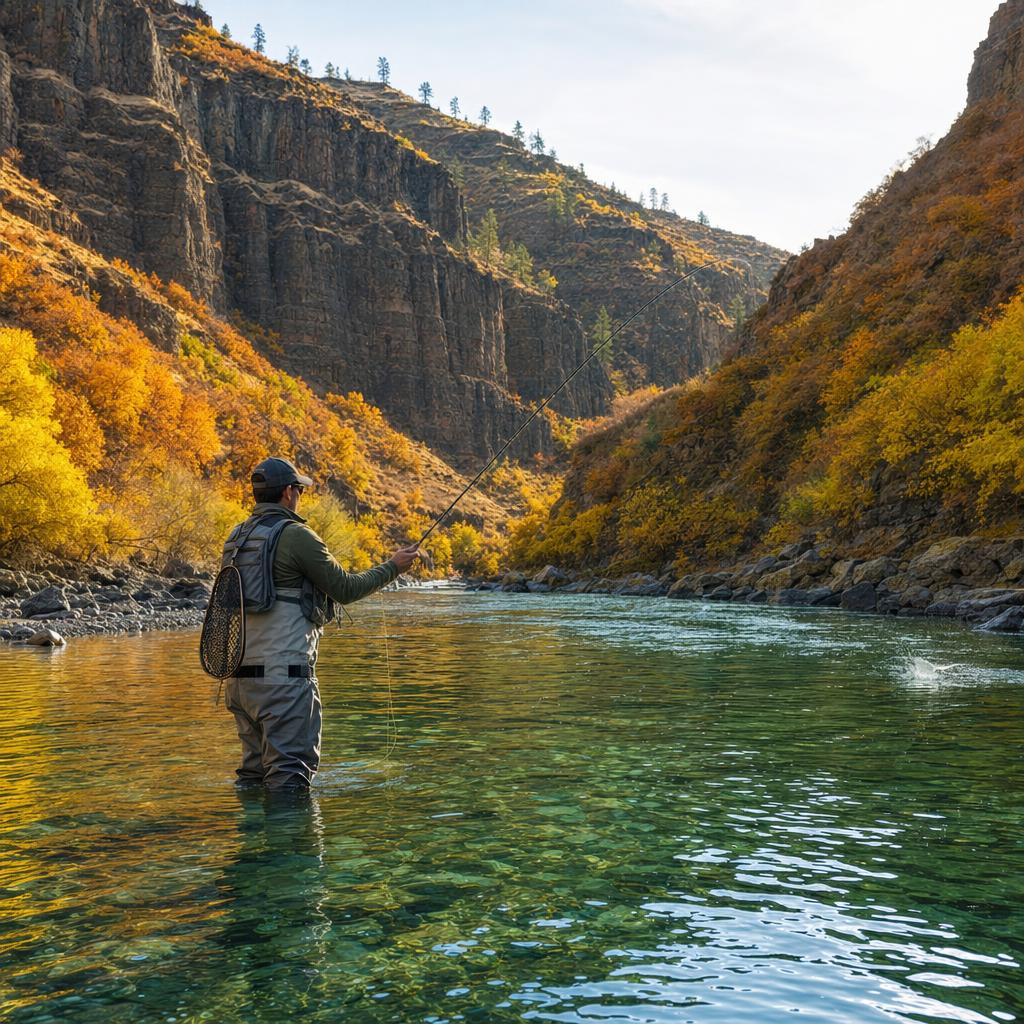
Don't let the boat crowds discourage you — Tillamook Bay has excellent bank access and wade fishing opportunities, especially on the Tillamook and Trask Rivers above tidal influence.
The upper Trask River between the hatchery and Tillamook has numerous gravel bars and pullouts along Trask River Road. During high water in October and November, coho stack in the deeper pools below fast water. Drift cured eggs under a bobber or work spinners (Blue Fox Vibrax #4 and #5 in pink or orange) through the tailouts.
For Chinook from the bank, try fishing a sand shrimp or egg-shrimp combination on a sliding sinker rig. Cast to the seam between fast water and slow, let it sink to the bottom, and hold tight. Bay City has public bank access with a dock near the marina — surprisingly productive on the incoming tide when kings are moving.
Regulations and Licensing
Tillamook Bay falls within ODFW's North Coast management zone. Current regulations allow harvest of both hatchery Chinook and hatchery coho — wild fish (those without a clipped adipose fin) must be released. Always carry your Oregon Sport Fishing License and a Combined Angling Tag. Check the current year's regulations for bag limits and any emergency closures before you go, as restrictions can change in-season based on run counts.
Gear to Pack
- 9- to 10-foot medium-heavy rod rated for 1–4 ounces
- Level-wind reel spooled with 30 lb monofilament or 50 lb braid with a mono topshot
- Assortment of plug-cut and whole herring (fresh or frozen)
- Cured roe and sand shrimp (for bank fishing)
- Banana sinkers: 3, 4, and 6 oz
- Quality net — these are big fish
- Cooler with ice — keep fish cold from the moment they're on deck
Final Thoughts
Tillamook Bay fishing isn't a secret — the parking lots at the boat launch fill before sunrise on peak weekends. But the fishery is big enough to absorb the pressure, and there are always fish for anglers willing to adapt their technique to the tide and conditions. Pre-season preparation — scouting the access points, checking run reports, and getting your gear dialed in now — will pay dividends when the first big push of Chinook shows up in late August. Block out your calendar now.