Suppressors have gone from rare curiosities to mainstream hunting tools in the Pacific Northwest over the past decade. Oregon is suppressor-friendly — they're legal to own, legal to hunt with, and increasingly common on deer and elk rifles across the state. If you've been curious about adding a can to your hunting setup but aren't sure where to start with the NFA process, this guide walks you through everything from first purchase to first hunt.
Is It Legal in Oregon?
Yes. Oregon state law explicitly permits suppressor ownership and use for hunting, subject to federal NFA compliance. There is no Oregon-specific suppressor license or registration beyond the federal process. As long as you've completed the NFA transfer and your Form 4 (or Form 1 if you're manufacturing) has been approved by the ATF, you can take that suppressor hunting anywhere it's otherwise legal to hunt in Oregon. This includes deer, elk, bear, cougar, upland birds, and waterfowl on both public and private land.
Note that regulations do change. Always verify current state rules with ODFW before a hunt. Some states in the region (notably California) prohibit suppressor hunting — know the rules if you're hunting near state lines.
The NFA Process: Step by Step
Buying a suppressor involves the National Firearms Act (NFA) transfer process. It's bureaucratic but not complicated. Here's the standard path for an individual or NFA trust purchase:
Step 1: Find a Suppressor and SOT Dealer
Suppressors must transfer through a licensed Class III/SOT (Special Occupational Taxpayer) dealer. Find a local Oregon dealer who carries or can order the suppressor you want. Oregon has a healthy suppressor market, particularly in the I-5 corridor and Bend/Central Oregon areas.
Step 2: Choose Your Ownership Structure
You can purchase as an individual, as a trust (NFA Gun Trust), or as a corporation. For most hunters, an individual purchase or NFA trust purchase are the practical options. A trust offers advantages: multiple trustees can possess the suppressor legally, and you can add family members, simplifying lawful transfers of possession on hunting trips. Trust setup costs $50–$200 via an attorney or online NFA trust service.
Step 3: Submit ATF Form 4
After paying for the suppressor and completing your 4473 at the dealer, your dealer submits ATF Form 4 on your behalf. This form includes your identifying information, a $200 tax payment (the NFA transfer tax — a fixed fee since 1934), and biometric data (fingerprint cards for individual transfers). An approved photograph is also required.
Step 4: Wait
This is the hard part. ATF Form 4 wait times have historically ranged from 6 to 14 months, though eFiled Form 4 submissions have been processing significantly faster in recent years — sometimes 30–90 days for eFiled individual transfers with electronic fingerprints (using a LiveScan or FBI-approved submission). Ask your dealer about eFiled options, as they can dramatically reduce wait time.
Step 5: Approval and Transfer
When your Form 4 is approved, the ATF mails the approved tax stamp to your dealer. You return to the dealer, complete the transfer, and take possession of your suppressor. Keep the approved Form 4 with the suppressor whenever it's being transported or used. You'll be asked for it.
Suppressor Selection for Oregon Hunting
Oregon's hunting environments demand different things from a suppressor. Here's how to think about selection:
Big Game (Deer and Elk)
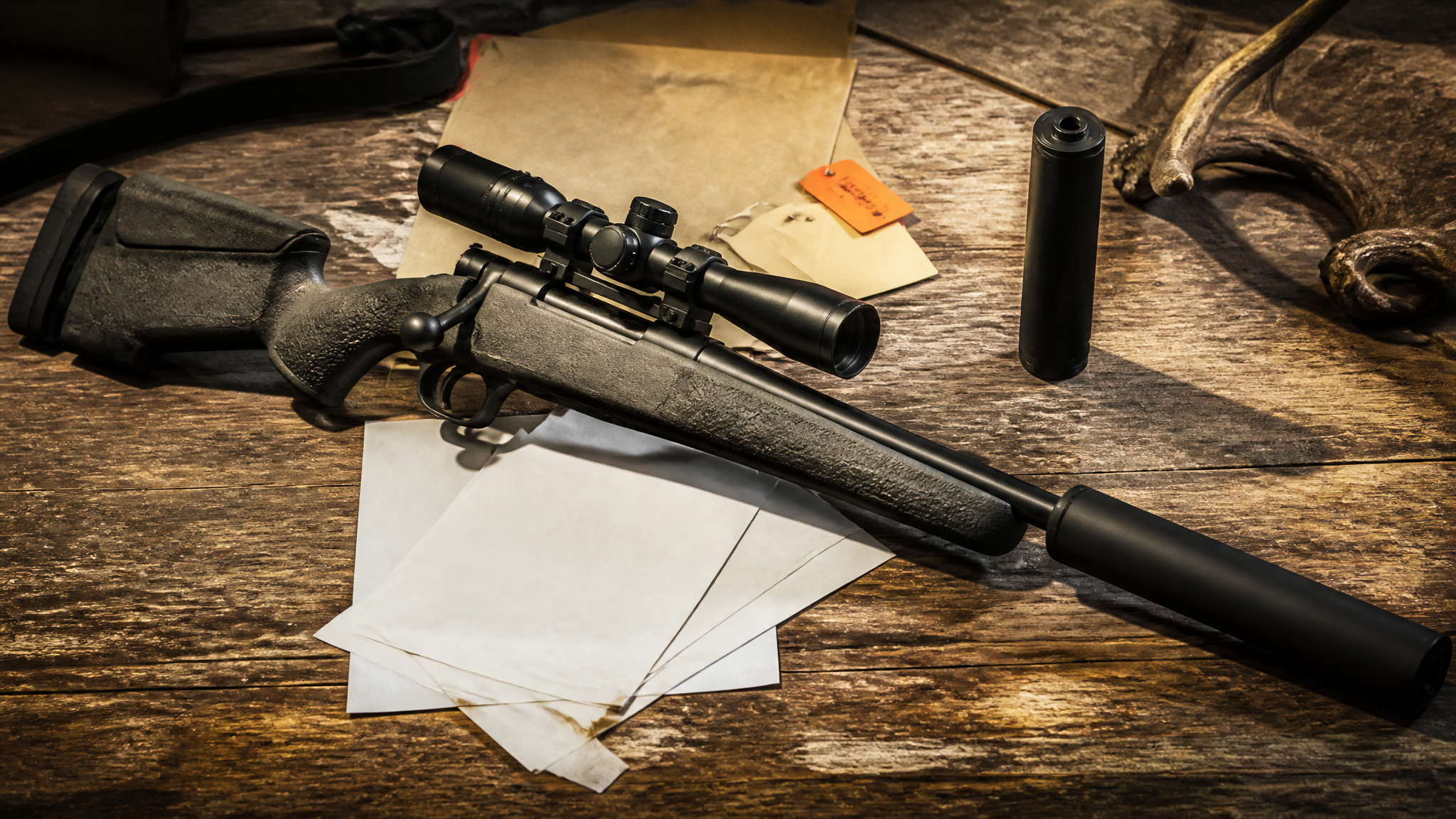
For centerfire rifle hunting, you want a durable, full-size rifle suppressor. Popular choices among Oregon hunters include the SilencerCo Omega 36M, Dead Air Nomad-30, and OSS HX-QD 556/762. These suppressors handle magnum-level pressures, mount on a range of thread patterns, and offer 25–32 dB of sound reduction — enough to protect your hearing without hearing protection on a single shot in the field.
Sound suppression for hunting is about hearing protection and reduced noise disturbance, not movie-quiet whispers. A suppressed .308 Winchester still produces around 130–135 dB — below the threshold for permanent hearing damage on a single shot, but not quiet in any cinematic sense.
Rimfire and Small Game
The rimfire suppressor market has exploded. If you squirrel hunt, shoot pests, or want a quiet practice tool, a dedicated .22 LR suppressor (SilencerCo Sparrow, Ruger Silent-SR, Gemtech GM-22) is genuinely whisper-quiet and ideal for off-season shooting. Rimfire suppressors are the best gateway into the NFA world — they're inexpensive ($300–$500), versatile, and the suppression is dramatic.
Hunting Benefits Beyond Hearing Protection
Beyond protecting your ears, hunting with a suppressor offers practical advantages Oregon hunters quickly appreciate:
- Reduced flinch: The combination of reduced muzzle blast and recoil makes follow-up shots faster and hunters more accurate — critical for archery tag holders who switch to rifle for late seasons.
- Animal behavior: Game animals react less dramatically to suppressed shots. A suppressed shot in a group of elk is less likely to immediately scatter the herd, giving you time for a follow-up on a wounded animal.
- Neighbor and landowner relations: Hunting near agricultural lands? Suppressed shooting is dramatically less disruptive to livestock and neighbors. Landowner access gets easier when your rifle isn't slamming across three valleys.
- Dog protection: If you hunt upland birds or waterfowl with dogs, suppressed shooting significantly reduces long-term hearing damage risk for your working animals.
Common Misconceptions
The biggest suppressor myth is that they make rifles movie-quiet. They don't. The second biggest is that owning one makes you a criminal suspect. The NFA process exists precisely because suppressors are tightly regulated — your approved Form 4 is your proof of lawful ownership. Carry it. Know it. And enjoy one of the most practical upgrades you'll ever make to a hunting rifle.
The process takes patience, but Oregon hunters who've made it through consistently report the same thing: once you hunt with a suppressor, going back feels like leaving a tool in the truck.