There's no mistaking the violence of a Columbia River Chinook hitting a trolled plug at seven in the morning. The rod bows hard into the holder, the reel screams, and suddenly every other distraction in your life disappears. Summer kings on the Columbia are what Pacific Northwest fishing is made of — trophy-class fish in open water, accessible to both boat anglers and shore-bound fishermen with the right game plan.
Understanding the Summer Chinook Run
Oregon's summer Chinook (also called "bright" or "summer kings") are distinct from the spring run. They enter the Columbia estuary beginning in May and continue pushing upriver through August, staging at holding water before migrating to spawning grounds in Idaho, eastern Oregon, and British Columbia. Peak bank fishing near Portland typically runs June through mid-July, while upriver at Bonneville Dam and The Dalles, the fish push through July into August.
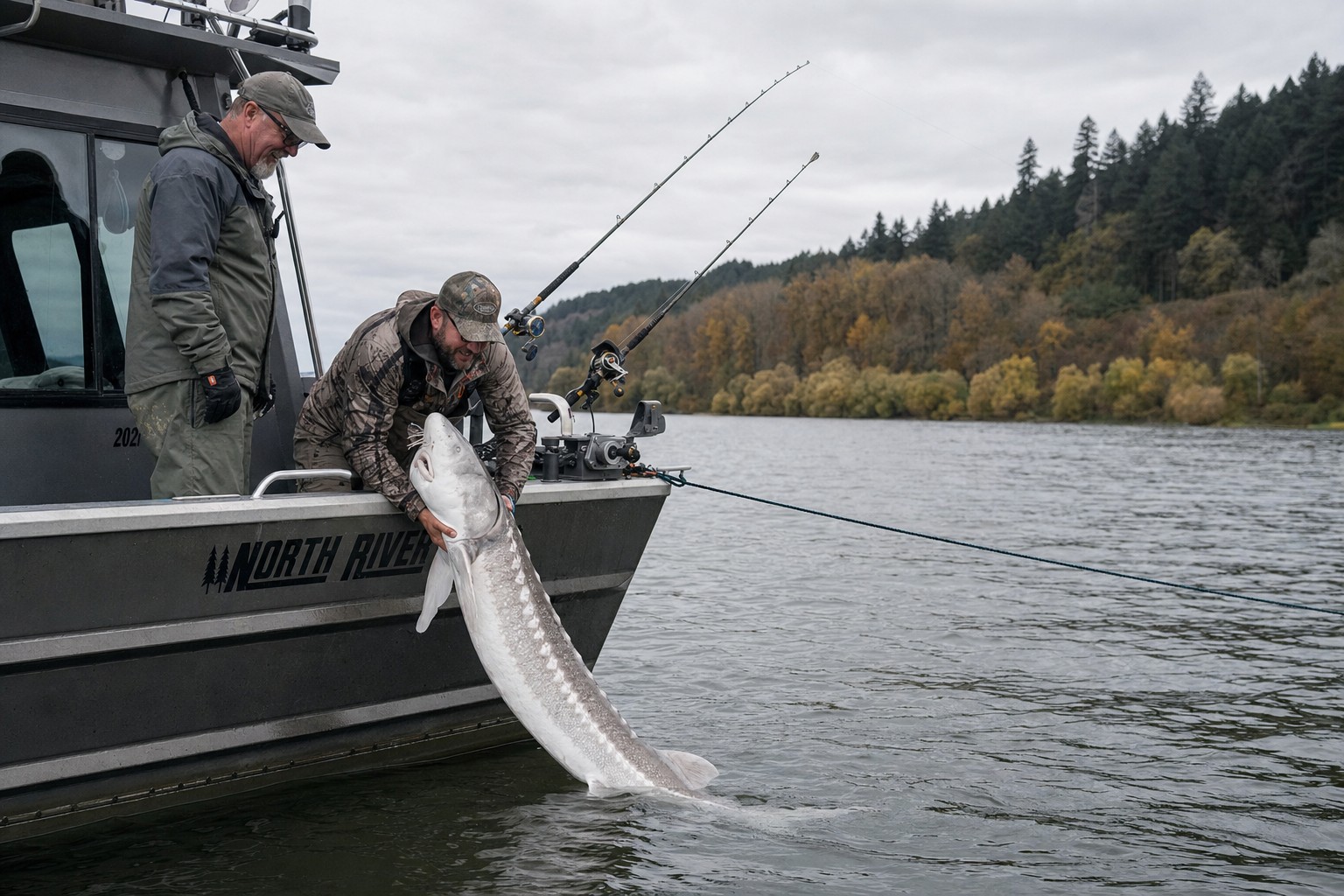
These fish average 15–25 pounds, with 40-pound-plus kings caught every season. ODFW regulates the fishery tightly — always check current regulations at myodfw.com before heading out, as retention rules change weekly based on run counts.
Trolling Tactics: The Boat Angler's Edge
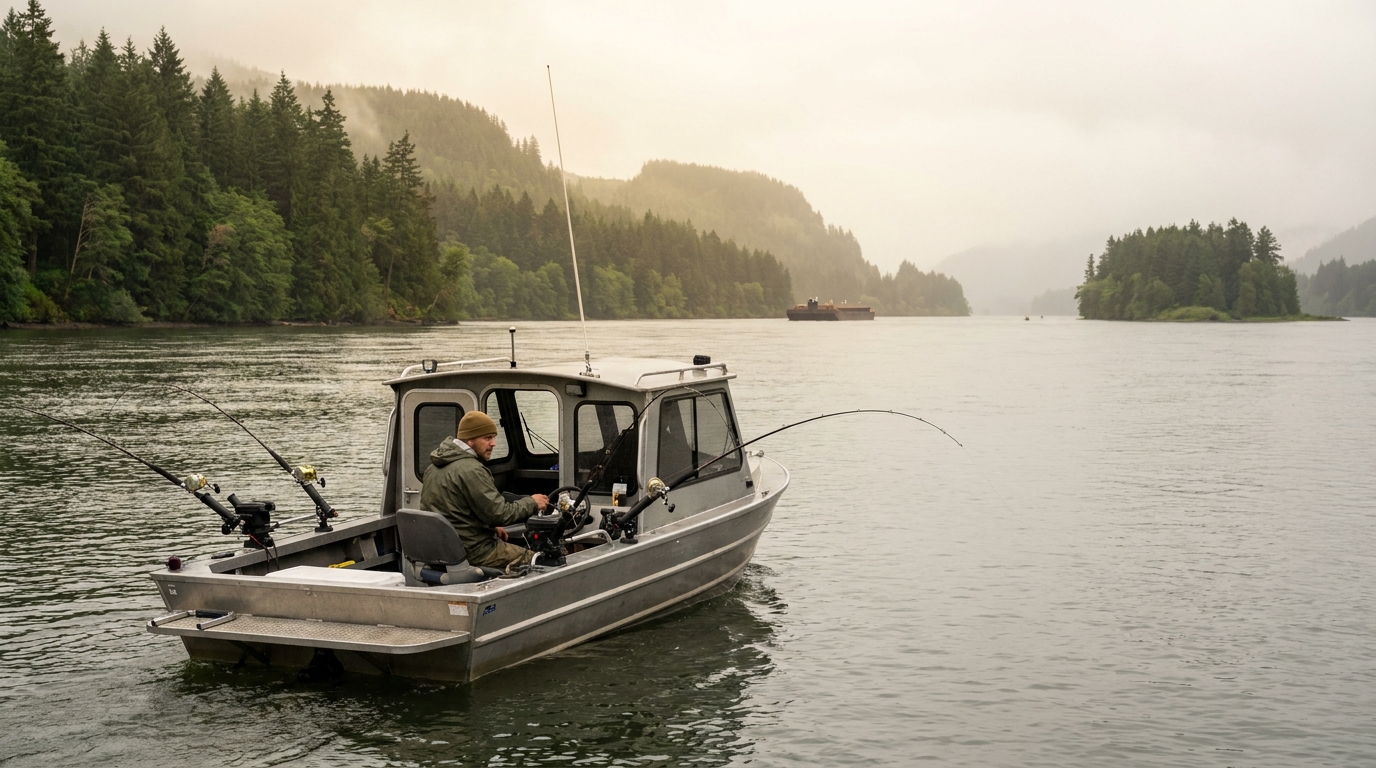
Trolling is the most consistent method for covering water and finding active fish. Here's how to set up a productive spread:
Gear Setup
- Rods: Medium-heavy 8.5–10.5 ft mooching rods or dedicated trolling rods rated 15–30 lb
- Reels: Level-wind reels with solid line counters (Shimano Tekota or Okuma Convector are workhorses)
- Mainline: 30 lb monofilament or 50 lb braid with a 20 ft mono leader
- Terminal: 4–6 oz banana weight → 18-inch leader → size 4/0–5/0 Gamakatsu hooks
Lure and Bait Selection
For the Columbia, you have two main approaches: plug fishing and herring. Brad's Super Bait plugs in chrome, chartreuse, or blue/silver run well in the main channel. For bait, a whole fresh herring in a rotating bait head at 2.0–2.5 mph produces steady strikes. When fish are finicky, cut-plug herring presented on a spreader bar with natural roll is often the difference-maker.
Flashers are a matter of preference on the Columbia — many guides skip them for summer kings, preferring clean bait presentation. If you run one, a dodger 18 inches ahead of the bait can trigger reaction strikes in off-color water.
Depth and Speed
Summer Chinook on the Columbia run mid-column, typically 15–35 feet down in 40–60 feet of water. Use your sonar to locate fish marks and adjust depth accordingly. Troll between 2.0 and 2.8 mph — faster than spring, because summer fish are more active. Work upriver on the upstream trolling pass for the most natural bait presentation.
Bank Fishing: River Access for Shore Anglers
You don't need a boat to tangle with summer kings. Several bank access points along the Oregon side of the Columbia give wading and shore anglers legitimate shots at trophy fish.
Top Bank Spots
- Kelly Point Park (Portland): The confluence of the Willamette and Columbia is a classic holding spot for fish staging before moving upriver. Plunking with a 4–8 oz pyramid sinker and sardine-wrapped Spin-N-Glo produces here.
- Rooster Rock State Park: Bouldered shoreline with access to a productive channel edge. Good plunking water during the June push.
- Bonneville Dam Tailrace: Fish stack up below the dam waiting to pass. Shore access on the Oregon side below the powerhouse is popular and productive in July.
- The Dalles Area: Celilo Park and Lyle (Washington side) offer bank access to transition-zone fish in July and August.
Bank Fishing Rigs
Plunking is the go-to method from shore. Run a slider sinker on your mainline, peg it with a bead, tie a barrel swivel, then run 18–24 inches of 20 lb fluorocarbon to a Spin-N-Glo (size 2 or 4) tipped with a sardine fillet. Cast across and slightly upstream, let the weight anchor, and let the Spin-N-Glo work the current. Keep your bail open or clicker on and watch for that slow, deliberate pull-down.
Timing Your Trip
Mornings and evenings produce the most action, especially on warm summer days when fish become lethargic in water temperatures above 65°F. Overcast days with stable barometric pressure often fish better than bluebird conditions. Tidal influence below Bonneville is real — many guides prefer the outgoing tide for bank fishing and the incoming for trolling.
Licenses and Regulations
You'll need an Oregon fishing license plus a Combined Angling Tag. Always check the weekly Columbia River Compact regulations — they're subject to in-season modification based on run size. Report your catch and support hatchery programs by retaining adipose-clipped fish when legal.
The Columbia's summer king run is a finite resource worth chasing hard and respecting deeply. Get out there early, put in the time on the water, and you'll understand why Pacific Northwest anglers plan their summers around it.