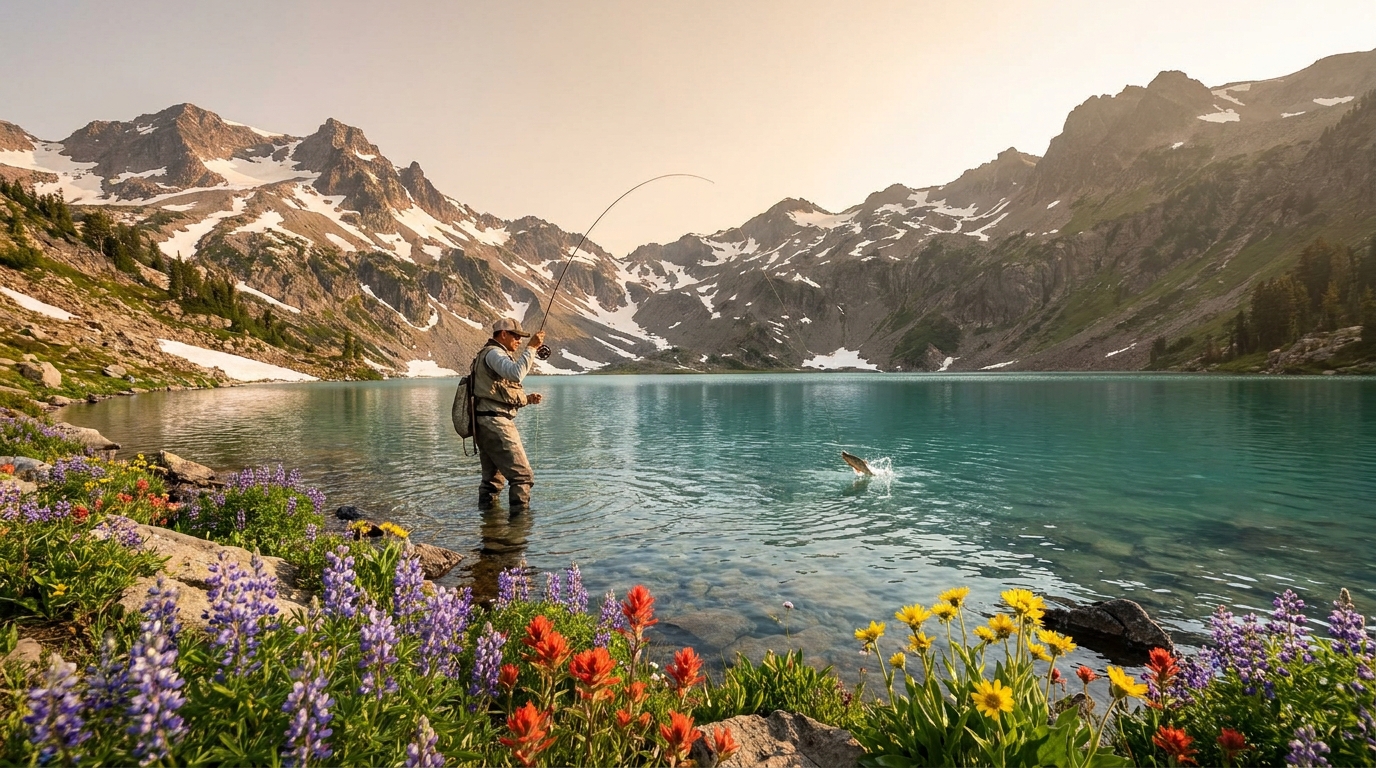
By late June, the snow has melted off most Oregon Cascade passes and the trail crews have opened routes that were buried all winter. That's when alpine lake fishing hits its stride — and few fish are as willing, as beautiful, or as rewarding to catch as a brightly colored high-country brook trout.
Brook trout aren't native to Oregon, but they've been planted in hundreds of wilderness lakes over the past century and have established self-sustaining populations in many of them. In the right lake — shallow, cold, with good inlet structure — they stack up and compete aggressively for food. That makes them ideal quarry for the backpacking angler who's already carrying a full pack and doesn't have patience for a slow bite.
Where to Look: Oregon's Best High-Lake Brook Trout Destinations
The Eagle Cap Wilderness in the Wallowas is the gold standard. Lakes like Moccasin Lake, Mirror Lake, and Lee, Horseshoe, and Glacier lakes in the upper Hurricane Creek drainage all hold brookies. Fish in the 10–14 inch range are common; occasionally you'll find a bruiser pushing 16 inches in a deeper lake with good forage.
In the central Cascades, the Three Sisters Wilderness offers dozens of options. Mink Lake Basin south of the Sisters is a classic — dozens of connected lakes in two days of hiking, many stocked with brook trout. The Waldo Lake Wilderness and surrounding smaller lakes also hold fish, though Waldo itself is notoriously tough due to ultra-clear, nutrient-poor water.
Southern Oregon's Sky Lakes Wilderness between Crater Lake and the Klamath Basin has a mix of brook and rainbow trout lakes, with brookies dominating the shallower, warmer basins. Isherwood Lake, Trapper Lake, and several unnamed tarns in the Divide Lake area are worth exploring.
Timing Your Trip
The sweet spot is late June through August. Early July can be magical — water temperatures are just coming up, fish are active and feeding aggressively after ice-out, and there's still snowmelt freshness in the water. By mid-August, the best bite shifts to early morning and evening as afternoon temperatures warm the shallows.
Check ODFW's stocking schedule before your trip. Many alpine lakes receive aerial or pack-in plants in June and July, and fresh-planted fish are especially aggressive.
Gear for the Pack-In Angler
Weight is everything when you're backpacking, but don't shortchange your fishing kit. Here's what works:
- Rod: A 4-piece, 7'6" to 8' ultra-light or light rod in the 2–4 lb range. Pack rods from Fenwick, Shakespeare, or Cabela's pack down to 18–20 inches and weigh under 4 oz. A 4-weight fly rod works equally well if you're a fly angler.
- Reel: Any small spinning reel with a smooth drag. Bring 4 lb mono or 6 lb fluorocarbon.
- Lures: Panther Martin spinners in gold/black or rainbow trout patterns are the go-to for high lakes. Small Kastmasters, Phoebe spoons, and 1/16 oz jigs in white or pink also produce. Pack a dozen lures total — they're light and you might lose some to snags.
- Fly fishing: If you're fly fishing, an Elk Hair Caddis, Parachute Adams, and a small Woolly Bugger handle 90% of situations. Bring a small foam fly box.
Reading High-Lake Structure
Alpine lakes look featureless from above, but brook trout aren't distributed randomly. Focus your casts on:
- Inlet streams: Cold, oxygenated water and food delivery concentrate fish near inlets, especially in the morning.
- Outlet structure: The outlet end of a lake often holds deeper water and cruising fish.
- Boulder fields: Visible underwater boulders provide ambush cover. Cast tight to them.
- Weed edges: Where aquatic vegetation meets open water is a classic feeding lane.
- Shaded banks: On warm afternoons, fish move to shaded shorelines. North and east banks are cooler in afternoon sun.
Fishing Technique
Brook trout in alpine lakes are usually not selective — they're opportunistic and hungry. Slow to medium retrieves with spinners work well in cool morning water. As the day warms, speed up your retrieve or switch to a more erratic action. If fish are visible near the surface (look for subtle rises or nervous water), switch to dry flies or small surface lures.
Presentation matters more than lure choice. Stay low and quiet on the bank — high-country brook trout are spooky in ultra-clear water. A long cast that lands gently beats a short, splashy one every time.
Oregon Regulations
Most alpine wilderness lakes in Oregon follow the statewide trout regulations: a limit of 5 fish per day with no minimum size. However, always check the ODFW Oregon Sport Fishing Regulations booklet for specific waters — some lakes in the Eagle Cap and other wilderness areas have special regulations, including single barbless hook requirements or catch-and-release rules. Wilderness areas don't require a trout tag beyond a standard Oregon angling license.
The Reward
There's something uniquely satisfying about pulling a fat, vividly-colored brook trout from a lake you hiked 8 miles to reach, then cooking it over a camp stove with a view of snowfields and granite peaks. Brook trout are excellent table fare — firm, delicate white flesh that needs nothing more than butter, salt, and a hot pan. Clean them at the inlet or outlet, pack out the remains, and leave the campsite better than you found it.
Oregon's high lakes are a summer secret that not enough anglers take advantage of. The crowds are on the main rivers. The fish are up in the mountains. Grab a topographic map, a wilderness permit where required, and go find them.