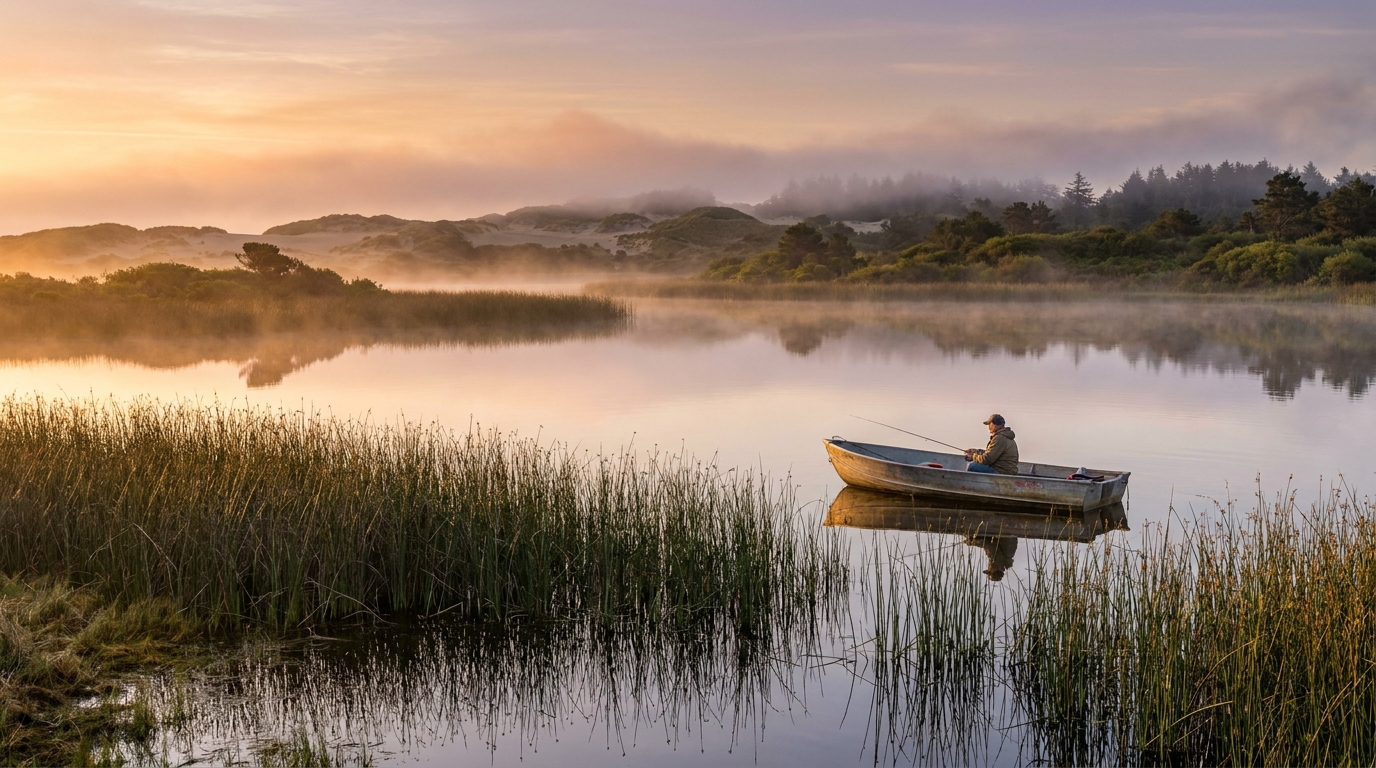
Tucked behind the Oregon Dunes National Recreation Area, Siltcoos Lake is the largest coastal lake in Oregon — and one of the most productive multi-species fisheries west of the Cascades. At nearly 3,200 acres with depths pushing 55 feet in places, Siltcoos offers warm-water fishing that rivals anything in the Willamette Valley, all within earshot of the Pacific surf. Summer is prime time.
What Lives in Siltcoos
The lake supports an impressive mix of species: largemouth bass, yellow perch, black crappie, brown bullhead catfish, and a resident population of sea-run cutthroat trout that move between the lake and the Siltcoos River outlet. Brown bullhead run large here — two- and three-pounders are common, with occasional fish pushing four. Bass top out around five or six pounds, and the cutthroat are wild coastal fish that deserve respect.
Don't overlook the perch. Siltcoos yellow perch run bigger than most anglers expect, with fish in the 10- to 12-inch range common off the deeper structure in summer. They're excellent table fare and will keep a rod bent when the bass go lockjawed in mid-afternoon heat.
Summer Bass Tactics
The bass fishery peaks from late May through September. Siltcoos bass are notoriously structure-oriented — look for them along the tule and cattail edges on the north end of the lake near the Canary Road access, around the submerged timber on the east shoreline, and along the rocky points near the Lodgepole Campground ramp on the south end.
- Early morning (first two hours of light): Topwater is king. Frogs along the tule margins, poppers over the shallow flats, and walking baits like a Zara Spook over submerged grass beds will draw explosive strikes.
- Mid-morning to noon: Transition to Texas-rigged worms (junebug or watermelon red, 6–7 inch) worked slowly through the submerged structure. A 3/8 oz weight keeps you in contact in the 8–15 foot zone.
- Afternoon: Go deeper. Drop shots with 4-inch finesse worms in 15–25 feet of water will pick up the fish that have retreated to cooler, darker holding areas. Shaky heads work equally well.
- Evening: Return to the shallows. Chatterbaits and swimbaits along the edges as the light fades often produce the biggest fish of the day.
Catfish After Dark
Brown bullhead catfish in Siltcoos are most active at night, especially on calm summer evenings when the lake surface goes glassy. Set up on the wide, flat muddy bays on the northeast end of the lake — the water is 6–10 feet deep with a soft bottom that catfish love. Night crawlers, cut sucker meat, and chicken liver on a simple Carolina rig (1 oz egg sinker, 18-inch leader, #4 bait hook) are all you need. Let the bait sit on the bottom and give a fish 10 to 15 seconds after the bite before setting the hook. Come prepared with a headlamp, a landing net, and a cooler — these fish are outstanding eating when skinned, soaked in buttermilk, and fried.
Sea-Run Cutthroat: The Summer Bonus
From July through September, sea-run cutthroat make their way out of the ocean, up the Siltcoos River, and into the lake. These are wild fish — chrome-bright in early summer, darker and more colored by August. They respond well to small spinners (Mepps #2 in gold or silver), small white or chartreuse Clouser Minnows on a fly rod, and Rapala minnow imitations retrieved steadily through open water near the river channel. ODFW manages these as wild cutthroat — check current regulations for retention rules, as they often change year to year.
Access and Facilities
The primary access point is the Stagecoach Trailhead and boat ramp off Highway 101 south of Florence. The Lodgepole Campground on the south end offers a second ramp. Both have paved launches and are accessible for trailered boats. Non-motorized boats and kayaks can be launched from several pull-outs along Canary Road on the north end. Electric motors are legal; gas engines are also permitted, but during peak summer weekends, the lake sees significant recreational boat traffic — plan your bass fishing early before the jet skis show up.
An ODFW Combined Angling Tag covers bass, trout, and panfish. Catfish have no bag limit under current regulations, making Siltcoos an excellent destination for filling the freezer.
The Overlooked West-Side Fishery
Most Oregon anglers focus their summer freshwater attention on the Deschutes, the John Day, or the Willamette system. Siltcoos flies under the radar — which is exactly why it deserves your attention. When the Cascade rivers are blown out by late-June runoff or crowded with weekend traffic, the coastal dune lakes are fishing perfectly. Pack a cooler, an assortment of soft plastics, a dozen nightcrawlers, and a sleeping bag. Fish the morning bass bite, nap through the midday heat, and jug for catfish until midnight. There are worse ways to spend a summer weekend on the Oregon Coast.