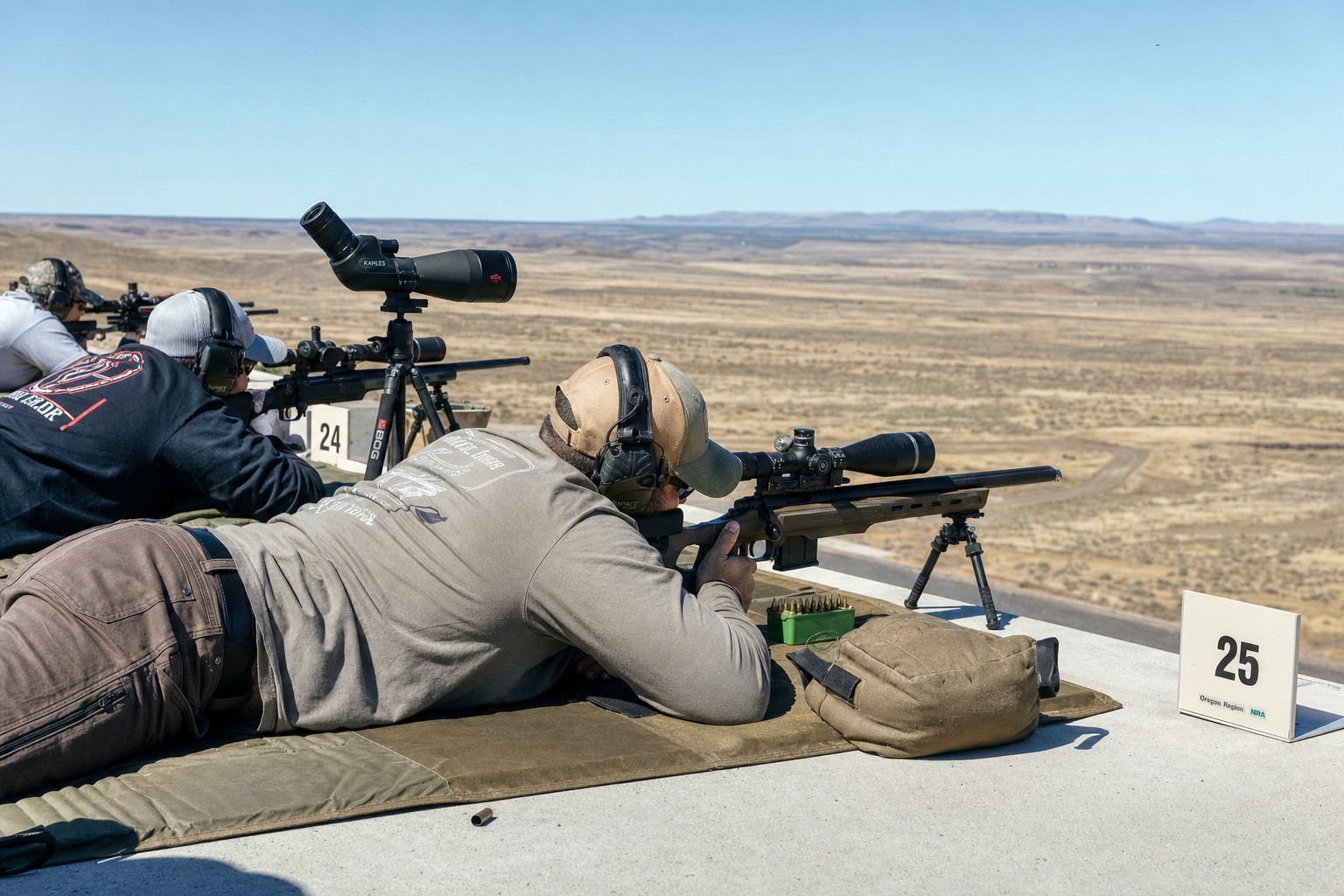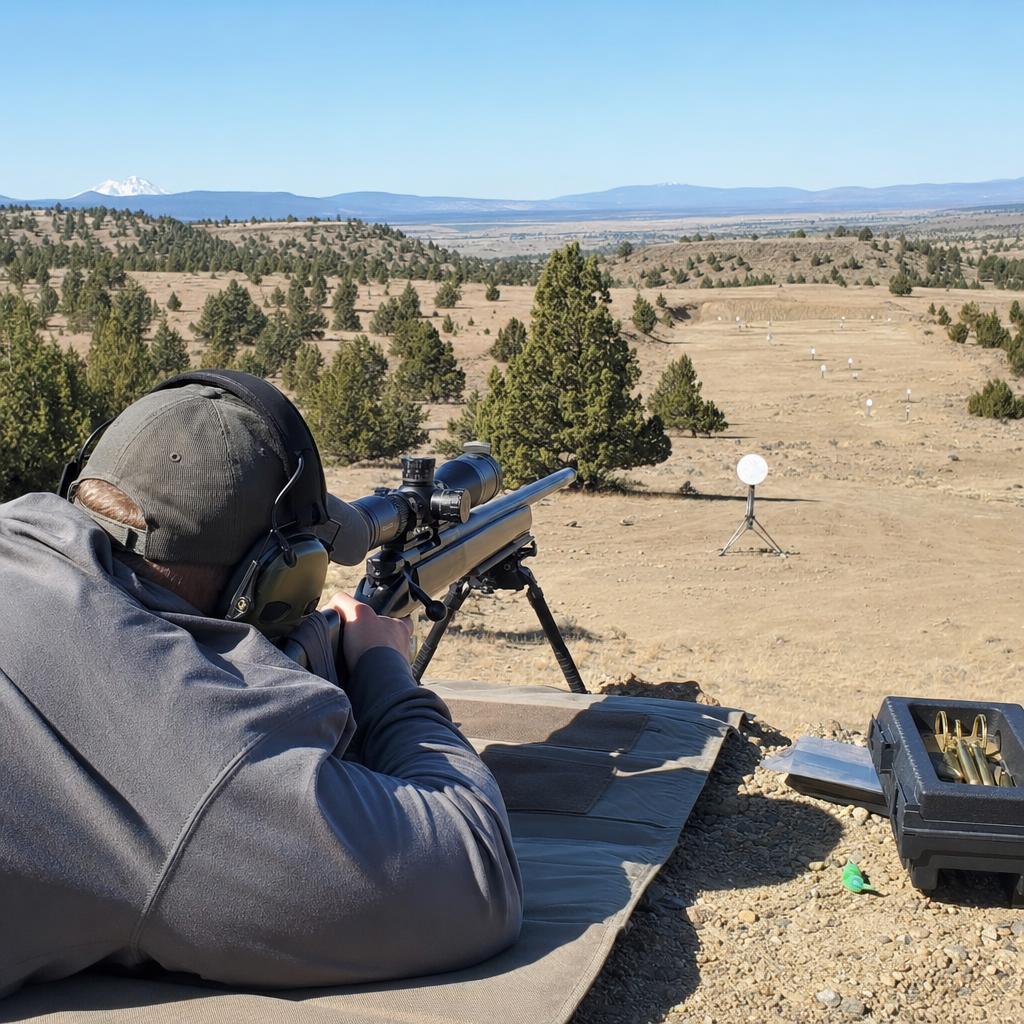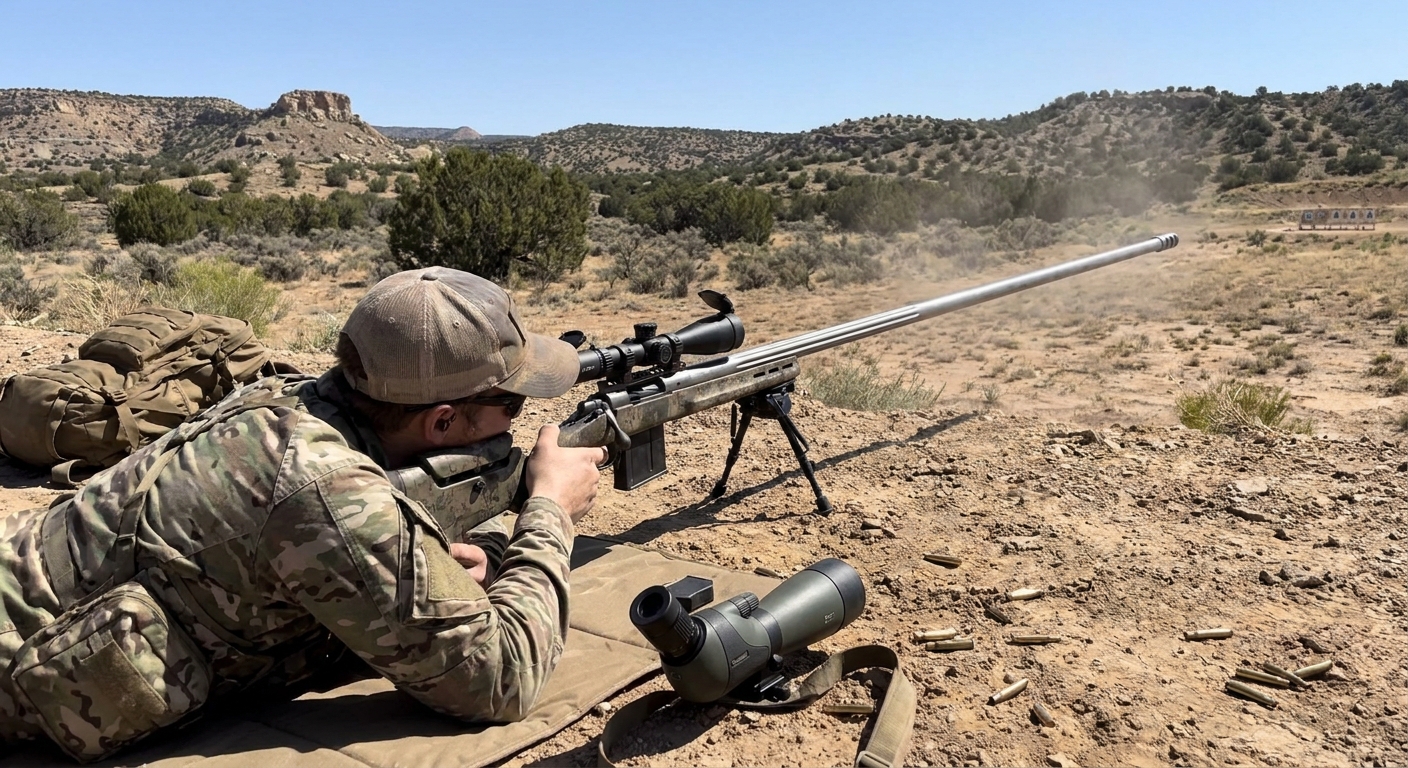
Summer range sessions have a way of exposing problems you didn't know you had. The rifle that shot consistent half-MOA groups in February might open to an inch-plus by July — not because anything changed mechanically, but because heat does things to ballistics, barrels, and optics that a cold-weather shooter never has to think about. If you're doing your serious practice and confirmation shooting in summer, understanding these variables isn't optional.
Heat Mirage: Reading It vs. Fighting It
Mirage is thermal turbulence in the air column between your muzzle and your target. On a hot day, it can visually shift your point of aim by a full minute of angle or more — meaning you see the target one place, but it's actually somewhere else. At 100 yards that's barely noticeable. At 600 yards, unread mirage can push your group into a different zip code.
The key is learning to read mirage, not eliminate it. Mirage running straight up (boiling) means there's no crosswind — the sight picture is reliable but fuzzy. Mirage running hard left or right tells you wind is moving and roughly how fast. Experienced long-range shooters use mirage as a real-time wind indicator, not an obstacle.
Practical mirage management:
- Set your scope parallax to a distance slightly short of your target — this slightly defocuses the mirage and sharpens the target image
- Use the highest magnification where you can still hold a steady sight picture — high mag amplifies mirage but also helps you read it
- Shoot in the first 2 hours after sunrise when ground temp differential is lowest
- A spotting scope angled from the side (not behind the gun) gives a cleaner mirage read without barrel heat interference
Barrel Temperature and Point of Impact Shift
This is the most practically important summer shooting variable for hunters. A cold bore shot often lands in a different place than round number five from a hot barrel — and the difference can be 1 to 3 inches at 100 yards depending on your rifle, load, and barrel profile.
Heavy barrels (sporter-to-sendero weight and above) are far more thermally stable than pencil profiles. A lightweight hunting rifle will see dramatic point-of-impact shift after four to five rounds fired quickly. A 28-inch heavy barrel benchrest rifle barely moves. Know your rifle's behavior — this is not something you can assume.
Confirming your cold-bore zero in summer:
- Shoot your first round on a fresh target from a cold barrel — this is your hunting zero
- Let the barrel cool completely (15–20 minutes minimum for light contours), then shoot again
- Note the shift; if it's more than 1.5 inches at 100 yards, you have a barrel-bedding or load-related issue worth diagnosing
- For hunting rifles, your cold-bore shot is the shot that matters — train for it
During summer range sessions, let your barrel cool between groups if you're doing load development. Shooting strings through a hot barrel tells you what a hot barrel does — useful for competition, less useful for validating a hunting load that you'll fire once from cold in the field.
Ammunition and Powder Consistency in Heat
Temperature affects powder burn rate. Most modern hunting powders are temperature-compensated (Hodgdon Extreme series — Varget, H4350, H4831SC — are the benchmark), but not all powders are. A load developed at 40 degrees that was running 2,900 fps may run 2,970 fps at 95 degrees. That's a meaningful velocity change that shifts your trajectory and could push a near-maximum load into pressure signs.
Summer load considerations:
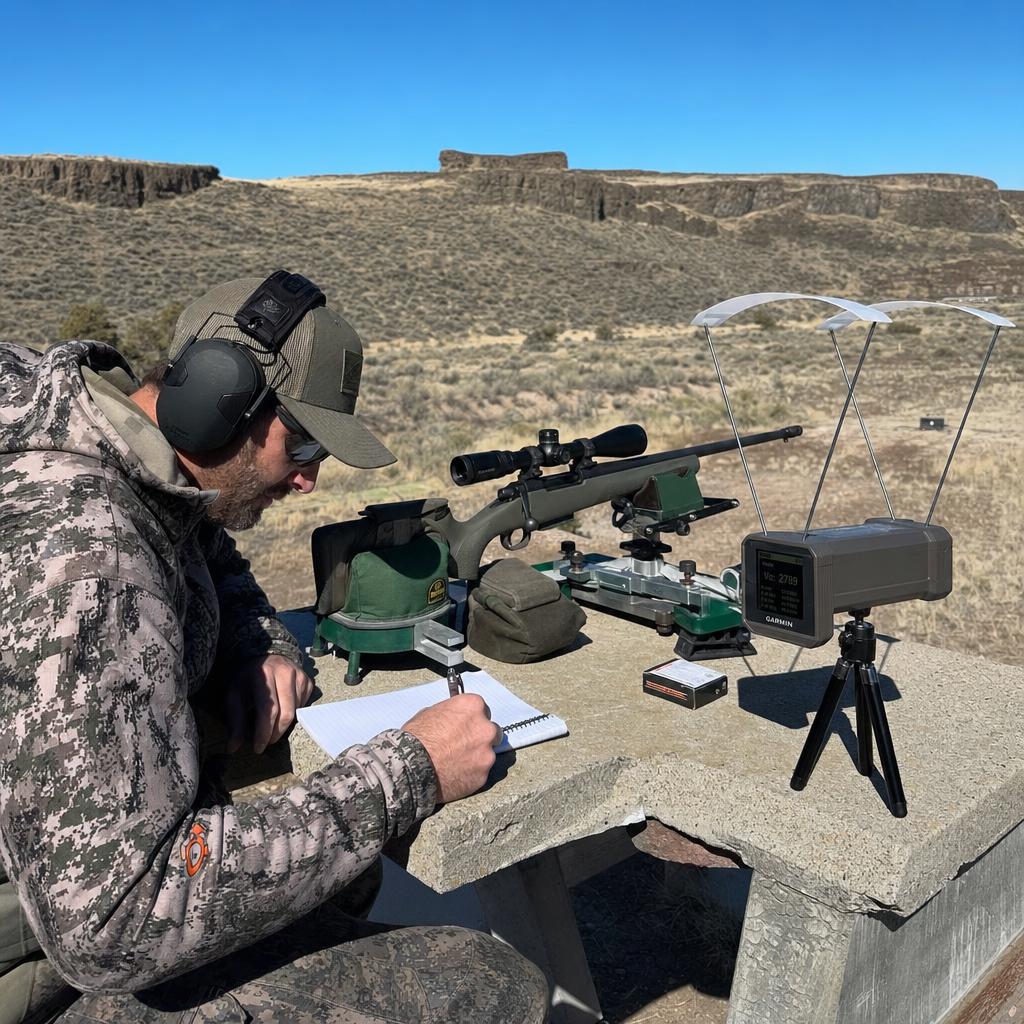
- If you shoot a non-temp-stable powder (most ball powders and some stick powders), verify velocity with a chronograph in summer conditions
- Store your loaded ammunition out of direct sunlight — a sealed ammo can left on a dark car seat in July can see 130+ degrees, well past the temperature range most powders were tested at
- Check primers for flattening or flow after summer range sessions if you're running hot loads
- Consider developing summer and winter zero data if you hunt both seasons and shoot a non-Extreme powder
Optics in the Heat
Scope tubes can expand slightly in extreme heat, which rarely causes visible problems but can affect erector spring tension on lower-quality optics. More commonly, high-end scopes with nitrogen purging hold their reticle and parallax adjustment without issue. Budget glass can show internal fogging or floating reticles when temps spike — if your scope is doing either of those things in summer, it's telling you something about its quality ceiling.
Keep scope caps closed between strings to prevent heat buildup inside the tube. Lens coatings don't care about heat, but dust and thermal expansion of the objective housing can temporarily affect parallax on cheaper units.
Staying Functional on a Hot Range Day
This sounds obvious, but shooter performance degrades faster than you think in heat. A 95-degree range day with no shade will erode your trigger discipline, breathing control, and patience within an hour if you're not hydrated and rested. Summer long-range sessions should prioritize quality over quantity — fewer rounds, slower pace, more deliberate execution per shot.
- Schedule range time for early morning or late evening in July and August
- Bring twice the water you think you need
- A battery-powered clip fan aimed at your position makes a measurable difference in sustained focus
- Dark clothing absorbs more heat than light — light-colored, vented shooting shirts are practical, not just stylish
What Summer Range Work Actually Teaches You
The best argument for shooting through the summer is that it builds conditions tolerance. A hunter who only confirms zero in October doesn't know how their rifle behaves under stress. A hunter who shoots through July knows their cold-bore offset, has seen their barrel's heat behavior, and has chronographed their load in temperature extremes. That's the difference between assumed performance and confirmed performance — and in the field, assumed is another word for guessing.
Embrace the heat. Use it. Your rifle is telling you things in June and July that it can't tell you in a 50-degree October morning. Pay attention.