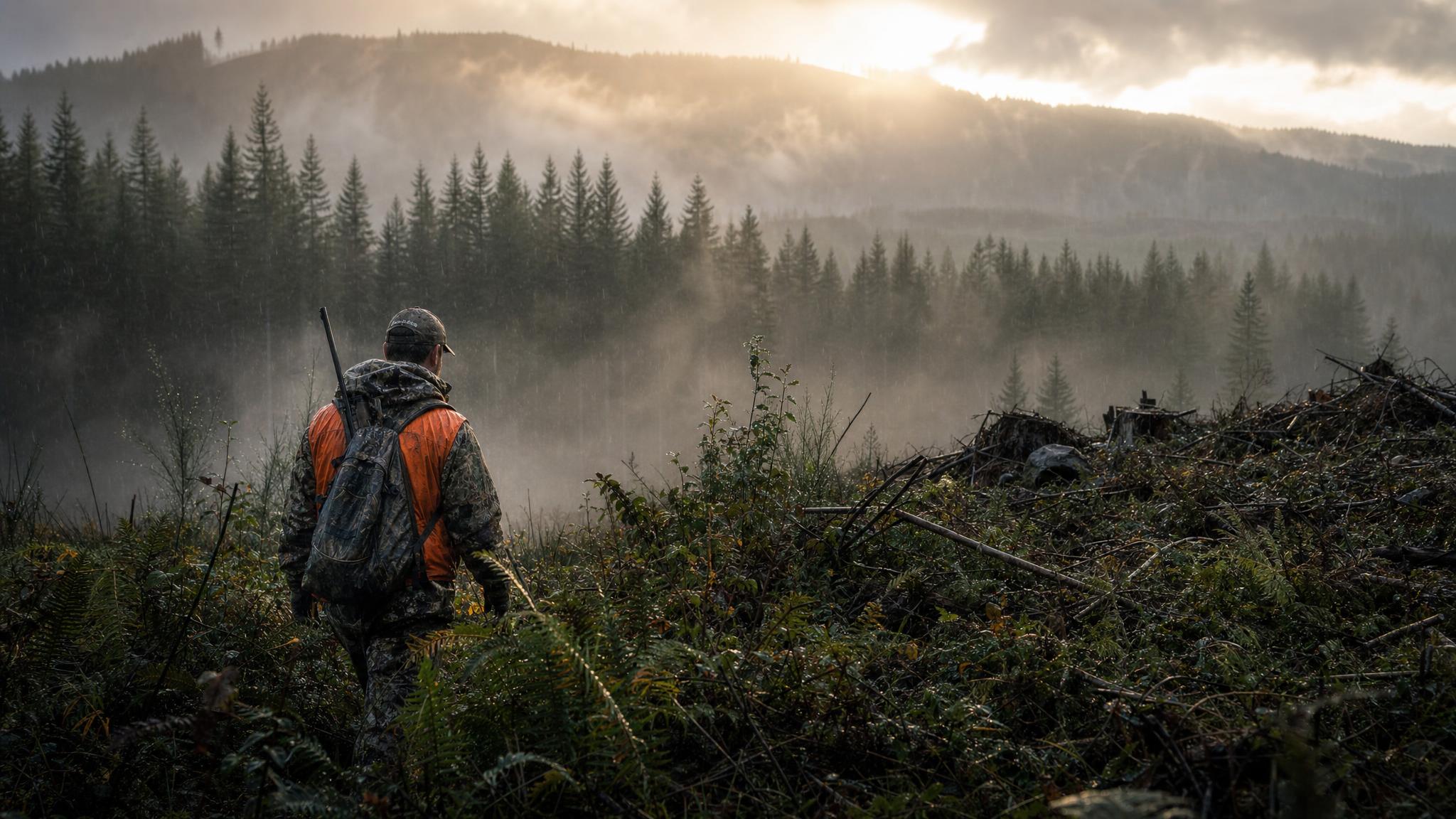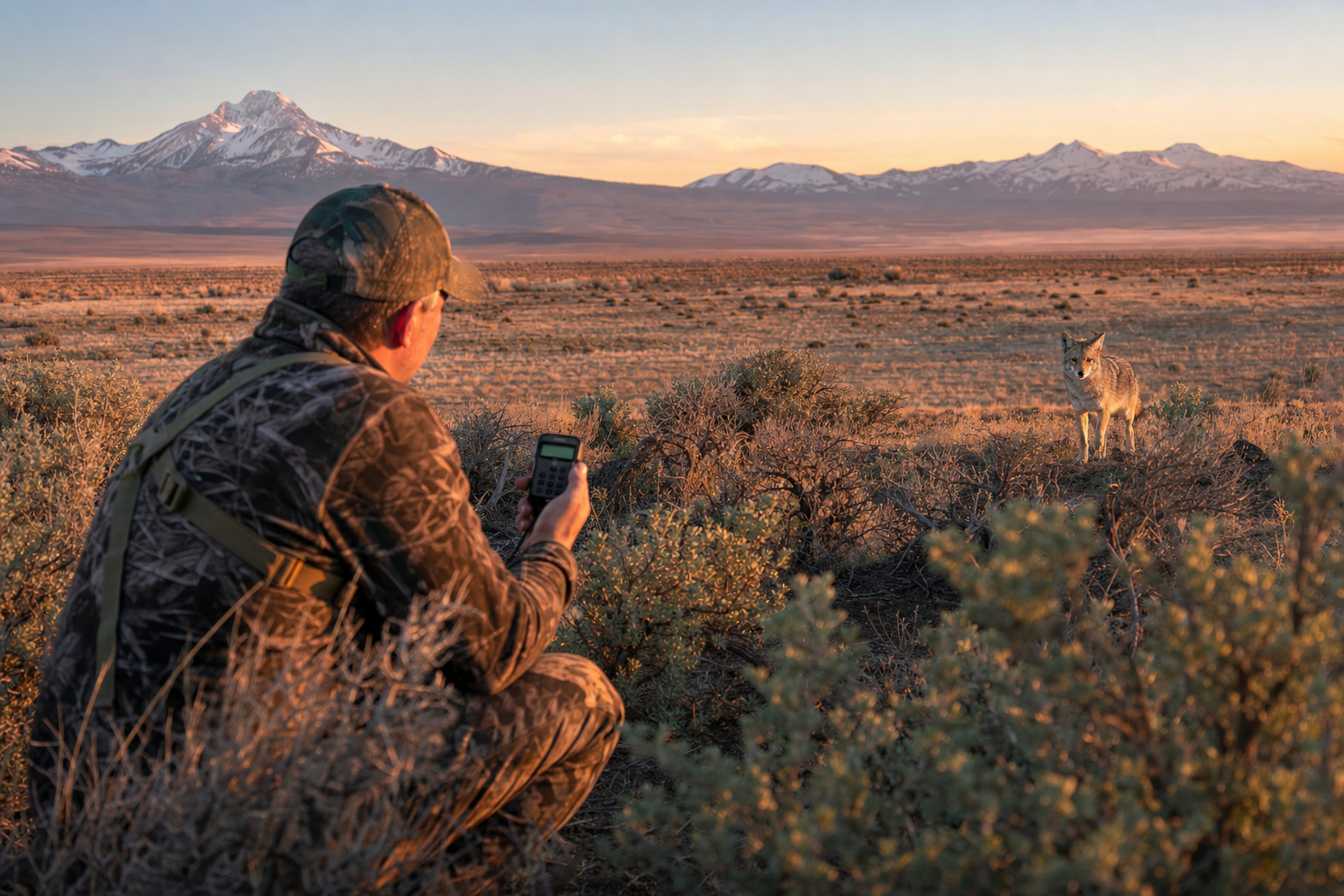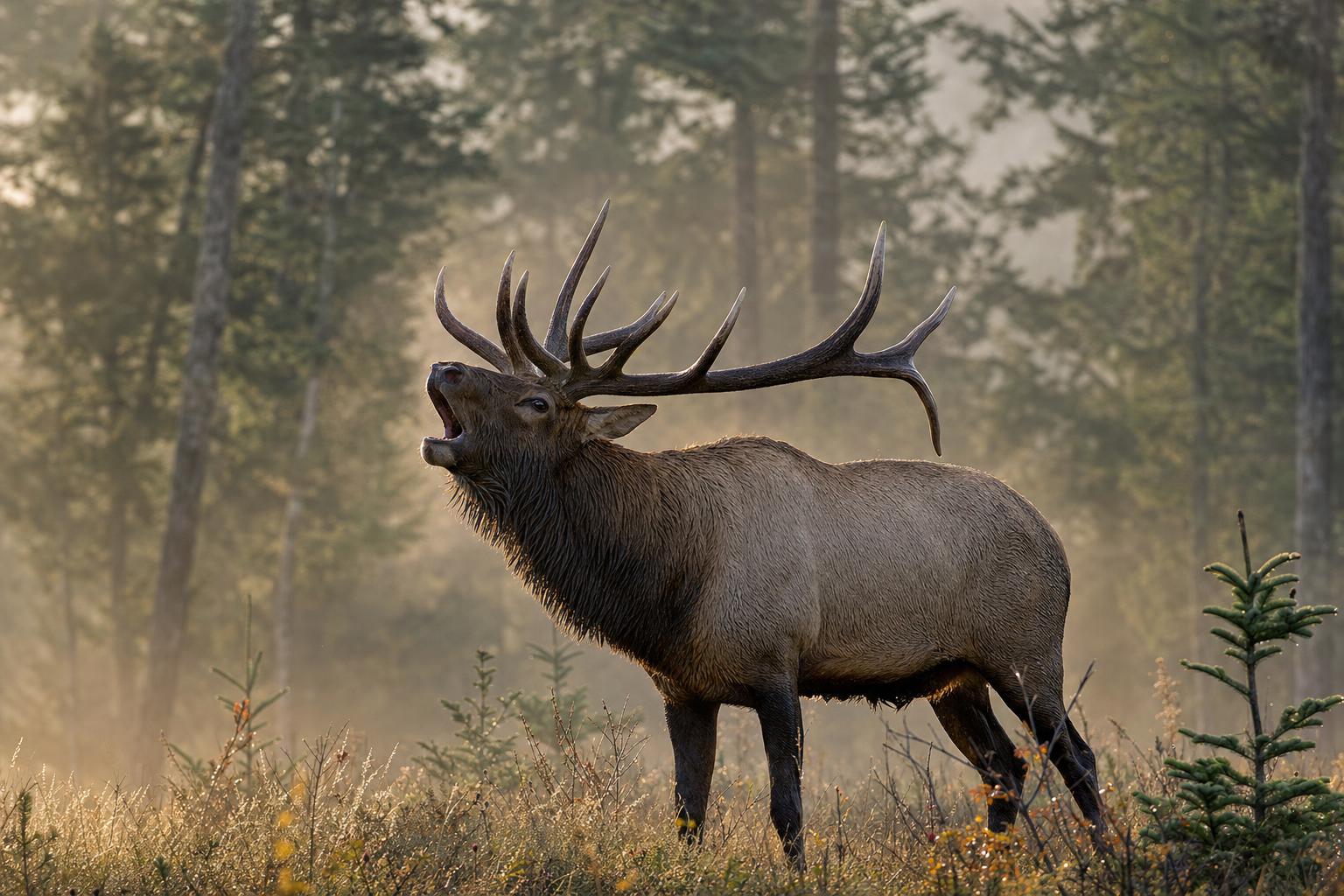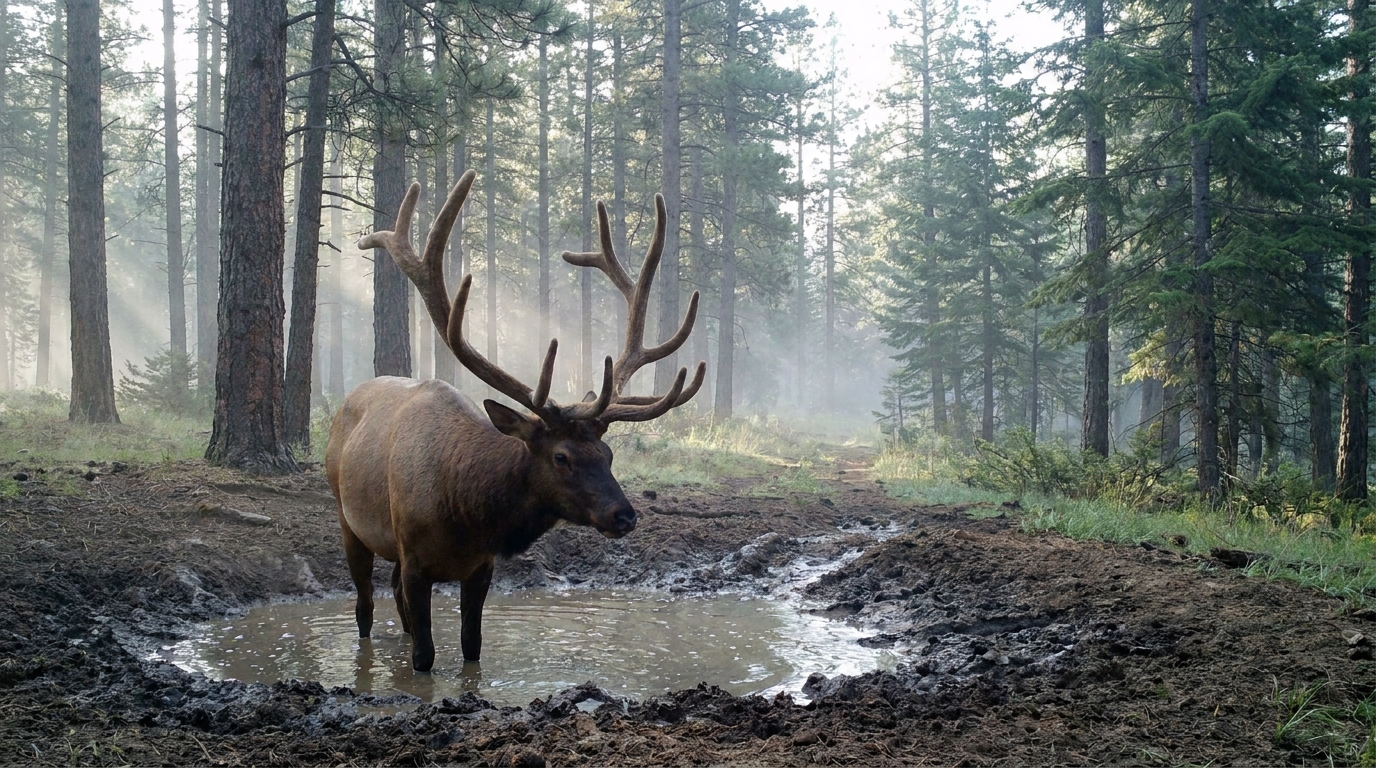
Late July is prime time to find and pattern bull elk before Oregon's archery season opens in late August. The bulls are still in velvet, moving somewhat predictably between feed and bedding areas, and the sign they leave behind — especially wallows — is fresh, obvious, and highly informative. If you know what to look for and how to interpret it, you can have bulls located and a hunting strategy dialed before you ever pull your bow from the case.
Why Late July Is the Best Scouting Window
By late July, bull elk have largely finished their summer migration to high-country ranges and settled into predictable summer patterns. They're feeding heavily to build the body mass they'll burn through the rut. Velvet antlers are nearly full-grown and highly sensitive — bulls are careful and tend to move along established trails to avoid damaging their racks. This makes travel corridors more predictable than almost any other time of year.
Just as importantly, the rut is only four to six weeks away. Testosterone is building. Bulls are beginning to interact with wallows — not yet rutting in them, but visiting, scent-checking, and leaving the muddy tracks and hair that confirm their use. A wallow you find in late July will almost certainly be active when the rut kicks in mid-September.
Understanding Elk Wallows
A wallow is simply a muddy depression where bulls roll to coat themselves in mud and their own urine. During the rut, this scent-soaked mud serves as both a visual advertisement and an olfactory calling card. But wallows don't appear from nowhere — they start as depressions near springs, seeps, or creek crossings, and are improved by years of use.
What to Look For
- Mud disturbed in the last 24-48 hours: Fresh wallows have smooth, wet mud with clear hoof prints. Old sign looks cracked and dried.
- Elk hair: Bulls roll vigorously. The surrounding grass and brush will have elk hair embedded in it, especially on logs they've rubbed against while exiting the wallow.
- Urine smell: Active wallows have a strong, musky ammonia smell. Trust your nose — if you catch the scent before you see the wallow, you're on a hot one.
- Tracks and exit trails: Multiple entry and exit trails indicate heavy use. Note the directions they lead — this tells you where bulls are bedding relative to the water source.
- Rubs on nearby trees: Velvet-removal rubs typically happen within a quarter mile of a wallow. A wallow surrounded by rub trees is a premium kill site.
Using Topography to Find Wallows
You don't find most wallows by stumbling on them — you predict their locations from maps and then confirm on foot. Here's the process:
Digital Pre-Scouting
Pull up CalTopo or OnX on your phone or computer and look for the intersection of three features: water sources (springs, seeps, small creek headwaters), north-facing timber with horizontal benches elk can bed on, and transition zones between feeding meadows and bedding timber. Where these three things converge within a quarter mile of each other is where you find wallows.
Springs and seeps on topo maps appear where contour lines show a small flat interrupting a slope. On OnX, enable the satellite layer and look for green anomalies — isolated patches of darker vegetation in dry terrain — which often indicate water. In units like the Silvies, Metolius, or Chesnimnus, this kind of digital scouting can cut your boot miles in half.
Boot Work Confirmation
Once you've identified candidate areas digitally, get in there on foot. Move slowly and quietly in the early morning — elk are still using these areas in late July, and bumping bulls repeatedly before the season can shift their patterns. Cover the terrain systematically, checking every seep and creek crossing. Pay special attention to the soft soil at the heads of drainages, where underground water reaches the surface.
Other Sign Worth Cataloging
Rub Trees
Velvet-removal rubs appear in late August, just before the season, but pre-rub signpost trees — used year after year for scent-marking — can be found now. Look for trees with bark worn smooth 3 to 5 feet up the trunk, with embedded hair and a distinctive musky smell. A signpost tree near a wallow is a location worth putting a camera on immediately.
Feeding Sign
Elk are grazers and browsers. In late July, look for heavily cropped grass in open parks and clearings, and browsed shrubs (especially willow, alder, and serviceberry) along creek corridors. Fresh elk droppings — dark, pellet-shaped when dry, but loose and clumped when summer vegetation is lush — are a reliable indicator of recent use.
Beds
Bull beds are large — roughly the size of a bathtub — and are typically found on north-facing slopes with good sight lines downhill. They'll often have a few piles of droppings adjacent. A cluster of beds indicates a bachelor group using the area consistently.
Trail Camera Strategy for Late July
If you find a hot wallow or a major trail convergence, put a cellular camera on it immediately. Don't wait. You want four to six weeks of data before the opener, and a cell cam lets you monitor without burning additional boot miles and scent into the area.
Set cameras on the downwind side of wallows so bulls approach from upwind and trigger the sensor before they have a chance to smell the camera. Use a quiet shutter mode if available. Rotate SD cards minimally — with a cellular cam, you get images pushed directly to your phone without touching the site at all.
Putting It Together: From Sign to Strategy
Once you've confirmed active wallows, trails, and feeding areas, you can begin building your hunt. For archery elk, the equation is usually: find the wallow, find the travel corridor between wallow and bedding, set an ambush on that corridor during the morning when bulls are returning to bed.
Wind is everything. Pre-identify wind-favorable stand locations on both sides of the trail — a morning wind setup and an evening wind setup — so you have options regardless of conditions on opening morning. In Oregon's mountains, winds typically flow uphill (thermal) through the morning and reverse (downhill) in the evening. Use this to your advantage.
The hunters who consistently tag out on Oregon public land bulls are the ones who put in the July and early August work when conditions are open and sign is fresh. By the time August 24th rolls around and the archery season opens, they're not scouting — they're hunting. That's the edge you're building right now.