Oregon's tree squirrel season is one of the state's most overlooked hunting opportunities. Opening September 1st and running clear through January 31st, it offers five solid months of action in some of the most beautiful timber country in the West. Whether you're a veteran hunter looking for a low-pressure outing or a newcomer who wants to practice woodsmanship without the stress of a tag lottery, tree squirrels deserve a serious look.
Oregon's Two Huntable Species
Oregon has two legal squirrel species worth chasing: the western gray squirrel (Sciurus griseus) and the Douglas squirrel (also called the chickaree, Tamiasciurus douglasii). Eastern fox squirrels, introduced in some Willamette Valley areas, are also legal. Know your target before you pull the trigger — the federally protected northern flying squirrel is nocturnal and rarely encountered during daylight, but be aware it exists.
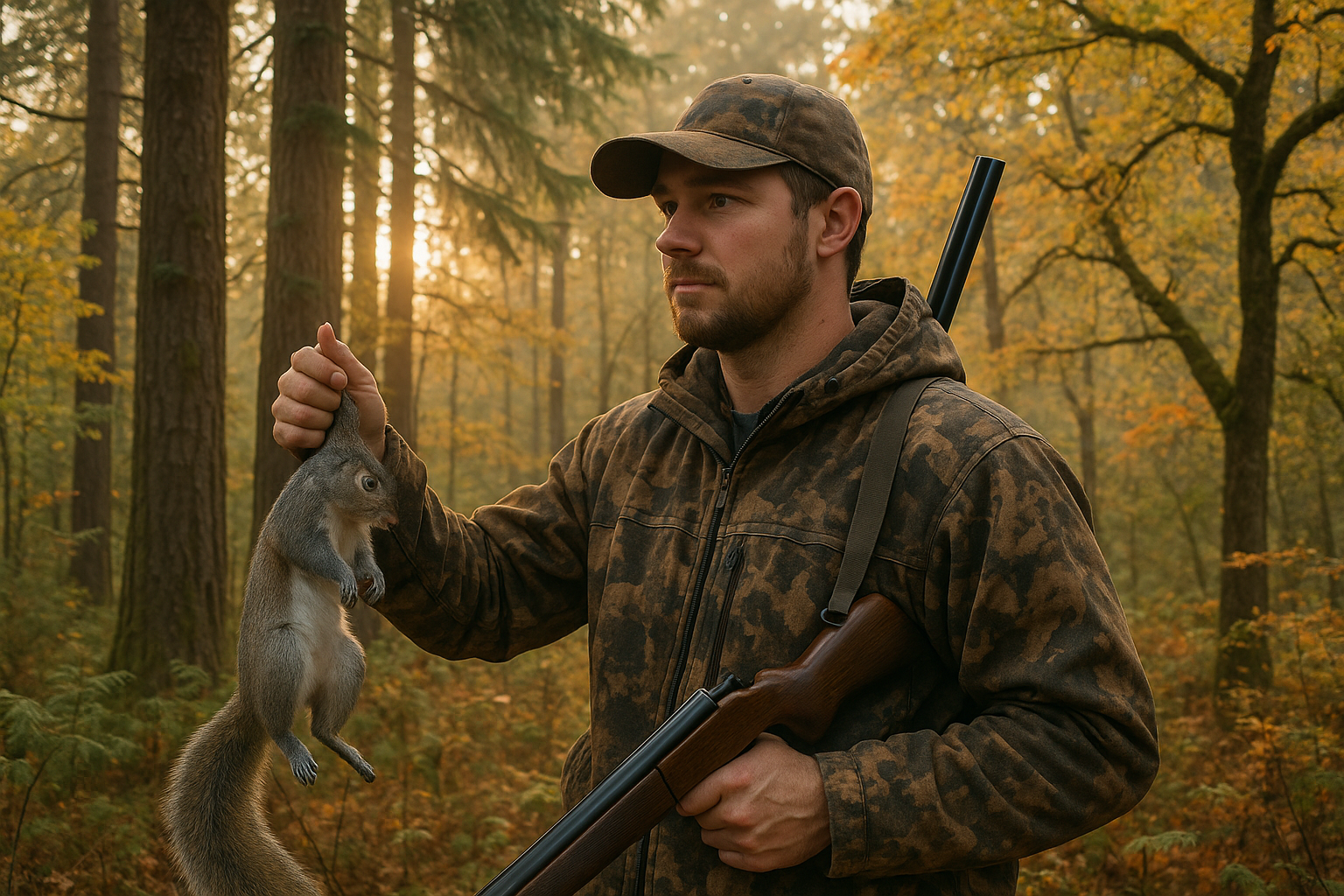
Western gray squirrels are the big ones — up to 24 inches including tail, silver-gray above with a white belly and a full, bushy tail. They favor Oregon white oak, Oregon grape, and mixed oak-conifer zones. Look for them in the foothills of the Cascades' western slopes, the Umpqua Valley, and especially in Josephine and Jackson Counties where ponderosa pine meets Oregon oak.
Douglas squirrels are smaller, more aggressive, and far more vocal. Brownish-gray above with an orange-tinted belly, they're a creature of dense conifer stands — Douglas fir, Sitka spruce, and western red cedar. They're the chattering alarm system of the Coast Range and Cascades up to about 6,000 feet. Their season is open simultaneously with westerns.
Where to Hunt
Most of Oregon's best tree squirrel habitat sits on federal land — Willamette, Umpqua, Siuslaw, and Rogue-Siskiyou National Forests all hold solid populations. The key is finding food. Squirrels don't wander far when they have a reliable mast crop, and Oregon oaks producing a heavy acorn year is the single best indicator of where western grays will concentrate. Walk creek drainages in the Umpqua Valley between Roseburg and Canyonville — those mixed oak-fir zones produce reliably year after year.
For Douglas squirrels, old-growth or mature second-growth conifers are your target. Look for cut conifer cones piled at the base of large trees — these middens (larder caches) are a sure sign of activity. The Oregon Coast Range between Tillamook and Coos Bay is loaded with Douglas squirrels in the right timber.
Seasonal Timing
September is excellent for western grays because the acorns are just beginning to ripen and squirrels are moving actively to cache food before winter. Activity peaks in the morning hours from first light until about 10 AM, then again in the last couple hours before dark. Midday in warm September weather, squirrels often hole up in nest cavities or lie flat on large branches — nearly invisible from below.
By November and December, both species slow down during cold snaps but remain active on warm, sunny days. Post-rut for deer hunters who've filled their tag, late-fall squirrel hunting keeps you in the woods and your eye sharp.
Gear and Guns
A .22 LR is the traditional choice, and for good reason — it's quiet, accurate, affordable to shoot, and won't blow up a squirrel you plan to eat. A scoped 10/22 or bolt-action .22 with standard velocity ammunition (not high-velocity hollow points that damage meat) is ideal for head shots at 30–60 yards. Subsonic .22 LR is even better in timber where you want to hear approaching squirrels.
A 20-gauge or .410 shotgun loaded with #6 shot is the choice when hunting in dense brush where squirrels dart behind branches. It's also the right tool when you're hunting moving squirrels rather than sitting and glassing. A full or modified choke at 20–35 yards is effective. Keep your shots within range — a wounded squirrel that makes it into a cavity is a lost animal.
Rimfire pistols — .22 LR or .22 WMR — are a fun choice for hunters who want a challenge. Oregon allows handgun hunting for squirrels on general forest land.
Hunting Tactics That Work
Sit-and-Listen
The most productive squirrel tactic in Oregon timber is the simplest: find a good spot in a feeding area — below big oaks or at the base of a large conifer — and sit still for 20–30 minutes. Let the woods settle after your approach. You'll hear squirrels long before you see them. The rapid, chattering alarm call of a Douglas squirrel means it's spotted you. The slower, agitated bark of a western gray means it's seen something it doesn't like. Both will forget you exist if you remain still long enough.
Still Hunting the Timber
Move slowly through the trees — three or four slow steps, then stop and glass the canopy for 60–90 seconds. Look for movement, the flick of a tail, or the silhouette of a squirrel pressed against a limb. On windy days, squirrels are harder to hunt because they can't hear danger and become nervous, but the wind also covers your movement noise.
Calling
Squirrel calls work. A simple Haydel's or Quaker Boy squirrel call mimicking distress or chatter will bring curious squirrels in close, especially Douglas squirrels which are aggressively territorial. This is a particularly effective method in September when squirrels are actively defending food caches.
Regulations Snapshot
- Season: September 1 – January 31 statewide
- Bag limit: 5 per day, 10 in possession
- License required: Oregon hunting license (no additional tag needed)
- Western gray squirrel: May NOT be taken within a city or town. Check local ordinances near urban-adjacent forest.
- Always confirm current regulations at myodfw.com
In the Kitchen
Don't let anyone tell you squirrel isn't table fare. Fried squirrel is a Appalachian tradition with good reason — the meat is lean, dark, and rich. Western grays, being larger, are excellent braised or slow-cooked. Small Douglas squirrels are best split and grilled or used in stews. Field dress them immediately and cool the carcass quickly — squirrel meat sours fast in warm September weather. Skin them within an hour of harvest for the best flavor.
Oregon's tree squirrel season is a hidden gem — five months long, no tag required, public land access almost everywhere, and an honest hunting challenge that sharpens your woodsmanship for bigger game seasons ahead. Get out in the oaks and conifers this September.