When most Oregon archery elk hunters think Blue Mountains, they immediately reach for the Wenaha or Starkey units. That's a mistake the Ukiah Unit's resident bulls are happy you keep making. Tucked into Umatilla County along the North Fork John Day River drainage, the Ukiah Unit consistently produces quality bulls on public land — with a fraction of the hunting pressure that plagues its more famous neighbors.
Unit Overview and Access
The Ukiah Unit covers roughly 700,000 acres of mostly public land, including significant chunks of the Umatilla National Forest and BLM ground. The town of Ukiah sits at the heart of the unit on Highway 395, giving hunters easy access to fuel, limited supplies, and a staging area for deep country pushes. Elevations range from around 3,000 feet along the river bottoms to over 6,000 feet on the forested ridges — classic Blue Mountains topography with ponderosa pine giving way to grand fir and mixed conifer as you climb.
Primary access roads include Forest Road 52 off Highway 395 and the network of two-tracks threading through the Camas Creek and Desolation Creek drainages. Most roads are passable with a high-clearance 2WD through early September, but a 4WD rig is smart insurance after the first fall rains hit in late September.
When and Where to Find Bulls in September
Oregon's archery elk season typically opens in late August and runs through September — right through the rut. In the Ukiah Unit, bulls are vocal from roughly September 5 through September 25 in most years, with peak bugling activity peaking around the second and third weeks of September depending on temperatures.
Early Season (Late August–September 7)
Pre-rut bulls are still in bachelor groups at this point, pushing toward higher elevation feed in the evenings and bedding in dark timber during the day. Glass open parks and south-facing burns from a high point at first light. Look for elk trails cutting across ridgelines and focus your morning sits near meadow edges. Water sources — springs and small creeks — become critical as August heat lingers.
Peak Rut (September 8–25)
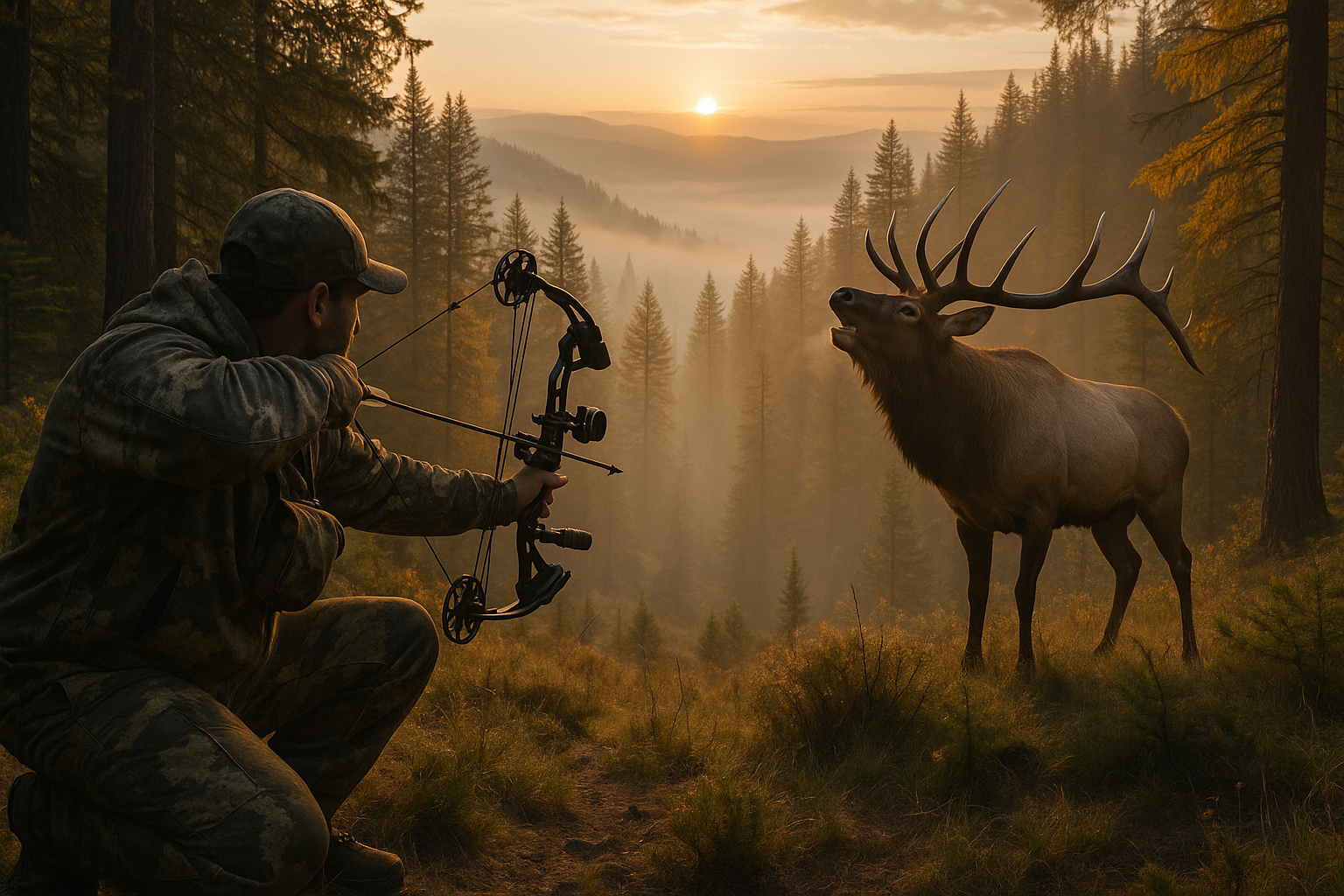
This is the Ukiah Unit's finest hour. When temperatures drop below 50°F at night, bulls begin screaming in earnest. The North Fork John Day drainage and its tributaries — Desolation Creek, Camas Creek, and the headwaters of the Umatilla River — all hold elk year-round and produce reliable bugling action. Work the timber edges at dawn and dusk. Cow-call your way into position, then challenge with a location bugle to get a response. Dominant bulls in this country are not shy — if one answers within 400 yards, commit hard.
DIY Tactics That Work
- Glass first, call second: The Ukiah Unit has enough open parks and ridge saddles that you can spot elk before committing to a stalk. Cover ground with your eyes before your boots.
- Wind is everything: Blue Mountains thermals are predictable — they drain downhill before dawn and flow uphill by mid-morning. Hunt accordingly. Circle wide on your approaches.
- Pack light, move fast: Pressured bulls that won't respond in the morning can be relocated mid-day by covering ground quietly. A daypack with enough food and water for 10 miles lets you reposition without going back to the truck.
- Mock wallows and raking: Raking a tree and adding cow estrus near a natural wallow in dark timber is deadly in the Ukiah Unit during the second week of September. Set up downwind and wait.
- Go deep on weekends: Opening weekend will see pressure on the main road drainages. Walk 2 to 3 miles further than anyone else is willing to go. The elk know exactly where the trucks stop.
Camping and Logistics
Dispersed camping is available throughout the Umatilla National Forest — no permit required for most areas. The Ukiah–Dale Forest State Scenic Corridor along the North Fork John Day River offers developed camping. Cell service is essentially nonexistent in most of the unit, so download your OnX maps offline and file a float plan with someone before heading into the back country.
Nearest fuel is in Ukiah or Heppner. The nearest butcher is in Pendleton, roughly 60 miles north on Highway 395. If you kill early in the week, you can bone out the quarters and pack to the truck without spoilage concerns in September's cool mornings — but watch mid-day temps carefully in early season. Game bags and shade are non-negotiable.
Regulations at a Glance
Check ODFW's current regulation booklet before heading out — the Ukiah Unit uses general archery elk tags, which are available over the counter. No special draw is required for archery, though antler restrictions may apply in certain subunits. The 2026 archery season runs through the end of September. Make sure your bow setup meets Oregon's minimum draw weight requirements (40 pounds at your draw length) and that you're using broadheads — no mechanical broadheads that rely on explosive expansion are permitted for big game in Oregon.
Final Thoughts
The Ukiah Unit won't make the highlight reels or the list of "best units" you'll find on hunting forums. That's exactly what makes it special. If you're willing to drive past the more famous units, shoulder a pack, and trust your calling, you'll find bulls in the Blue Mountains that have seen very few hunters. September in the Ukiah Unit is about as good as DIY public land archery elk hunting gets in Oregon.