Wheeler County doesn't get a lot of love from the archery crowd. Most Oregon mule deer hunters have their eyes fixed on the Steens, Hart Mountain, the Murderers Creek unit, or the Silvies. That's fine. More room in the rimrock for the rest of us. The Fossil unit — named for the small Wheeler County town that houses one of Oregon's great fossil beds — is a consistently overlooked archery opportunity on public land that produces solid bucks for hunters willing to glass, hike, and work in summer heat.
The Unit at a Glance
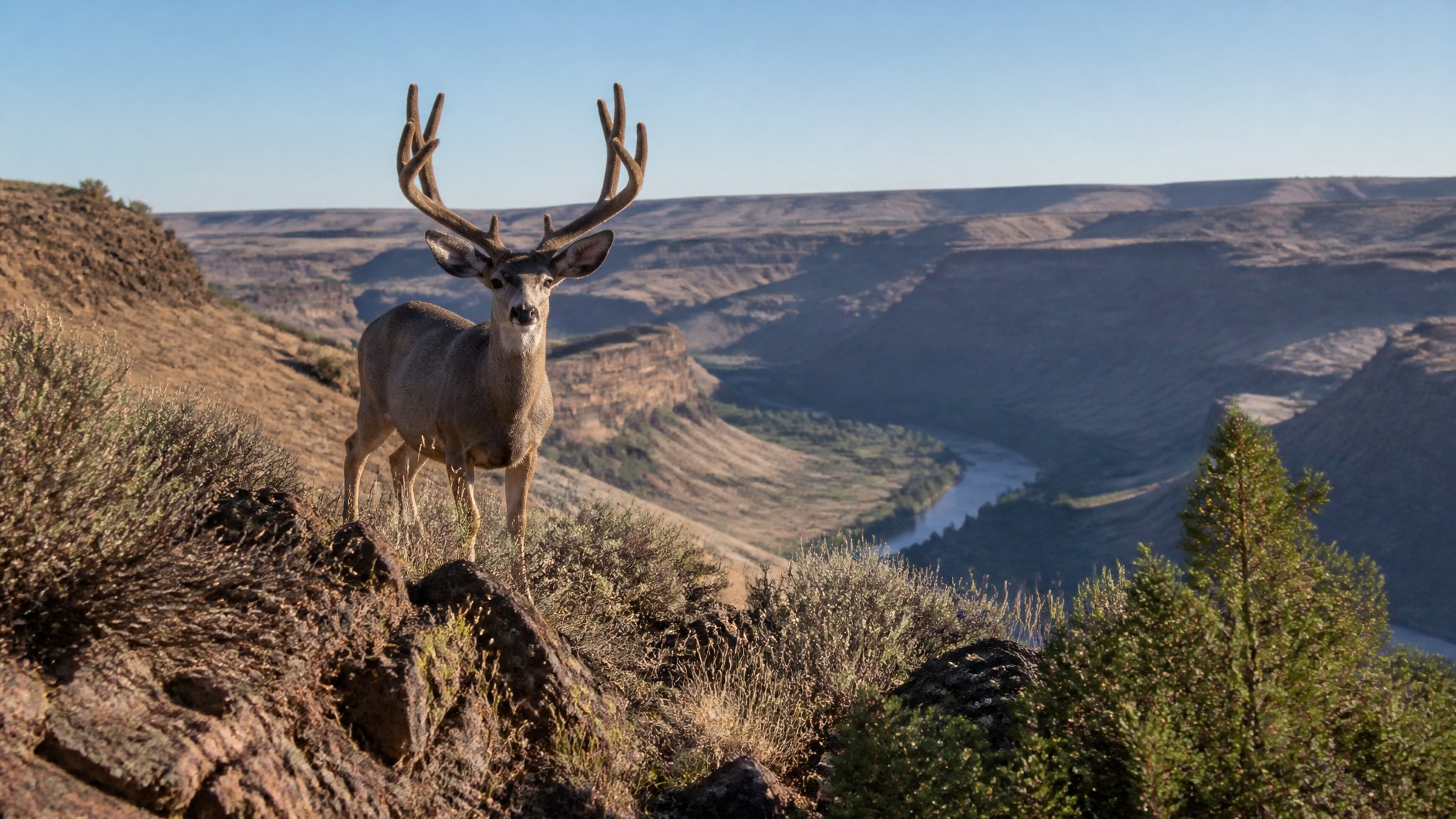
The Fossil unit covers a substantial chunk of Wheeler County in north-central Oregon, east of the Ochoco Mountains and west of the John Day basin proper. The terrain is classic high desert canyon country: rimrock plateaus falling away into sage flats, deep draws choked with mountain mahogany and juniper, and scattered ponderosa parks on the higher benches. Elevations range from about 2,400 feet in the canyon bottoms to nearly 5,000 feet on the higher benches above Spray and Service Creek.
The unit holds a decent resident mule deer population. You're not going to find the trophy concentrations of a draw-only unit, but mature bucks with 24–28 inch spreads are taken every season by hunters who do their homework. The land access is the real draw: a significant portion of the unit is BLM ground with legal access, and ODFW general archery deer tags are available over-the-counter.
Summer Scouting: Glass First, Walk Second
Pre-season glassing in late July and early August is essential. Bucks in the Fossil unit are still in velvet through the archery opener and tend to pattern predictably around water sources, feeding benches, and thermal bedding cover. Get to a high vantage point by 5:30 AM and glass hard through mid-morning. Focus on the transition zones between open sage flats and juniper stands — that's where bucks feed early before retreating to shaded canyon walls and north-facing slopes to bed.
Digital scouting with OnX Hunt or FarOut is critical for identifying BLM parcels. The Fossil unit is a patchwork of public and private land, and the private sections are not always obvious on the ground. Download the offline maps before you go — cell service is unreliable across most of the unit. The BLM Prineville District manages a large portion of public land in the area; their office in Prineville can provide current access information and fire restriction updates.
Water Is Everything in August
By mid-August in Wheeler County, water defines deer movement. Natural springs, stock ponds, and creek seeps are your primary target areas. Find water on public land, set up a cellular trail camera in late July if legal and logistically feasible, and let the camera work for you. Deer will move to water in the evening and again before first light. A waterhole ambush with a ground blind — set up a week or more before the opener to let deer pattern to it — is one of the most consistent archery strategies in this country.
Service Creek and the North Fork John Day River corridor in the lower unit hold water year-round and attract deer from the surrounding sage flats. The riparian zones along these drainages are worth hunting both morning and evening, particularly where canyon walls funnel movement into natural choke points.
Access Roads and Camp
Fossil is the primary access hub. Highway 19 runs north-south through the heart of the unit, connecting Fossil to Spray to the south and Arlington on the Columbia to the north. County and BLM roads spur off 19 in both directions — many are passable in a high-clearance 2WD vehicle in dry conditions, but a 4WD with all-terrain tires is strongly recommended once you leave the pavement.
Dispersed camping on BLM land is free and widely available throughout the unit. Pick a site at least 200 feet from water sources and pack out everything you pack in. Nights in Wheeler County drop into the 40s even in August — bring warm layers regardless of the forecast. August is also prime rattlesnake season in this country; watch where you put your hands and feet in rocky areas.
Shot Opportunities and Realistic Expectations
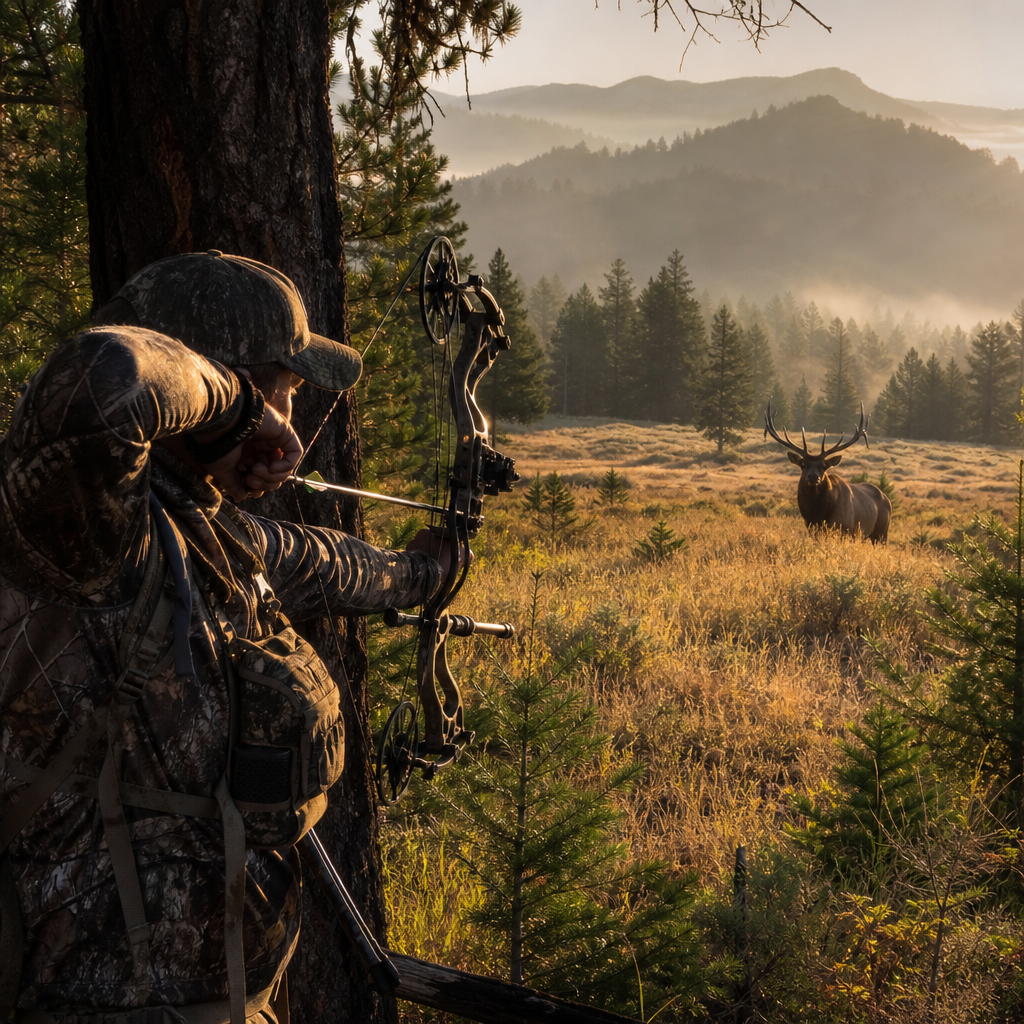
Archery mule deer hunting in open country is a mental game. You will glass deer that you cannot reach. You will close to 60 yards on a buck and watch him vanish into a draw you didn't know existed. Heat mirage will drive you insane at midday. The hunters who punch tags in units like the Fossil are the ones who stay mobile, glass from multiple vantage points, and are willing to commit to a stalk even when the odds look marginal.
Spot-and-stalk is the primary technique on the open benches. Cut the wind, use terrain to hide your approach, and close the distance as fast as the ground allows. In the juniper and mountain mahogany draws, still-hunting through likely bedding cover can produce close encounters. Carry a rangefinder and shoot your realistic effective range — mule deer in flat, open terrain can cover 80 yards in a blink once they decide to go.
The Bottom Line
The Fossil unit isn't going to make anyone's top-five list of Oregon archery deer destinations. That's exactly why it deserves a closer look. OTC tags, good BLM access, underworked country, and August thermals that keep the deer patterned — if you're willing to put in pre-season time on a spotting scope and accept that the bucks you'll find aren't going to stop traffic, this is a unit worth hunting.