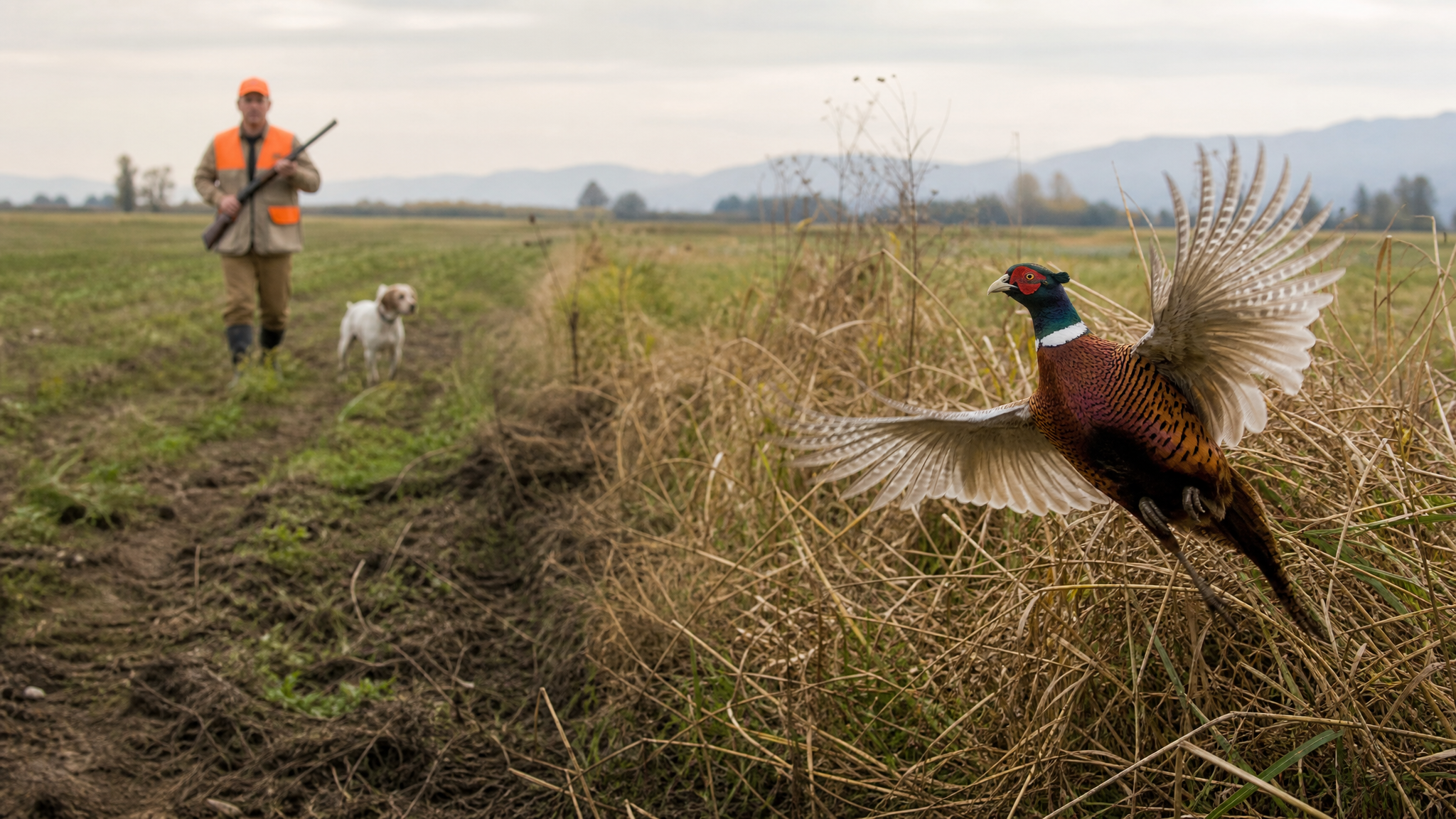
Ring-necked pheasant hunting in Oregon doesn't get the same breathless press as elk or steelhead, but for hunters who've spent a sharp October morning working a pointing dog through Willamette Valley grass with a rooster thundering up in a blur of copper and green, it needs no promotion. Oregon's pheasant season offers accessible, social hunting close to the state's population centers — and with the right preparation, it's as productive as anything in the Pacific Northwest upland bird calendar.
Oregon Pheasant Season Basics
Oregon's general pheasant season typically opens in late October and runs through December in most zones, though dates and bag limits vary by zone and year. The 2026 season schedule should be confirmed with ODFW's current upland bird regulations — check the ODFW website or pick up a regulation pamphlet at any license vendor. The statewide bag limit is generally 2 roosters per day, 6 in possession. Hens are protected statewide.
A valid Oregon hunting license and upland bird validation are required. Licenses are available online through ODFW's licensing portal or at sporting goods retailers statewide.
Where the Birds Are: Willamette Valley Habitats
The Willamette Valley's mix of agriculture, wetlands, and Conservation Reserve Enhancement Program (CREP) lands creates ideal pheasant habitat in stretches. Birds concentrate in:
- Row crop edges: Corn, wheat stubble, and grass seed fields provide food. Birds roost in adjacent cover — grass waterways, brushy fence lines, cattail margins.
- Wetland fringes: The valley's bottomland marshes and sloughs provide dense, protective cover that roosters run to when pushed. Hunt edges, not centers.
- CREP grasslands: Conservation Reserve Enhancement Program lands planted to native grasses and wildflowers hold resident birds and provide the best public hunting access in the valley.
- Wildlife management areas: E.E. Wilson WMA (Benton County), Ankeny NWR (Marion County surroundings), and Baskett Slough NWR adjacent lands all offer quality pheasant habitat. Know which units allow hunting and what special regulations apply.
ODFW Pheasant Release Program
Oregon's ODFW releases pen-raised ring-necked pheasants at designated release sites throughout the season. These sites are distinct from wild bird populations and are intended to provide hunting opportunity close to population centers. In the Willamette Valley, release sites include locations in Linn, Benton, Marion, and Polk counties — check ODFW's current release schedule (typically posted online in October) for exact timing and locations.
Release birds behave differently than wild pheasants. They're less flighty initially, hold tighter to dogs, and concentrate at or near the release point for the first day or two. By the second week post-release, surviving birds have scattered and become nearly indistinguishable in behavior from wild birds. Hunt release sites early in the season for the highest success rates, but don't overlook them in mid-season — educated survivors are legitimate sport.
Wild Pheasants in the Willamette Valley
Wild pheasant populations in the Willamette Valley have declined significantly since the 1960s and '70s due to changes in agricultural practices and loss of nesting cover. Pockets of strong wild bird populations remain, however — particularly in areas with established CREP grass strips, farm ponds, and intact hedgerows. The lower Willamette south of Salem and the areas around Corvallis and Albany hold the most consistent wild bird numbers in the valley.
Finding wild birds requires scouting. Drive county roads in September and look for roosters in field edges at dawn and dusk. Note cattail sloughs, brushy fence corners, and any standing corn stubble — these are your October hunting grounds.
Dogs: Non-Negotiable for Pheasant Success
You can hunt pheasants without a dog. You'll recover a fraction of the birds you would with one. Roosters run. They run hard, and they run far, especially later in the season when hunting pressure has educated them. A flushing Labrador or springer spaniel keeps birds from out-running you; a pointing breed (German shorthair, Vizsla, English pointer) works cover methodically and gives you time to prepare for the flush.
For Willamette Valley pheasant conditions — wet grass, dense cattails, muddy bottomlands — a Labrador retriever is arguably the most practical single choice. They're tireless in cold water and wet grass, mark fallen birds precisely, and will charge into the nastiest cattail marsh without hesitation. If you're looking for a first hunting dog for Oregon upland birds, start here.
Shotgun and Load Selection
Pheasants are tough birds that require a solid hit. Don't bring a 28-gauge with light loads and hope for the best. The standard recommendation for pheasants in the Willamette Valley:
- Gauge: 12 or 20 gauge
- Shot: Non-toxic required on some WMAs and federal lands — check regulations. On private land and most state lands, lead is legal. Lead No. 4 or No. 5 is ideal; steel No. 2 or No. 3 for non-toxic requirements.
- Choke: Modified for flushing dogs; Improved Modified or Full if birds are running and flushing at distance late season
- Load: 1¼ oz. or heavier for lead; 1⅛ oz. of steel No. 2 handles most shots cleanly
October Prep Checklist
The season opens before you know it. Use August and September to check these boxes:
- Renew your hunting license and upland bird validation
- Scout Willamette Valley release sites and wild bird cover
- Run your dog — get them in shape and tuned on birds if possible
- Pattern your shotgun with your intended loads at 30 and 40 yards
- Check WMA access rules and non-toxic shot requirements for your target areas
- Contact local sporting goods stores for intel on release site timing closer to season
Oregon's pheasant season flies by fast. But for hunters willing to put in the legwork — or the dog work — the Willamette Valley delivers autumn rooster hunting that's as satisfying as anything the state has to offer. Get out there.