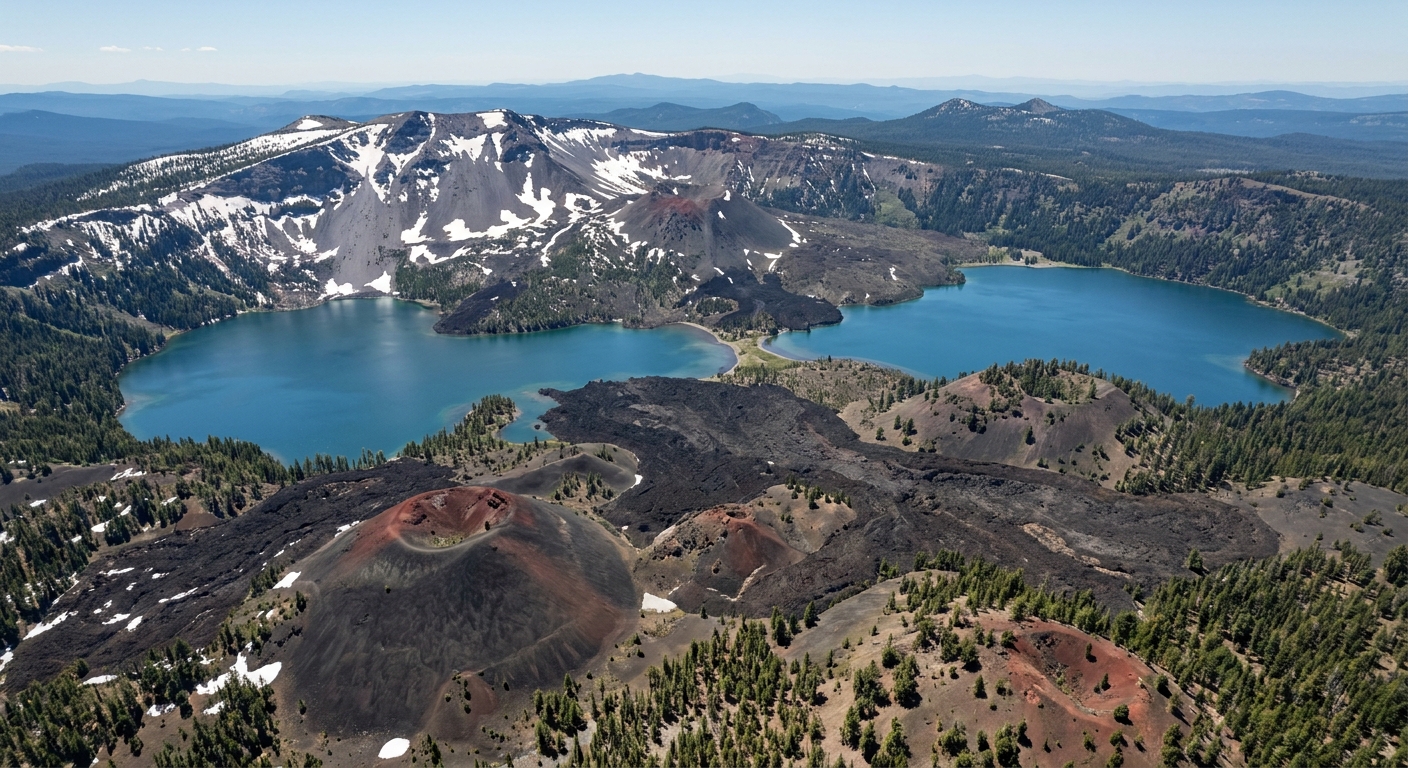
Newberry Volcano National Monument sits 20 miles south of Bend and remains one of Central Oregon's most spectacular and underutilized destinations. The monument encompasses over 55,000 acres on the flanks of Newberry Volcano — one of the largest volcanoes in the continental United States by volume. At the summit caldera, two separate lakes (Paulina Lake and East Lake) sit side by side within the crater rim, divided by a central pumice plateau. Add the Big Obsidian Flow, Paulina Peak, and miles of uncrowded trails and you have a legitimate wilderness experience within an hour of Bend.
When to Go
The caldera sits at 6,400 feet elevation. The access road (Forest Road 21) typically opens in late May or early June depending on snowpack — check with the Deschutes National Forest before planning a Memorial Day trip. The sweet spot for backpacking is late June through early October. July and August are prime: trails are snow-free, lakes are fishable, and the summer crowds at nearby Cascade destinations push some visitors toward the more remote eastern portions of the monument where you can still find solitude.
Avoid the peak of the Paulina Lake campground crowds (4th of July weekend through mid-August) if solitude matters. The backcountry areas east of East Lake and the outer caldera rim trails see a fraction of the day-use traffic at Paulina Lake itself.
The Best Routes
Paulina Lakeshore Trail (7.5 miles, easy)
The full circumference of Paulina Lake is the monument's most popular hike and is excellent for a day trip or car-camp base. The trail circles the entire lake through lodgepole pine and pumice flats, with views of the caldera rim throughout. Fishing access is excellent from the western and northern shores. Estimated time: 3.5 to 5 hours for the full loop.
Paulina Peak Summit (4 miles out-and-back, strenuous)
The highest point in the monument at 7,985 feet offers the defining view of the caldera — both lakes visible simultaneously, the obsidian flow, the outer flanks dropping to the high desert, and on clear days, the entire Oregon Cascade crest from Hood to McLoughlin. The trail gains 1,500 feet from the caldera floor. Do this hike on a clear morning; afternoon thunderstorms are common in July and August above treeline. The view from the top is genuinely one of Oregon's best non-technical summit experiences.
Big Obsidian Flow Trail (0.9 miles, moderate)
This short interpretive trail crosses the largest obsidian flow in North America — roughly 1,700 years old and still razor-sharp. A boardwalk and gravel trail route protects both the geology and your boots. Obsidian everywhere, stunning volcanic colors, and the surreal experience of walking on a material Native Americans traveled hundreds of miles to obtain for tools. Do this one even if you only have two hours at the monument.
Caldera Rim Backpacking Route (15+ miles, multiple nights)
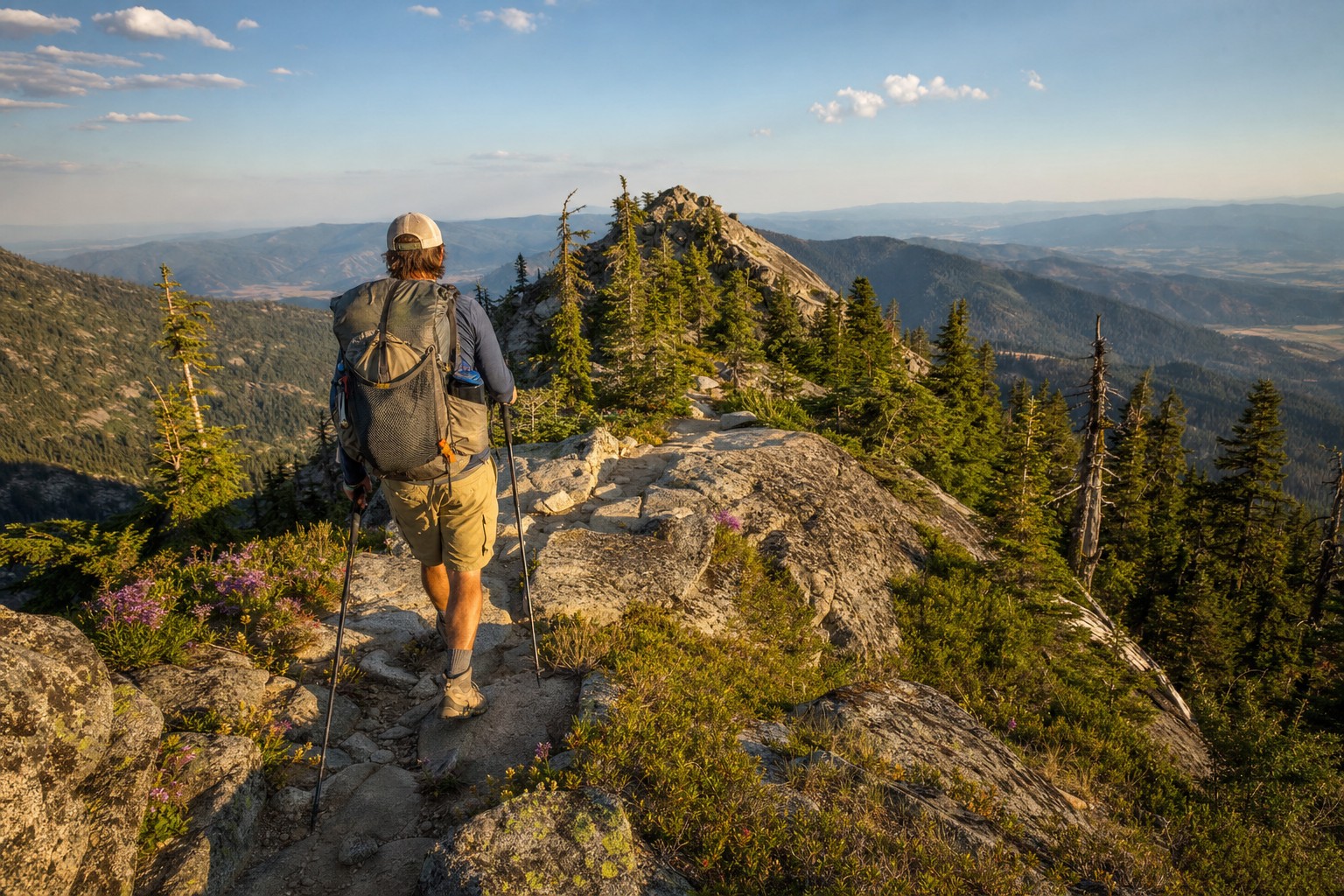
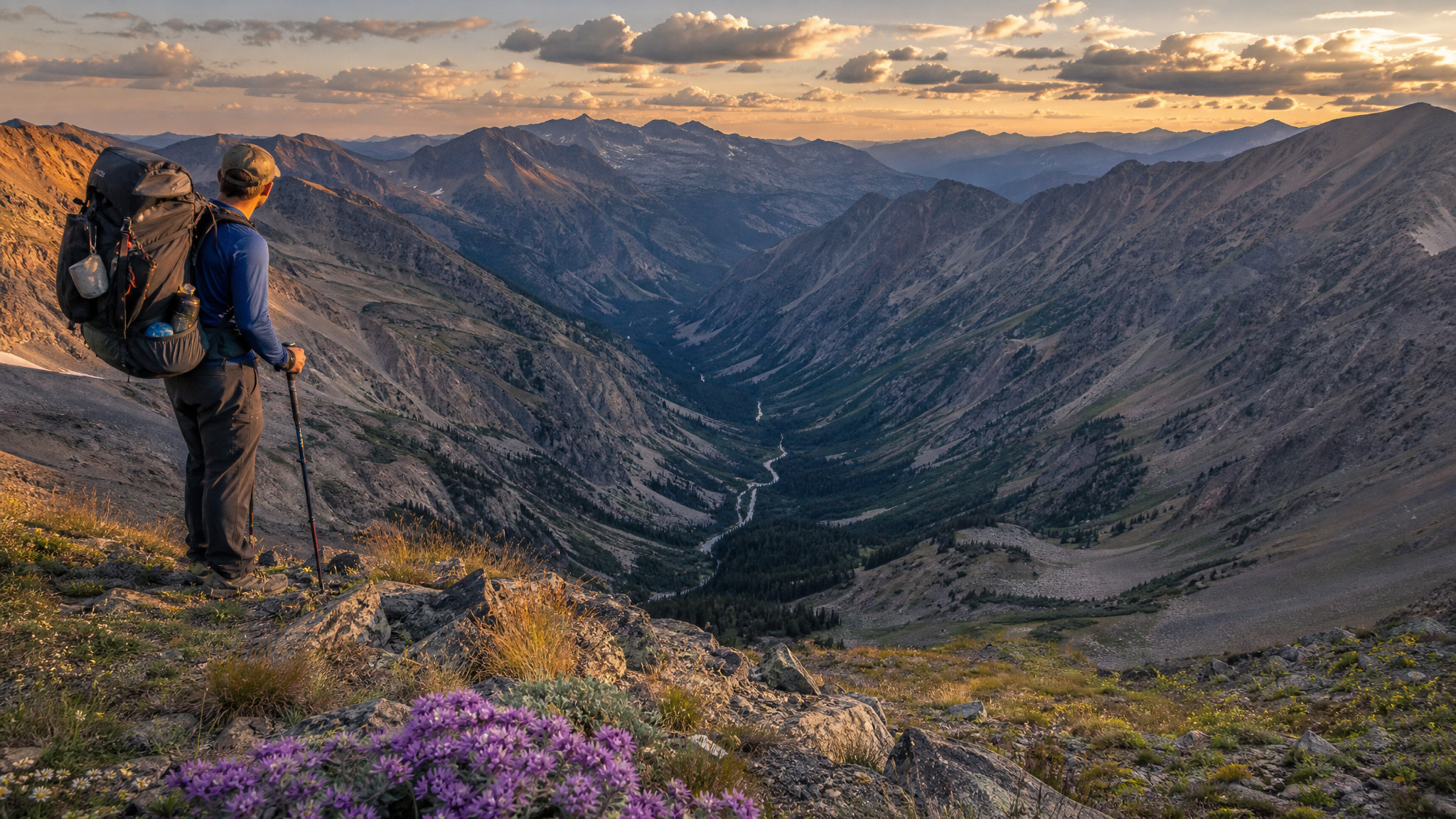
The most rewarding overnight option in the monument follows the caldera rim from Paulina Peak south and east, looping around the outer crater wall with views in both directions — caldera on one side, high desert stretching to Steens Mountain on the other. This route is informal; navigation by map and GPS is required as signage is limited on the outer rim sections. Camp on the pumice flats south of East Lake for an unobstructed eastern horizon sunrise over the desert.
Water is limited outside the caldera — carry 2 to 3 liters when leaving the lake vicinity. The outer rim slopes are exposed and offer no shelter; check weather before committing to this route and be prepared for afternoon lightning.
Fishing the Caldera Lakes
Paulina Lake and East Lake are both productive fisheries and add tremendous value to a backpacking trip here. Paulina holds trophy brown trout — fish over 20 inches are caught regularly, and the lake record brown exceeds 26 pounds. Trolling with a Wedding Ring spinner tipped with worm, or fishing leech patterns on a sinking fly line along the rocky drop-offs, produces fish consistently in summer. The lake's cold, clear water and volcanic structure create excellent trout habitat.
East Lake is warmer and shallower, holding rainbow trout and Atlantic salmon (stocked). Shore fishing with PowerBait or small spinners along the boat launch area and the north shore rocky points is productive for visitors without a boat. Both lakes require an Oregon fishing license. Consult current ODFW regulations for any special restrictions before fishing.
Gear Notes for Newberry
- Footwear: The obsidian, pumice, and volcanic rock on many trails is extremely abrasive. Gaiters protect ankles and keep pumice gravel out of trail runners. Heavier hikers should consider leather or stiff synthetic mid boots for the outer caldera routes.
- Sun protection: The caldera is exposed and the pumice reflects significant UV. Hat, sunglasses, and sunscreen are mandatory even on overcast days at this elevation.
- Water: Filter water from the lakes (type II filter minimum). The springs on the outer flanks are unreliable after mid-July. Plan your water carries carefully for any route that leaves the caldera.
- Camping: A Deschutes National Forest Wilderness permit is required for backcountry camping outside the developed campgrounds. Self-issue permits are available at the monument entrance. Camp 200 feet from water and use established fire rings only — fire restrictions are typically in effect by late July.
Getting There
From Bend, drive south on US-97 approximately 23 miles to the La Pine area, then east on County Road 21 (Paulina Lake Road) for 15 miles to the monument entrance. The road is paved but narrow in sections. A Northwest Forest Pass or National Monument fee is required — annual passes work here. Newberry's visitor center and the Lava Lands Visitor Center on US-97 provide current conditions and permit information.
The Bottom Line
Newberry Volcano is Oregon's best volcanic landscape experience outside of Crater Lake, and it sees a fraction of the crowds. The combination of two fishable caldera lakes, summit views, obsidian geology, and genuine backcountry camping on the outer rim makes it a destination worth building a trip around. Twenty miles from Bend, but it feels like another world entirely. Get there in late June or early July before fire season hits and you'll have one of Oregon's finest summer weekends.