Oregon's spring turkey season extends into June in many eastern units, and for hunters willing to put in the work, the Blue Mountains can still produce mature toms when the rest of the state has wrapped up. The catch: these are late-season birds. They've been called at, shot at, and educated. The run-and-gun style that kills birds in April doesn't work here. You have to slow down, think like the turkey, and let them come to you.
Blue Mountains Turkey Country
The Blue Mountains of northeastern Oregon—primarily Umatilla and Wallowa-Whitman National Forests—hold solid populations of Rocky Mountain Merriam's turkeys. These birds occupy a distinct niche from the Willamette Valley's Rio Grande hybridized flocks. Merriam's are ponderosa pine and mixed-conifer birds. They roost in big old-growth pines on ridge edges, feed in park-like openings, and strut along dirt roads and log landings.
Units 48, 49, 50, and 53 (Wenaha, Sled Springs, Chesnimnus, and Imnaha) are worth your attention. Public access is good through USFS and BLM ground. Cell service is minimal—download your OnX maps before you leave the pavement.
Why Late-Season Birds Are Different
By June, most hens are on the nest or brooding. The breeding peak is well past. Toms are reverting to bachelor groups and becoming unpredictable. They may respond to a call, or they may hang up at 200 yards and refuse to budge. The loud, aggressive yelps and cuts that fired up April birds will spook a June tom that's already been chased by three hunters this month.
Adjust your mindset accordingly:
- Call less. One or two soft tree yelps or a few clucks and purrs is often more effective than a long, aggressive sequence. Let silence do the work.
- Set up where they want to be. In late season, turkeys follow habit. Find their strut zones—log landings, ridgeline trails, open meadows—and intercept them rather than pulling them off course.
- Glass more. Locate birds visually first. A tom you've watched for 20 minutes is infinitely easier to hunt than one you heard and are now guessing about.
- Stay longer. Late-season toms often show up at 9 or 10 AM after the morning feeding routine settles. Don't give up at 8.
Decoy Strategy
A single hen decoy—feeding posture, not upright—is usually enough. Avoid full-strut Jake decoys late in the season. They can work but they also push subordinate toms away, and by June the dominant birds have already sorted out the pecking order and aren't looking for a fight the same way they were six weeks ago.
Stake your hen at 20–25 yards in front of your blind or setup. If you're hunting a known strut zone, position her in the center of the open area where she'll be visible from a long distance.
Shooting and Setup Considerations
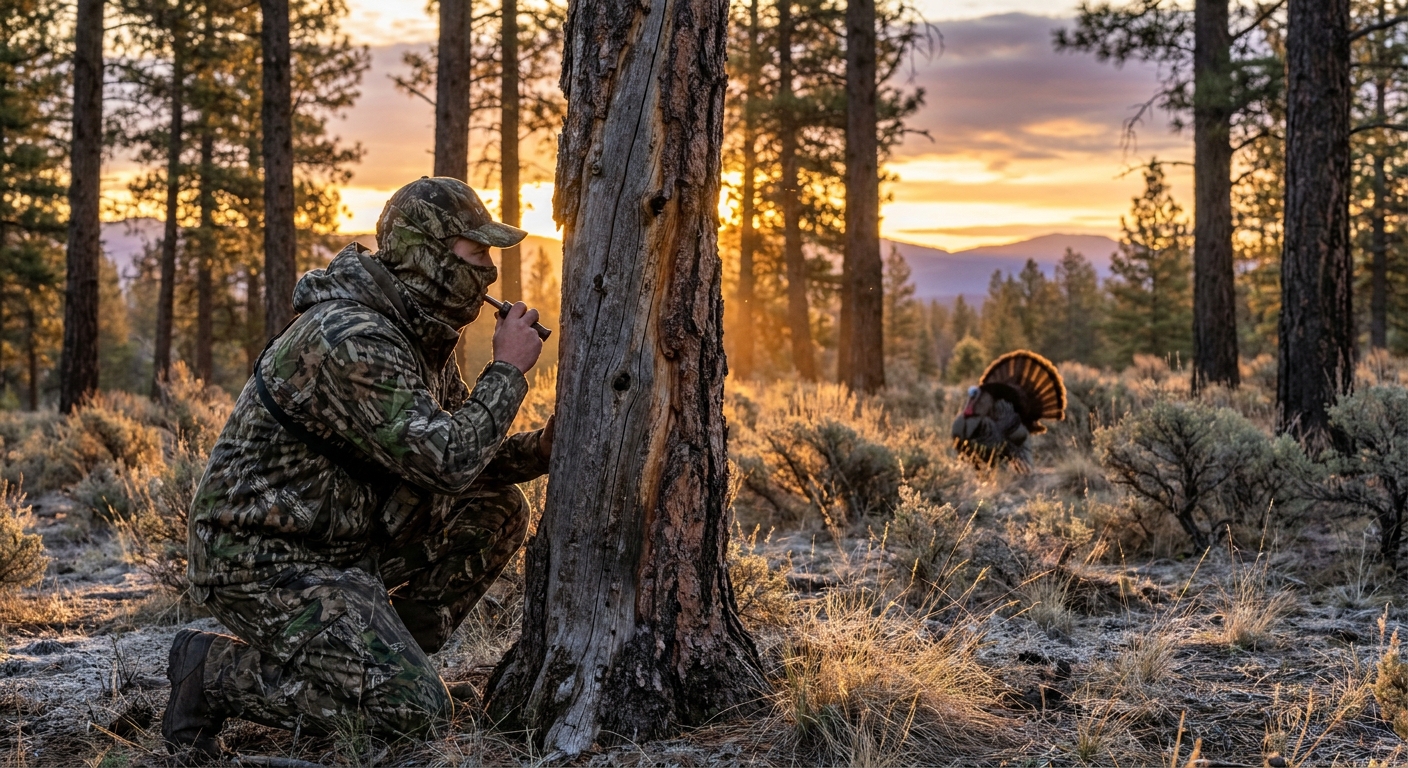
Blue Mountains terrain means longer walks. Keep your setup light. A pop-up blind is great if you have scouted a specific strut zone and can set it up the evening before. For run-and-gun style, natural cover against a wide tree trunk works fine—turkeys have exceptional eyesight but tend to look for movement, not patterns. Stay still and you can get away with less concealment than you'd think.
Most Blue Mountains turkey hunters run 12-gauge guns with #4, #5, or #6 loads out to about 40 yards. If you're shooting a modern turkey-specific choke and premium loads like Federal Premium 3rd Degree or BOSS Tom TSS, you can extend that to 50–60 yards confidently. Measure your pattern before season and know your gun's limits.
Licensing and Access Notes
Oregon turkey tags are over-the-counter for spring season residents. You can buy a second turkey tag if you harvest your first. The season runs through June 15 in most eastern units—check the current ODFW synopsis for your specific unit, as dates vary. No special draws required. A valid hunting license plus the turkey tag is all you need.
Logging roads are the primary access routes into the Blue Mountains. Many are gated May through June for mud season—call the local USFS ranger district before your trip to confirm road conditions. A high-clearance 4WD with good tires is not optional in this country.
The Reward
A mature Merriam's tom from Oregon's Blue Mountains is one of the more satisfying birds you'll ever tag. Full, white-tipped fan feathers, a thick beard, and a bird that earned his education over months of hunting pressure. The country itself—open ponderosa parks, rocky ridgelines, and the constant background of hawks and meadowlarks—makes for a hunt worth doing even when the birds don't cooperate. Get out there before June 15.