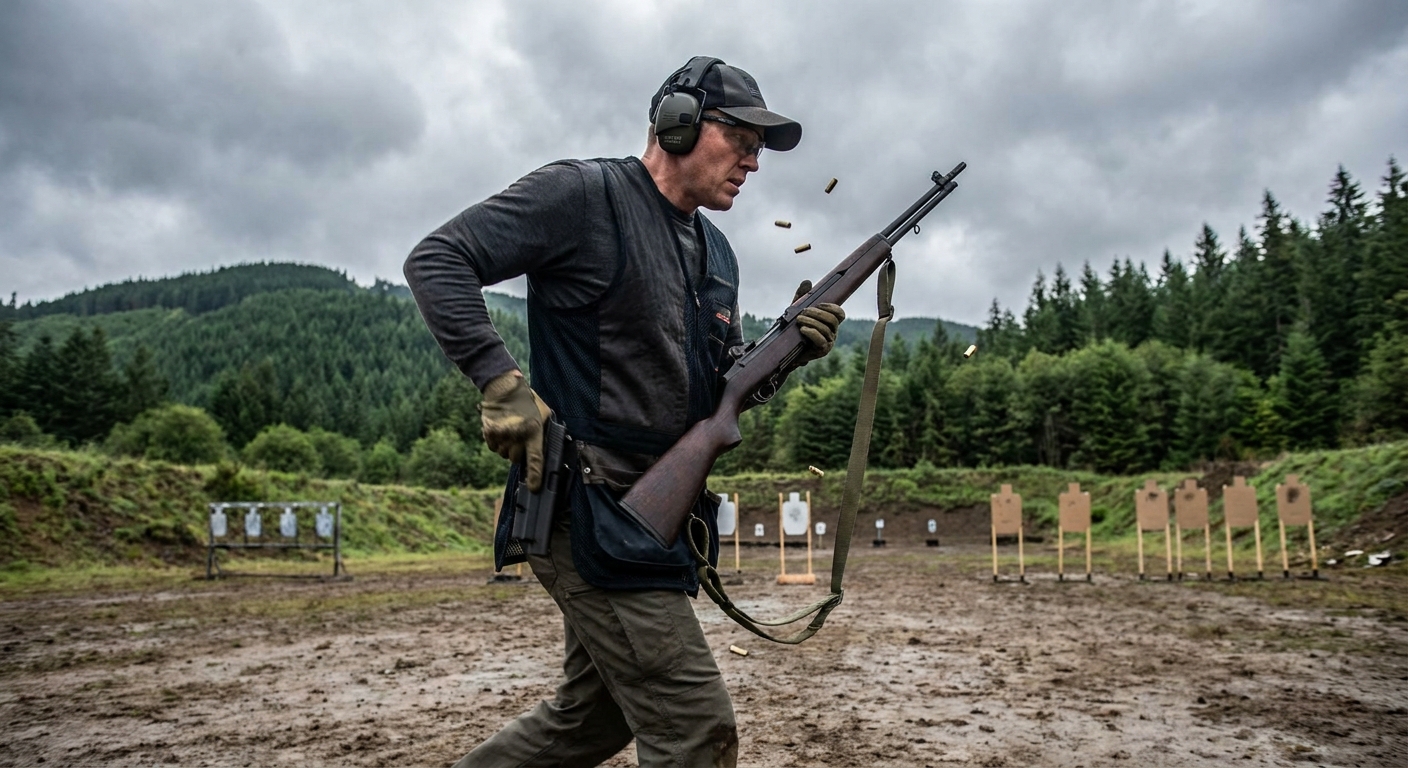
3-gun competition—running rifle, pistol, and shotgun through dynamic stages that require transitions, movement, and target engagement at varying distances—is one of the fastest-growing shooting sports in the country. It's also one of the most addictive. Ask anyone who's run their first match: they come home tired, humbled, and immediately looking for the next one.
The Pacific Northwest has a solid 3-gun community. Clubs in the Willamette Valley, central Oregon, Spokane, and the Puget Sound region run regular local matches. National-level events like PNW Multi-Gun and various USPSA-sanctioned 3-gun matches draw competitors from across the region. If you shoot and you haven't tried this yet, here's how to start.
What 3-Gun Actually Is
A 3-gun match consists of multiple stages, each requiring competitors to engage an array of steel and cardboard targets at varying distances using whatever combination of rifle, pistol, and shotgun the stage design calls for. Some stages are primarily rifle, some are shotgun-heavy with knockdown steel, some mix all three in rapid succession. You're scored on time plus penalties for missed targets or procedural errors.
Divisions exist to keep competition fair: Tactical (more stock gear), Open (race guns and extended magazines), Heavy Metal (big calibers, limited capacity), and others. For beginners, Tactical or Tactical Optics is the right starting point—it's the division you're probably already equipped for.
The Gear: What You Actually Need to Start
The barrier to entry is lower than most people think. You don't need a race gun with a compensator and a $500 trigger job. Here's what you actually need:
Rifle
An AR-15 in 5.56 or .223 with a functional red dot or low-power variable (1–6x or 1–8x) is the standard starting rig. A reliable 16-inch mid-length or carbine is all you need. Your existing hunting or home defense AR will work. Iron sights are legal but slower—if you have a red dot gathering dust, get it mounted.
- Minimum 5 magazines loaded to capacity (30 rounds each)
- A sling you can run with (two-point, adjustable)
- A way to carry your rifle magazines on your body (belt pouches or a vest)
Pistol
Your GLOCK 17, 34, M&P 9, or similar full-size 9mm works perfectly. You're going to draw from a holster under time pressure, so use a quality Kydex or leather holster that retains the gun securely at the draw and reholsters cleanly. No Uncle Mike's nylon.
- Minimum 3 magazines
- Double magazine pouches on your belt
- An OWB holster at 3–4 o'clock
Shotgun
This is where 3-gun differs most from other shooting sports. You need to be able to reload your shotgun quickly on the move. A pump-action like the Mossberg 590 or Remington 870 works in Tactical Heavy division, but a semi-auto (Beretta A300/A400, Mossberg 930/940, Benelli M2) is strongly preferred in standard divisions for competitive reasons.
- A side saddle or shell carrier on the receiver
- A loading pouch or quad-load carrier on your belt
- Shot shells (7.5 or 8 shot) for close steel, slugs for long-range targets
Your Belt: The Foundation of Your Setup
3-gun is really a belt sport more than a gun sport. Everything lives on your belt—pistol, pistol mags, rifle mags, shotgun shells, dump pouches. A dedicated competition belt (CR Speed, DAA, or similar) with an inner/outer system keeps it stiff and positioned correctly. Budget $80–$150 for a good belt and you'll use it for years.
The Rules of Your First Match
Show up early. Tell the match director and your squad that you're a first-timer. The 3-gun community is almost universally welcoming to new shooters—someone will walk you through the rules, show you how to stage your shotgun, and explain the course of fire before the timer starts. Don't be embarrassed. Everyone had a first match.
Safety rules at 3-gun matches follow standard USPSA/NROI rules: finger off the trigger unless engaging targets, muzzle awareness at all times, pistols holstered with hammer down or safety on, rifles on safe until the stage starts. Violations result in disqualification. Take the rules seriously and you'll be fine.
Where to Find Matches in the Pacific Northwest
The best resources for finding local matches:
- Practiscore.com: The central registration hub for competitive shooting matches nationwide. Search your state and filter for 3-gun.
- Multi-Gun Nation and USPSA: Both organizations run regional and national 3-gun series. Membership is low-cost and gets you access to match listings.
- Local gun clubs: Willamette Valley Shooters, Central Oregon Shooting Sports Association, Cascade Pistol Club, and dozens of smaller clubs run regular 3-gun and multi-gun matches throughout the year.
Managing Expectations
Your first match will be slow and messy. You'll forget to stage your shotgun correctly on at least one stage. You'll miss a target you thought was a gimme. You'll finish near the bottom of the standings and have an absolute blast doing it. That's exactly how it's supposed to go.
3-gun rewards dry fire practice, efficient movement, and smooth transitions more than raw shooting ability. The hunter who can shoot accurately is already halfway there—the match-specific skills build quickly with reps. Compete a few times before you start buying gear upgrades. Figure out what's actually slowing you down, and spend your money there.
The community, the challenge, and the feeling of running a well-executed stage cleanly—there's nothing quite like it in the shooting sports world.