A decade ago, serious long-range hunters carried handwritten DOPE cards and hoped the conditions matched what they'd verified at the range. Today, a Kestrel in your shirt pocket can solve a 500-yard shot in seconds, accounting for real-time wind, temperature, altitude, and even the Coriolis effect. Ballistic calculators have genuinely changed the game — but only for hunters who know how to use them correctly. Enter your data wrong, and a calculator gives you a precise answer to a wrong question. Here's how to build a firing solution you can actually trust on a mule deer at 400 yards or an elk at 600.
Choosing Your Platform: App vs. Dedicated Device
Ballistic calculators come in two main forms: smartphone apps and dedicated devices (primarily Kestrel meters with built-in ballistic engines).
Smartphone Apps
The most popular are:
- Applied Ballistics Mobile: The gold standard for precision data. Uses the AB Analytics engine and the Litz drag models. Excellent for hand-entered custom curves. Subscription model.
- Hornady 4DOF: Uses a four-degrees-of-freedom model that accounts for bullet gyroscopic stability. Free, highly accurate for Hornady bullets with factory 4DOF data.
- Ballistic AE: One of the most user-friendly interfaces. Good choice for newer long-range hunters who want reliable solutions without a steep learning curve.
- Kestrel LiNK App: Pairs wirelessly with a Kestrel weather meter for real-time atmospheric data. The combination of a phone app and a dedicated Kestrel anemometer is extremely capable at a lower price than a Kestrel with a built-in engine.
Kestrel with Applied Ballistics or Hornady Engine
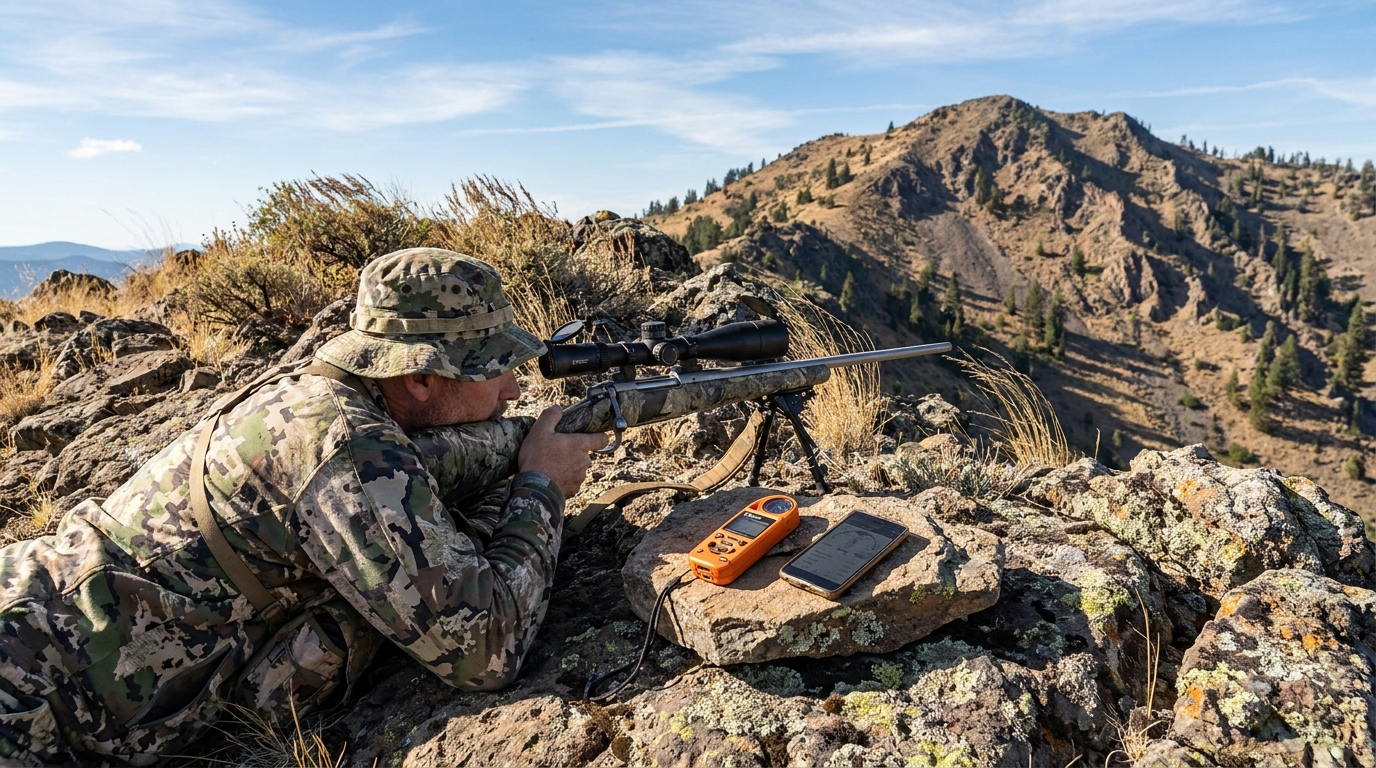
The Kestrel 5700 Elite with Applied Ballistics or the Kestrel 5700 with Hornady are the field-standard tools for serious western hunters. They measure wind speed, temperature, humidity, pressure, and density altitude simultaneously — and feed that data directly into the ballistic engine without any manual entry. For a hunt where conditions change hour to hour (which describes every high-country Oregon hunt), this is the most reliable solution.
The tradeoff is cost — a quality Kestrel with ballistics runs $600 to $800. For hunters who regularly shoot past 400 yards, it's a worthwhile investment. For hunters whose shots rarely exceed 300 yards, a phone app with a separate handheld anemometer covers 95% of scenarios at a fraction of the cost.
The Five Data Points That Actually Matter
Most ballistic calculator errors come from bad input data, not bad software. Get these five numbers right, and your solution will be reliable:
1. Muzzle Velocity (MV)
This is the most critical input and the one most often gotten wrong. Factory ammo advertises velocity from a 24" test barrel. Your 22" hunting rifle will be slower — typically 25 to 50 fps per inch of barrel lost. And lot-to-lot ammo variation adds another 25 to 50 fps. Handloaders often measure velocity on a cool morning that doesn't represent field conditions.
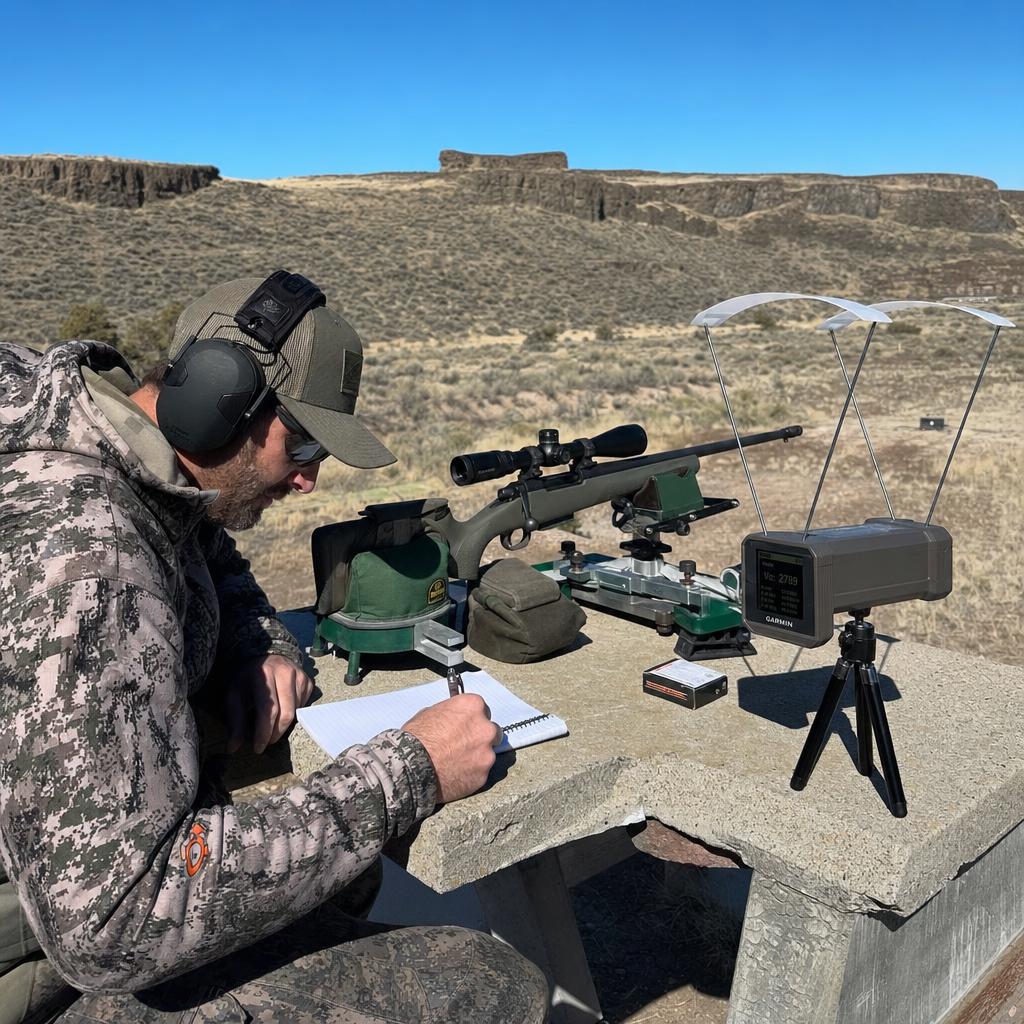
The fix: Chronograph your actual load from your actual rifle in conditions similar to hunting (temperature matters — velocity drops roughly 1–2 fps per degree Fahrenheit with most powders). Use an average of at least 10 shots. Enter this number, not the box velocity.
2. Ballistic Coefficient (BC) or Drag Model
G7 BC is more accurate than G1 for long, spitzer hunting bullets — always use G7 when available. Even better, Applied Ballistics has measured Custom Drag Models (CDM) for hundreds of bullets that outperform any single BC at extended ranges. If your bullet has a CDM in the AB library, use it.
3. Scope Height Over Bore
Measure the distance from the centerline of your scope to the centerline of your bore with calipers. Most rifle/scope combinations fall between 1.5" and 2.0". An error of 0.25" here produces meaningful hold errors at long range — get it right.
4. Zero Range
Enter your actual confirmed zero distance. If you zeroed at 100 yards, enter 100. If you zeroed at 200, enter 200. This seems obvious, but mismatched zero distances are a surprisingly common source of off-target first shots.
5. Atmospheric Conditions
Temperature, altitude (or barometric pressure), and humidity all affect bullet flight through their influence on air density. A 10°F temperature swing changes point of impact at 500 yards by several inches on most hunting cartridges. Density altitude — a combined measure of pressure, temperature, and humidity — is the single number that captures most of this. At Oregon's higher hunting elevations (5,000 to 8,000 feet), density altitude can run 1,000 to 2,000 feet higher than true elevation, significantly reducing drag and causing bullets to hit high relative to a sea-level zero.
Verifying Your Solution in the Field
Never trust a calculator you haven't confirmed on paper. Before any western hunt:
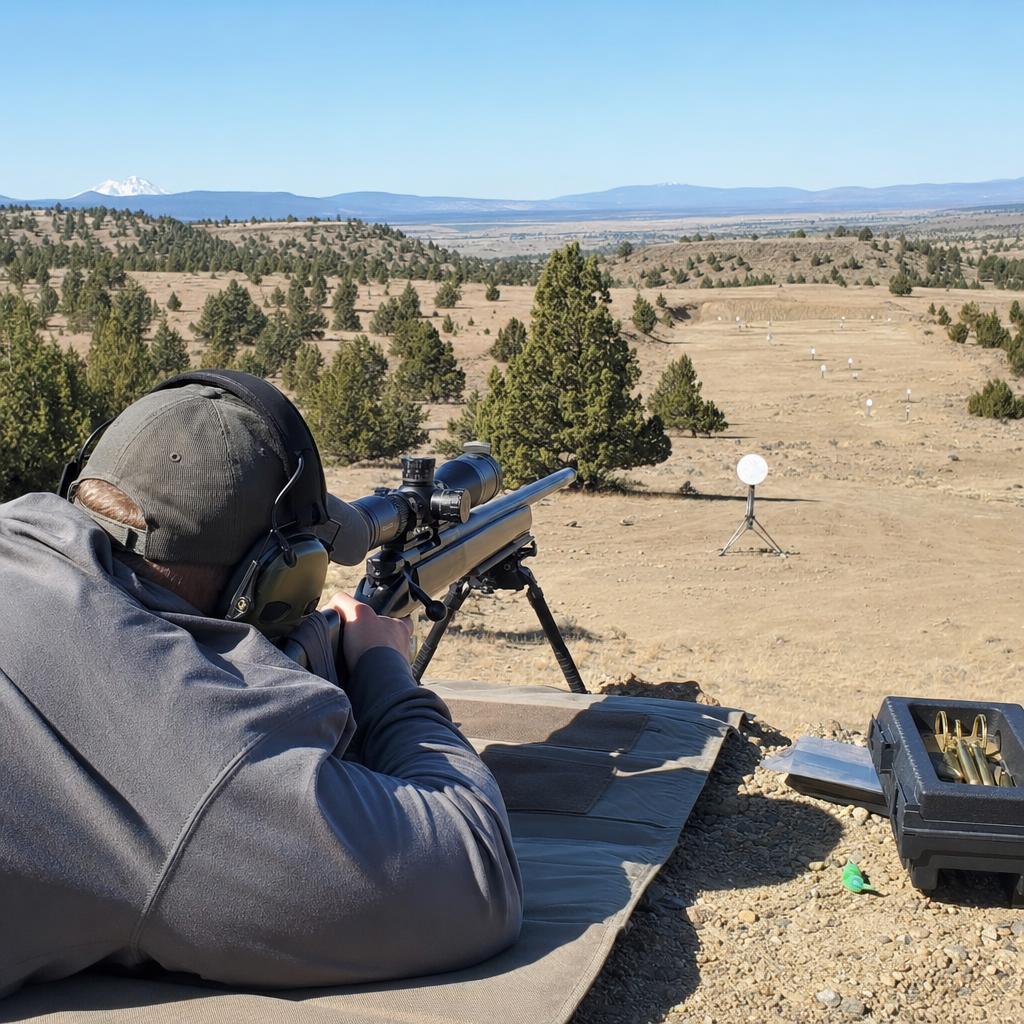
- Verify your solution at 200 and 300 yards with your actual hunting load under similar conditions to where you'll hunt.
- Record any deviation between predicted and actual POI. If the calculator is consistently 1 MOA high at 300, apply that correction as a confirmed offset.
- Build a verified DOPE card for your rifle and carry it as a backup to your electronic solution.
- In hunting conditions, always range your target first, then query the calculator — do not estimate distance.
Wind: The Variable the Calculator Can't Solve for You
A ballistic calculator solves the physics of a projectile in still air modified by atmospheric density. Wind is different — it requires you to read the terrain and make a judgment call. The calculator can tell you what 10 mph of full-value crosswind does to your bullet at 400 yards (several inches, depending on the cartridge). It cannot tell you that the wind in the canyon is gusting to 18 mph while you're reading 8 mph at your position. Wind reading is a learned skill that no app replaces.
The Kestrel is the best tool for measuring wind at your position. For wind downrange, watch mirage through your spotting scope, observe vegetation, and use your knowledge of terrain-induced wind patterns. When in doubt, take the chip shot and close the distance rather than pushing the range in variable winds.
Bottom Line
Modern ballistic calculators — whether a Kestrel Elite or a quality phone app — are among the most valuable tools a western hunter carries. But they amplify good data and amplify bad data equally. Spend the time at the range chronographing your load, confirming your BC, measuring your scope height precisely, and verifying your solution at distance before season. Do that work, and your calculator becomes a genuine force multiplier. Skip it, and you're just carrying an expensive overconfidence generator into the field.