Oregon's feral hog problem is growing faster than most hunters realize. Escaped farm pigs and deliberate illegal releases have established populations across several counties in the southern and eastern parts of the state, and ODFW's official stance is clear: they want these animals removed. That means no bag limit, no season, and no tag required for hunting feral swine in Oregon — just a valid hunting license and the drive to get after them.
If you've been waiting for an excuse to pick up a night-vision or thermal optic and do some good for Oregon's landscape, this is it.
Where Feral Hogs Live in Oregon
Unlike Texas or the Southeast, Oregon's feral hog population is still relatively localized, which makes scouting critical. Concentrations exist in:
- Jackson County: The Rogue Valley and surrounding foothills hold the state's most established populations. Agricultural areas near Medford, Ashland, and the Applegate Valley have documented hog activity.
- Josephine County: Similar terrain to Jackson, with river bottom and oak savanna habitat that pigs love. Some private ranches deal with significant damage.
- Douglas County: Lower elevation drainages off the Umpqua watershed have seen increasing sightings in recent years.
- Eastern Oregon fringe counties: Sporadic populations exist but are less established. Contact local ODFW offices for current intelligence.
The most reliable access is through private landowners who are dealing with crop or pasture damage. Many ranchers will welcome hunters at no cost — pigs are expensive problems, and hunters are free labor. Knock on doors, be respectful, and offer to share photos and any information about what you find.
Understanding Feral Hog Behavior
Pigs are not deer. They operate on a completely different timeline and logic, and hunters who approach them like whitetail hunters will spend a lot of nights watching empty fields.
Activity Patterns
Feral hogs are primarily nocturnal, especially in areas with hunting pressure. In low-pressure private land settings, you may catch them feeding in fields at dawn and dusk. On pressured land, expect them to move exclusively after dark. This is where thermal optics and night-vision become game-changers rather than novelties.
Sign to Look For
- Rooting: Pigs plow up soil looking for grubs, tubers, and acorns. Fresh rooting looks like a rototiller ran through an area — soft dirt turned over in patches ranging from a few square feet to several acres.
- Wallows: Muddy depressions near water sources where pigs roll to regulate temperature and remove parasites. Fresh wallows will have muddy water and tracks.
- Rubs and scrapes: Pigs rub on fence posts, trees, and rocks after wallowing. Look for mud smeared 18–24 inches high on rough-barked trees.
- Tracks: Rounded, blunt-toed tracks distinctly different from deer. Front hooves leave a wider, more rounded impression. Sows average 3–4 inches; big boars can push 5 inches.
Hunting Methods That Work
Spot-and-Stalk at Night with Thermal
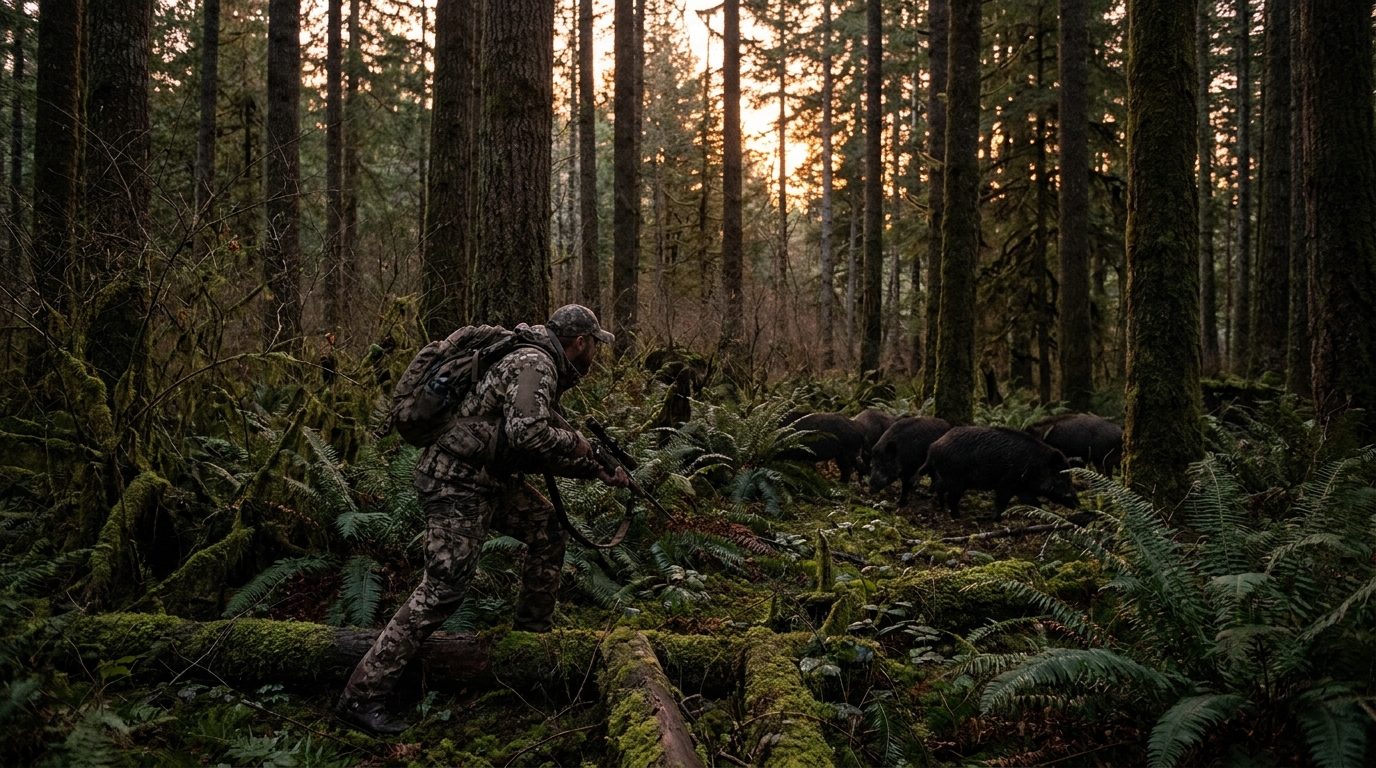
This is the most exciting and effective method. A quality thermal monocular (Pulsar Axion 2 XQ35 or similar) lets you locate pigs from 300+ yards in total darkness. Once you've spotted a group, work the wind and close the distance. Pigs have exceptional noses but only mediocre eyesight — a careful stalk in total darkness is completely feasible if you mind the wind.
Calling and Baiting
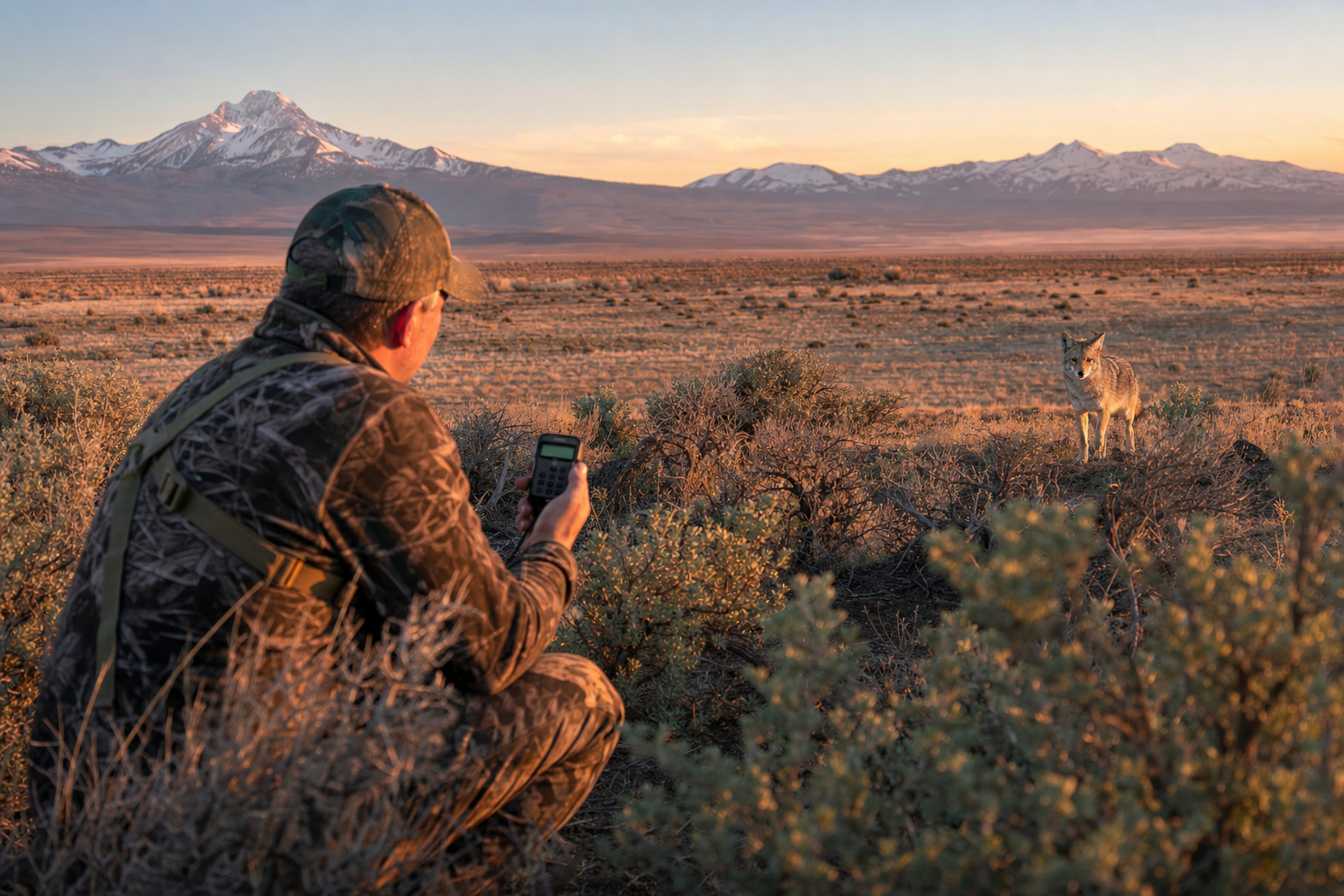
Electronic callers with piglet distress sounds will bring in both sows and dominant boars. Set up downwind of open terrain and be patient — response time varies from five minutes to an hour. Where legal on private land, corn bait piles with a game camera to pattern movement can dramatically increase success.
Dog Hunting
Traditional hog dog hunting — running catch dogs to bay and pin pigs — is legal in Oregon on private land with landowner permission. This style requires purpose-bred dogs (cur, plott, or blackmouth cur for tracking; bulldog-cross catch dogs) and significant experience to do safely. Don't attempt it without mentorship from an experienced hog dog hunter.
Caliber and Shot Placement
Pigs are tough. Their shoulder shield — a layer of cartilage and hardened fat — can deflect or slow penetrating projectiles if shot angles are poor. Use these guidelines:
- Minimum caliber recommendation: .243 for small pigs, .308 or larger for boars over 150 lbs
- Best shot placement: Behind the ear for clean kills; quartering-away shots into the vitals work well
- Avoid: Straight-on frontal shots — the shield is thickest here and bullets can deflect off the sternum
- Bullet construction: Use bonded or hard-construction bullets (Federal Trophy Bonded, Nosler Partition) for reliable penetration on big boars
Field Care and Processing
Get feral pigs on ice fast. In warm weather, body temperature needs to drop below 40°F within 4–6 hours to preserve meat quality. Wear gloves and eye protection during field dressing — wild pigs can carry brucellosis, which is transmissible to humans through contact with blood and reproductive fluids.
The meat of younger sows (under 80 lbs) taken in cool weather rivals domestic pork. Boars over 200 lbs in summer are a different story — the meat can be rank and is often best donated to wildlife programs or left for scavengers if landowner permits. Young pigs, however, are table fare worth taking seriously.
Do Your Homework First
Before hunting, contact the local ODFW district office to confirm population status and any updated guidance. Regulations can change, and hunting hogs on public land without ODFW authorization could cause problems. On private land with landowner permission, you're largely free to hunt any time, any method — and the landowner will probably thank you.
Oregon's feral pig population is a genuine ecological threat. Every pig removed from the landscape is a win for native habitat, ground-nesting birds, and the native species that rely on un-rooted soil. Hunt them hard, hunt them often, and don't feel guilty about stacking them up.