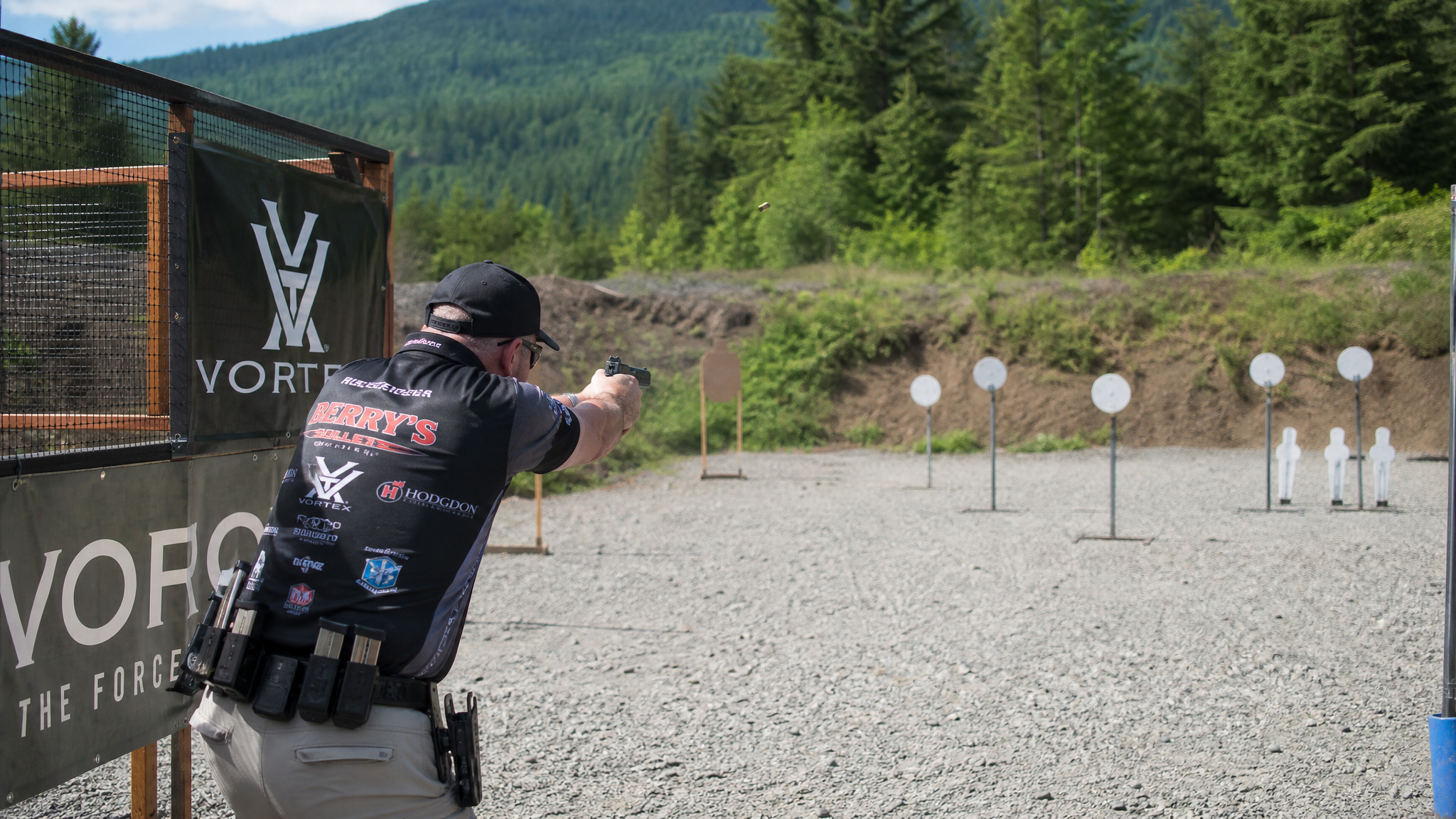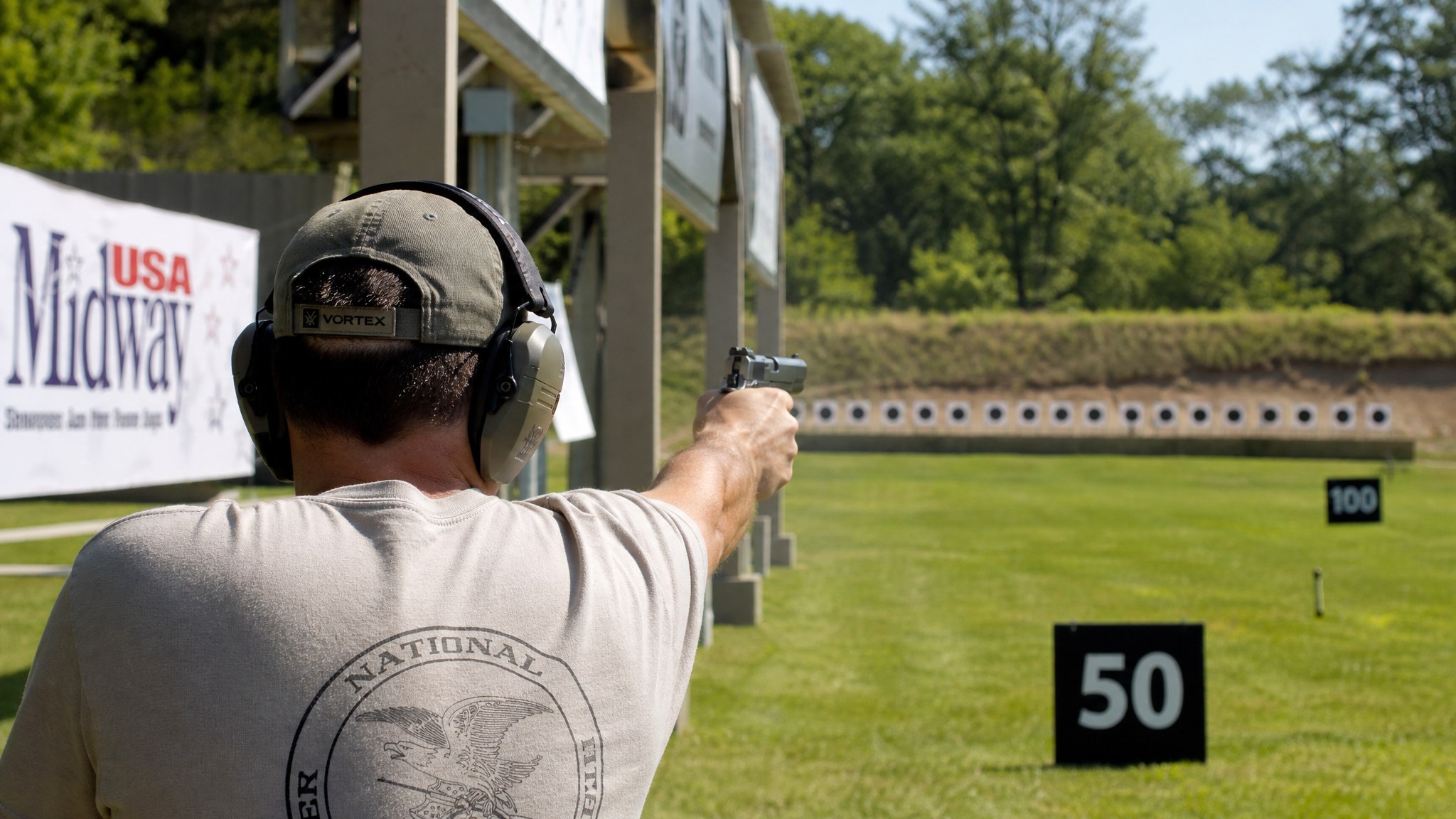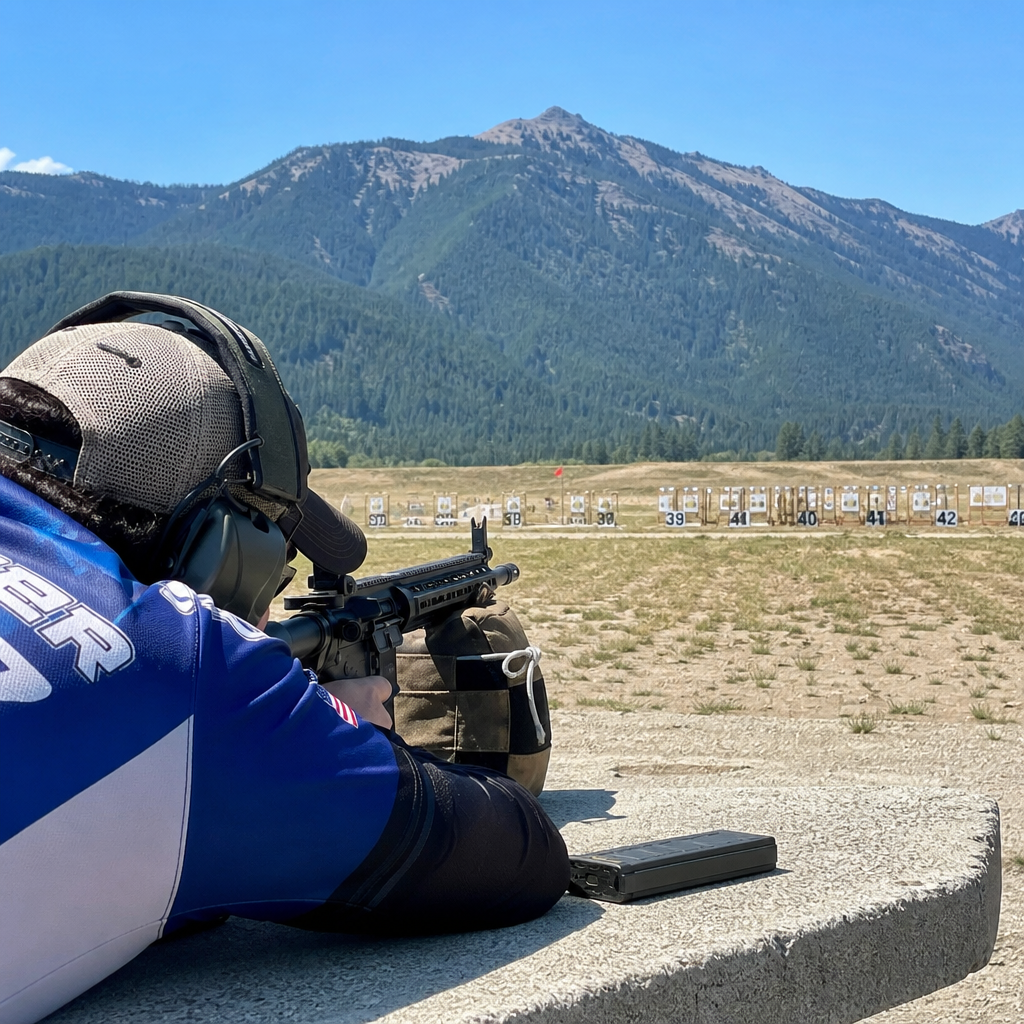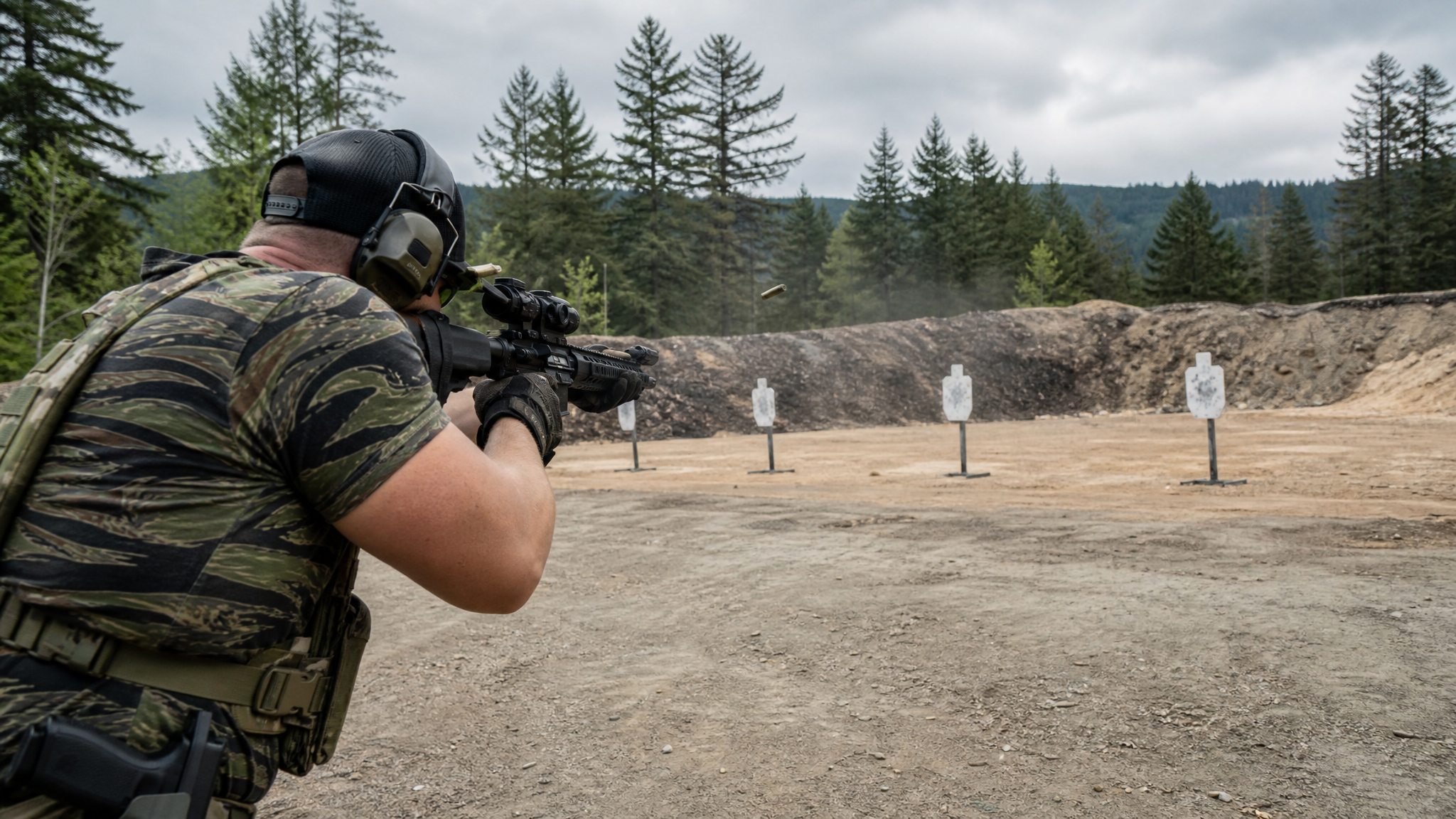
You bought an AR-15, zeroed it at 50 yards, and put a few hundred rounds through it at a static range. That’s a start. It is not training. Defensive carbine skills — the ability to run your rifle quickly, accurately, and safely under physical and mental stress — require deliberate practice that most gun owners never pursue. The Pacific Northwest has a growing network of quality carbine courses and match formats that will expose every gap in your skillset and help you close them.
Why Defensive Carbine Training Matters
An AR-15 sitting in a safe is a paperweight without the human skills to run it. Real carbine competency means you can perform a malfunction clearance without thinking, transition between targets at realistic distances, reload under time pressure, and shoot accurately from positions other than standing at a bench. These skills do not develop passively. They require repetition under conditions that create some degree of stress.
Training also exposes equipment problems. Most gear failures surface during courses — not in your living room. Optics lose zero, cheap BCGs bind, aftermarket triggers reset poorly, and magazines that looked fine on the shelf fail to feed reliably under rapid fire. A carbine course is essentially a 500-round torture test for your entire system. Run your defensive rifle in training before you need it.
What to Look for in a Carbine Course
The Pacific Northwest has no shortage of instructors. Quality varies enormously. Look for instructors with documented operational or competitive backgrounds and references you can check. Avoid courses that spend half the day on lecture and minimal time shooting. Good carbine training should have you putting rounds downrange within the first 30 minutes and accumulating 400–600 rounds of work over a two-day course.
Topics a quality Carbine 1 or Defensive Carbine Fundamentals course should cover:
- Safe gun handling and range commands
- Carbine zeroing (25m zero, 50m zero, and MPBR concepts)
- Fundamental marksmanship: trigger control, sight alignment, sight picture
- Shooting positions: standing, kneeling, prone, and braced
- Reloads: tactical and emergency (slide-lock equivalent for rifle)
- Malfunction recognition and clearance (type 1, 2, and 3)
- Target transitions and multiple target engagement
- Movement: lateral, forward, and to cover
Pacific Northwest Training Resources
Oregon and Washington Match Venues
If formal courses aren’t in the budget, structured competition will push your skills. The following match formats run regularly at clubs throughout Oregon and Washington:
- 3-Gun / Multi-Gun: Oregon Multi-Gun (OMG) runs matches throughout the Willamette Valley and Portland metro area. Multi-gun is the fastest way to develop carbine speed and target-transition skills in a competitive context. Stages require you to engage steel and cardboard from various positions at distances from 10 to 200+ yards.
- Practical Rifle: Some USPSA clubs run rifle-only or pistol-caliber carbine (PCC) stages. PCC matches are a lower-cost entry point and will teach the same fundamentals with cheaper ammo.
- Appleseed Project: While primarily focused on precision marksmanship with slings and positions, Appleseed events run at ranges throughout Oregon and teach a foundation that carries directly into defensive carbine work. Free for youth.
Oregon Training Ranges Worth the Drive
- Sunriver Shooting Center (Bend area): Hosts carbine courses from visiting instructors and has multiple bays capable of running dynamic drills.
- Central Oregon Shooting Sports Association (Redmond): Active 3-gun and practical shooting program with club matches that welcome new shooters.
- Cascade Shooting Facilities (Ravensdale, WA): Just across the border, CSF runs a full calendar of defensive pistol and carbine courses from respected instructors. Worth the drive from Portland or the Willamette Valley.
Dry Fire Drills You Can Do at Home
Dry fire is free, legal, and directly transferable to live fire performance. Before every dry fire session: triple-check the chamber, remove all live ammunition from the room, and point in a safe direction only.
- Draw and acquire sight picture: Mount the rifle from a low-ready position to a specific 1-inch dot on the wall in 1.5 seconds or less.
- Trigger reset drill: Fire, hold the trigger, rack the bolt (or use a snap cap system), release the trigger until you feel the reset click, then stage the next shot. Builds crisp, consistent trigger mechanics.
- Reload from slidelock: Practice your STANAG magazine reload until the entire sequence is below 2.5 seconds without looking at the gun.
- Transition drill: With a safe pistol nearby, practice switching from rifle to pistol (sling the rifle, draw the pistol) in a smooth, repeatable motion.
Gear Setup for Training
You don’t need a race gun to benefit from carbine training. Run what you own. That said, a few upgrades make training more productive:
- A quality red dot (Aimpoint, Trijicon MRO, Holosun 510C) will outperform a magnified scope for close-range carbine work
- A two-point sling that allows you to go hands-free is non-negotiable for any course
- A minimum of six magazines; ten is better
- A chest rig or plate carrier with magazine pouches if the course requires it
- Knee pads for shooting positions on gravel or hard ground
The AR-15 rewards the shooter who invests in skill. Find a course, run a local match, and spend 15 minutes a night in dry fire. The capability gap between most gun owners and trained shooters is enormous — and closeable.