Most Pacific Northwest shooters are familiar with USPSA, IDPA, Steel Challenge, or 3-Gun. They know the gear, the culture, and the rough shape of what those games look like. Fewer have heard of bullseye pistol — the original American precision handgun sport, one that's been shot at the Olympic level since 1896 and that remains, in the opinion of plenty of serious shooters, the most technically demanding pistol discipline on the planet. If you've hit a plateau in your handgun shooting and you're looking for something that will genuinely break your technique down and rebuild it, bullseye is the answer.
What Bullseye Pistol Actually Is
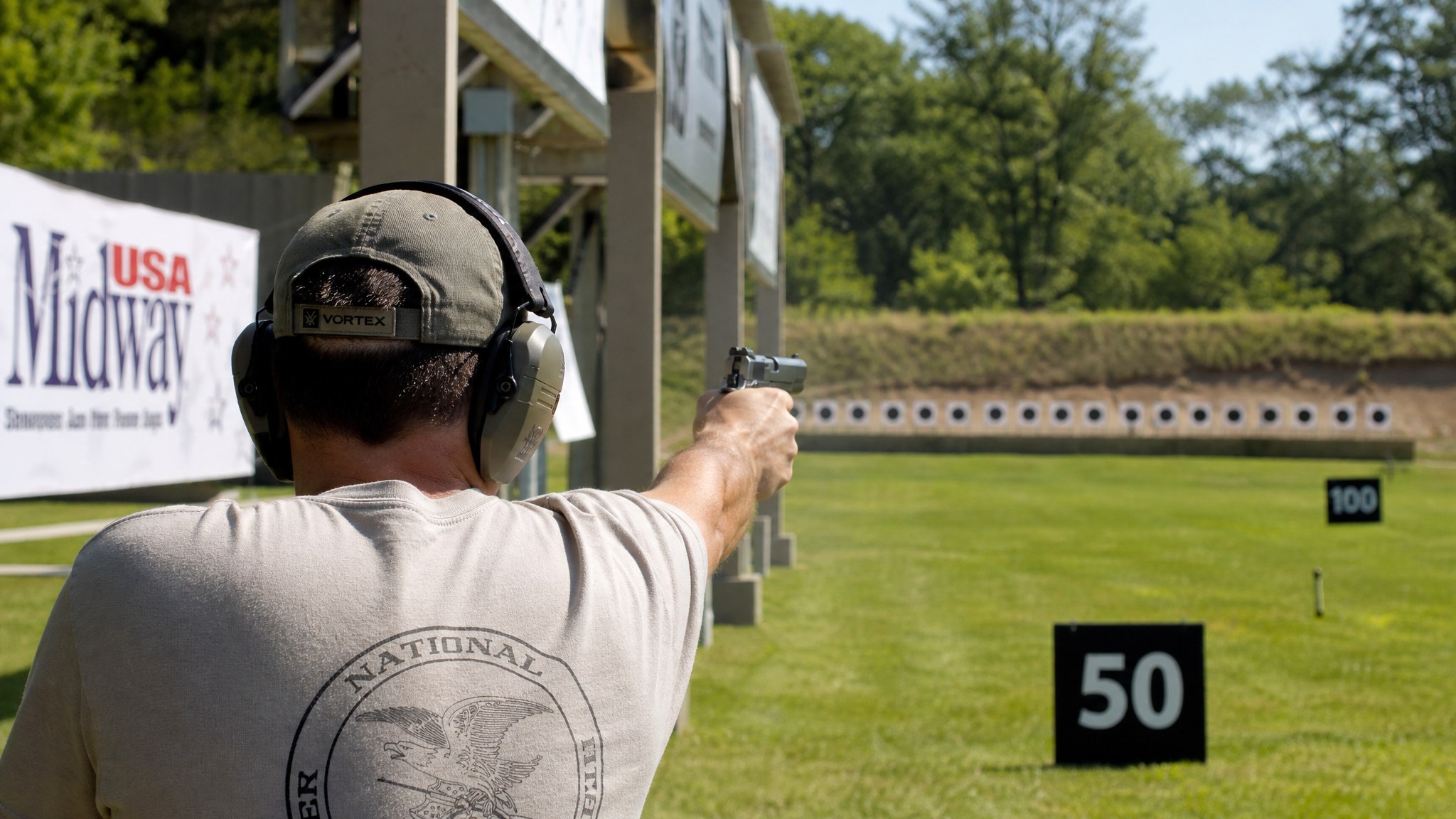
Bullseye is a one-handed, slow-fire precision pistol sport. Matches are shot in three stages: .22 LR rimfire, centerfire (typically .38 Special or 9mm), and .45 ACP. Each stage consists of slow fire (10 shots in 10 minutes), timed fire (5 shots in 20 seconds), and rapid fire (5 shots in 10 seconds). All shooting is done at 50 yards for slow fire and 25 yards for timed and rapid fire. Targets are the classic NRA B-6 bullseye cards — a small X-ring surrounded by concentric scoring rings.
A perfect score is 2700 points across all three stages. A 2600-plus is an expert-level performance. Most new shooters enter their first match shooting in the low 2000s and spend years chasing 2500. The slow-fire stage in particular is a pitiless teacher — 10 shots, 10 minutes, one hand, 50 yards, and nowhere to hide from a bad trigger press.
Why It Makes You a Better All-Around Shooter
The skills that bullseye demands — true trigger control, precise sight alignment, a consistent natural point of aim, and the mental discipline to execute the same shot over and over under a timer — transfer directly to every other shooting discipline. Hunters who spend a season shooting bullseye tend to see their cold-bore accuracy improve dramatically. USPSA and IDPA shooters who add a bullseye component to their training often find that their transition speed improves because their sight-to-trigger coordination is sharper. There's a reason military and law enforcement target pistol programs have been built on bullseye fundamentals for over a century.
What You Need to Get Started
The Gun
For your first foray into bullseye, whatever accurate centerfire or .22 pistol you already own is sufficient. A Ruger Mark IV, Smith & Wesson M&P 22, Browning Buck Mark, or any quality .22 semi-auto with iron sights will let you get started in the rimfire stage. For centerfire, a 1911 in .45 ACP is the traditional choice and the choice of competitive bullseye shooters at the national level — the SA trigger, the grip geometry, and the caliber all work together well at 25 and 50 yards. That said, factory 9mm pistols with good triggers (a CZ SP-01, a SIG P210, or a well-tuned P226) are legal and competitive.
The Sights
Traditional bullseye is shot with iron sights — a front post and a rear notch. The classic technique is a 6 o'clock hold: the front sight sits just below the bullseye, and you're looking at clean sight picture rather than covering the dot. Some shooters prefer a center hold. Find what works for your eyes and commit to it. Optics (dot sights) are legal in many NRA bullseye matches and can be a significant aid for older shooters with changing vision.
Ammunition
Consistency in ammunition matters enormously at 50 yards. For .22 LR, CCI Standard Velocity and Eley Sport are popular choices. For .45 ACP, a handloaded 185-grain or 200-grain cast lead semi-wadcutter over a charge of Hodgdon Clays or Alliant Bullseye powder at approximately 750–800 fps is the classic competition load. It's soft-shooting, accurate, and affordable. Match-grade factory loads (Federal Gold Medal, Speer Gold Dot) also work well if you're not yet reloading.
Finding a Club in Oregon
The Oregon State Rifle and Pistol Association (ORPA) maintains a list of affiliated clubs that run bullseye matches. In the Portland metro area, the Clark Rifles in Vancouver, Washington and the Mount Hood Pistol Club host regular bullseye matches. The Lane County Rifle and Pistol Club in Eugene and the Rogue Shooters in Medford also have active pistol programs with bullseye-friendly members. Reach out to any NRA-affiliated club in your area and ask whether they host position pistol or bullseye matches — the community is small, welcoming, and enthusiastic about new shooters.
Alternatively, contact the NRA's Competitive Shooting Division directly. They maintain a club finder and can point you toward sanctioned matches within driving distance of most Oregon population centers.
First Match Expectations
Walk into your first bullseye match planning to learn, not compete. Scores at the entry level are unremarkable — that's entirely normal and expected. The experienced shooters at any bullseye match are uniformly patient with newcomers because they remember exactly how difficult those first 50-yard slow-fire strings felt. Ask questions, watch technique, and pay attention to how good shooters manage the trigger through the shot.
Bring a spotting scope or a quality binocular. At 50 yards, calling your shots without glass is nearly impossible. Knowing where a shot landed helps you understand what happened — and understanding what happened is how you fix it.
The Bottom Line
Bullseye pistol is unforgiving, technical, and deeply satisfying. It's a discipline that's been refining American handgun shooters for more than a century, and the fundamentals it demands — sight alignment, trigger control, and mental consistency — are the same ones that make better hunters, better competitors, and better defenders. If you've never tried it, find a local club and shoot a match before the summer is out. Your trigger finger will thank you.