The most dangerous phrase in long-range hunting is "the app says." Applied Ballistics, Hornady 4DOF, Kestrel — these are excellent tools. But they're calculators, and calculators are only as good as the inputs you give them. Bullet BC values are manufacturer averages. Your barrel's actual velocity may differ from the advertised spec. Atmospheric density shifts hour to hour. If you're taking shots on big game beyond 400 yards and you haven't confirmed your drops at distance with your actual rifle and actual load, you're guessing with an animal's life.
DOPE stands for Data on Previous Engagements. A DOPE chart is your personalized ballistic record — the real numbers your rifle actually shoots, confirmed on targets at real ranges. Here's how to build one and use it in the field.
Start with a Solid Ballistic Baseline
Before you go to the range, you need accurate inputs for your ballistic solver:
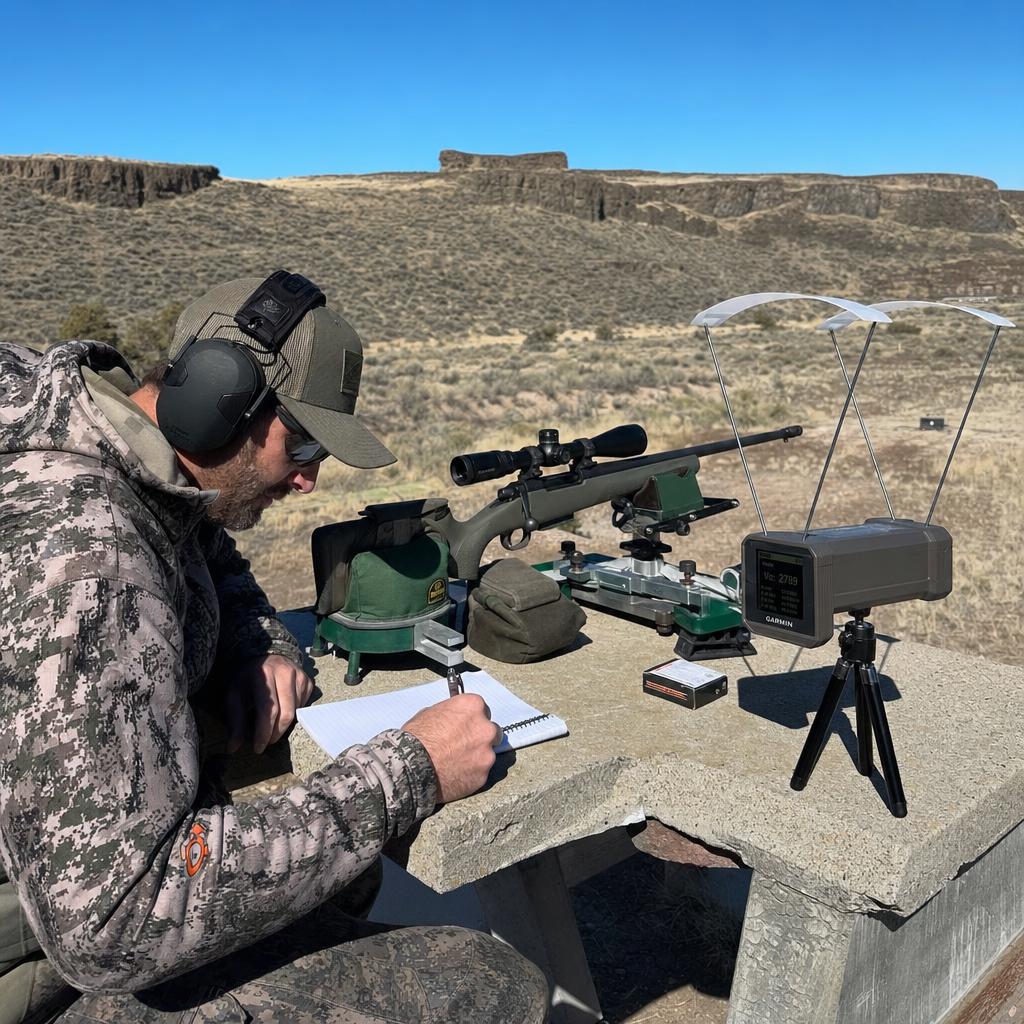
- Muzzle Velocity (MV): Chronograph your actual load. Take an average of at least 10 shots. Your box might say 2,850 fps — your 24-inch barrel might be running 2,780. That 70 fps difference matters at 600 yards.
- Ballistic Coefficient (BC): Use the G7 BC for long-range hunting bullets rather than G1. G7 is more accurate for long-range, boat-tail projectiles. Berger, Hornady, and Sierra publish G7 BCs.
- Zero Range: Most long-range hunters zero at 100 yards. Some prefer 200. Know yours exactly.
- Scope Height: Measure your scope centerline height above bore. For most hunting rifles with medium rings, this is 1.5–1.75 inches. This input affects near-range zero and close-distance impacts.
Plug these into your solver — Hornady 4DOF, Applied Ballistics Mobile, or a Kestrel with AB module are all proven choices — and generate a preliminary drop table from 100 to 800 yards in 100-yard increments.
Confirming at Distance: The Range Session
Your preliminary table is a prediction. Now you need to verify it. This requires targets at actual distances — not computer-estimated distances. Use a rangefinder to confirm your target placement is accurate before you shoot.
What to Record
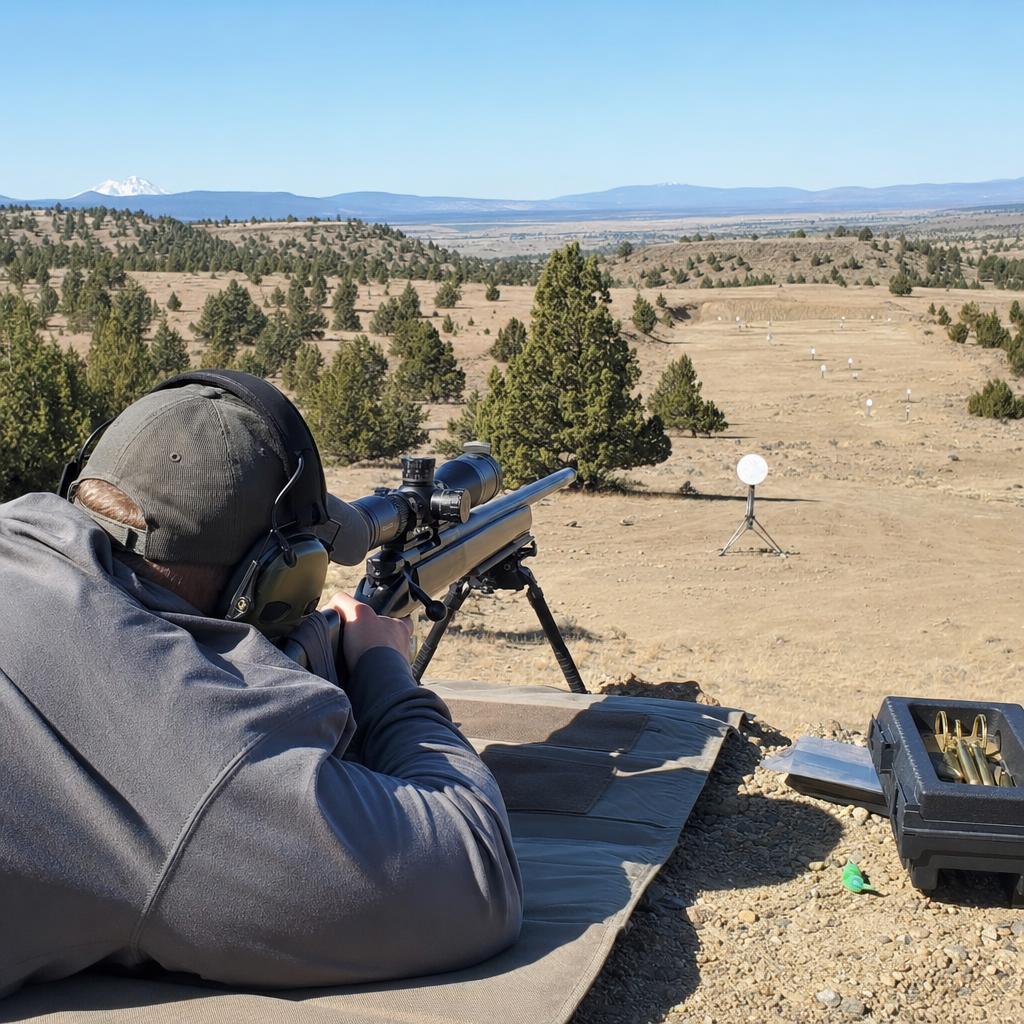
Set up targets at 300, 400, 500, and 600 yards minimum. Farther if your range allows and you're planning shots in open country. For each distance, shoot a 3-shot group with your actual hunting load after the barrel has had time to stabilize at range temperature. Dial your scope based on the solver's prediction, then record:
- Predicted adjustment (in MOA or MRAD, per your scope)
- Actual point of impact — where you hit vs. where you aimed
- The difference (your correction factor)
- Atmospheric conditions: temperature, altitude, barometric pressure
If your solver predicted 8.5 MOA at 500 yards and you hit 0.5 MOA high with 8.5 dialed, your real number is 8.0 MOA at that distance under those conditions. Record that. That's your DOPE.
Building the Chart
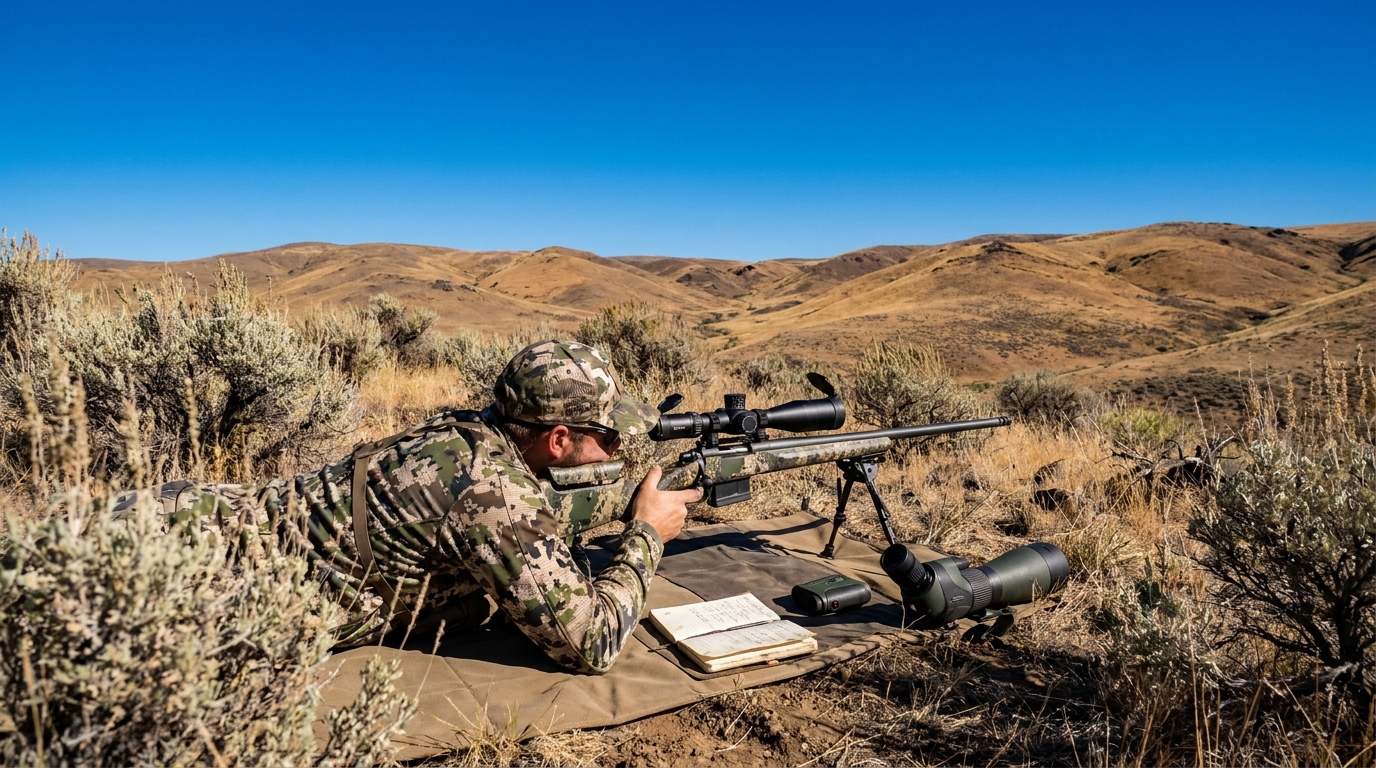
Your DOPE chart should live in two places: a notebook in your pack and a weather-resistant card attached to your rifle stock. Hunters who rely solely on a phone screen in the field learn quickly that wet hands, glare, and cold fingers make apps unreliable at the worst moments.
A basic DOPE chart format:
- Distance: 100 / 200 / 300 / 400 / 500 / 600 / 700 / 800
- Elevation Dial (MOA or MRAD): Your confirmed adjustment at each distance
- Wind (10 mph full value): Your confirmed or calculated wind hold at each distance
- Notes: Conditions during confirmation, any anomalies
Keep it clean and readable. In the field, you have seconds to find a number, dial, and shoot. A cluttered chart costs you the shot.
Atmospheric Correction in the Field
Your confirmed drops are valid at the conditions you shot them. Change the altitude, temperature, or humidity significantly and your drops will shift. A load confirmed at 1,000 feet elevation will hit low at 7,000 feet — air is thinner, less drag, bullet flies flatter. A Kestrel 5700 with the Applied Ballistics solver handles this automatically by feeding live atmospheric data into the engine.
If you don't have a Kestrel, at least know the direction: higher elevation and higher temperature both reduce bullet drop. Lower altitude and colder air increase it. A general rule: for every 1,000-foot increase in elevation above your confirmation altitude, expect roughly 1–2% less drop at distance. It's imprecise, but it's a useful field correction when you're hunting the Wallowas after confirming your DOPE at sea level.
Wind: The Variable You Can't Precompute
Your DOPE chart should include a wind reference — typically a 10 mph full-value hold at each distance range. From that, you interpolate. A 5 mph crosswind is half your 10 mph hold. A 45-degree quartering wind is roughly 70% of full value. Practice this math until it's automatic.
Wind is the hardest variable in field shooting. Reading mirage through your scope, watching grass movement, and feeling wind direction on your face are skills that only develop through time on the range and in the field. No app replaces reading the actual wind where your bullet will fly.
The Ethical Ceiling
A DOPE chart expands your ethical range — it doesn't eliminate limits. Assess every shot on its own: Can you read the wind confidently? Is the animal standing still? Do you have a solid rest? Have you practiced at this distance enough to execute consistently under pressure?
The hunters who make clean kills at distance aren't the ones with the best software. They're the ones who have done the range work, built an honest data set, and know exactly where their limitations are. Know yours, build your DOPE, and shoot only when the numbers and conditions align.