Most Oregon predator hunters are all-in on coyotes, and for good reason — they are plentiful, vocal, and responsive to calls. But for the hunter willing to dig a little deeper into the state's predator regulations and put in some extra scouting time, Oregon's bobcat population offers a genuinely challenging and rewarding hunting opportunity that sees almost no pressure on most public lands.
Bobcats (Lynx rufus) range across nearly every county in Oregon, from the Klamath Basin ponderosa forests to the rimrock of the high desert to the dense timber of the Cascades. They are rarely seen, but sign is everywhere if you know what to look for. Getting one to respond to a call is a different challenge than coyotes — slower, more cautious, more cerebral. When it works, it is one of the most satisfying moments in predator hunting.
Oregon Bobcat Regulations: What You Need to Know
In Oregon, bobcats are classified as a furbearer and are legal to hunt and trap under specific conditions. The key rules hunters need to understand:
- Bobcats may be taken statewide year-round as a nongame predator in counties where they are not designated as furbearers for the current regulatory year. Check the current ODFW Furbearer Regulations before you go.
- In furbearer management zones, a bobcat tag is required and seasons apply. Tags are available over-the-counter through ODFW for most zones.
- All bobcats taken must be reported to ODFW within 5 days, and a hide must be presented for tagging in furbearer zones.
- Electronic calls are legal for bobcat hunting in Oregon.
- No special equipment restrictions — any legal hunting firearm, bow, or crossbow may be used.
The regulations change periodically, so downloading the current ODFW Furbearer and Predator regulations PDF before your hunt is not optional. Get current, then get out.
Reading the Landscape: Where Bobcats Live in Oregon
Unlike coyotes, which readily adapt to open agricultural land and suburban edges, bobcats are ambush predators tied closely to broken terrain and dense cover. In Oregon, the highest-density bobcat habitat tends to fall into a few reliable categories:
Juniper-Sagebrush Transition Zones
The transition between juniper woodlands and open sagebrush steppe in Central and Eastern Oregon is prime bobcat country. These cats work the edges between cover types, using the junipers for loafing and denning while hunting the open sage flats for jackrabbits, cottontails, and ground squirrels. Eastern Oregon units like Coleman Hills, Silvies, and the Beatys Butte area hold good numbers.
Rimrock and Canyon Country
Bobcats in the high desert love rimrock. The broken ledges and basalt outcropping of the Owyhee River canyon, Hart Mountain, and the John Day country give bobcats exactly what they need: escape terrain, den sites, and ambush points. If you are hunting coyotes in rimrock country, you have almost certainly been within range of a bobcat without knowing it.
Cascade Foothills Timber Edge
The ponderosa pine and mixed conifer country on the east slope of the Cascades — particularly in Deschutes, Klamath, and Lake counties — holds bobcats that prey heavily on snowshoe hares, mountain cottontails, and forest grouse. Deschutes National Forest roads in the La Pine and Gilchrist areas are worth investigating.
Calling Bobcats: Patience Is the Game
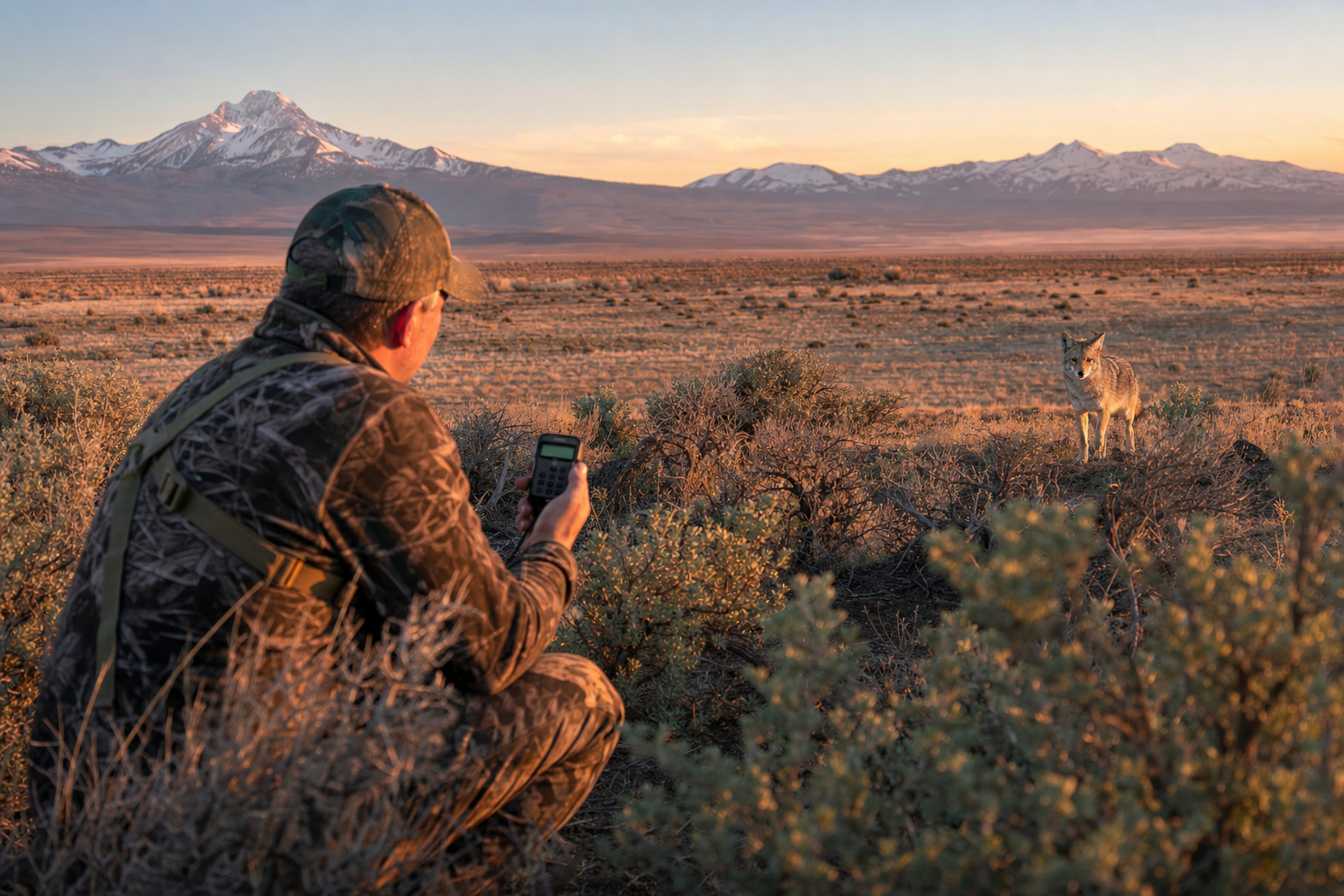
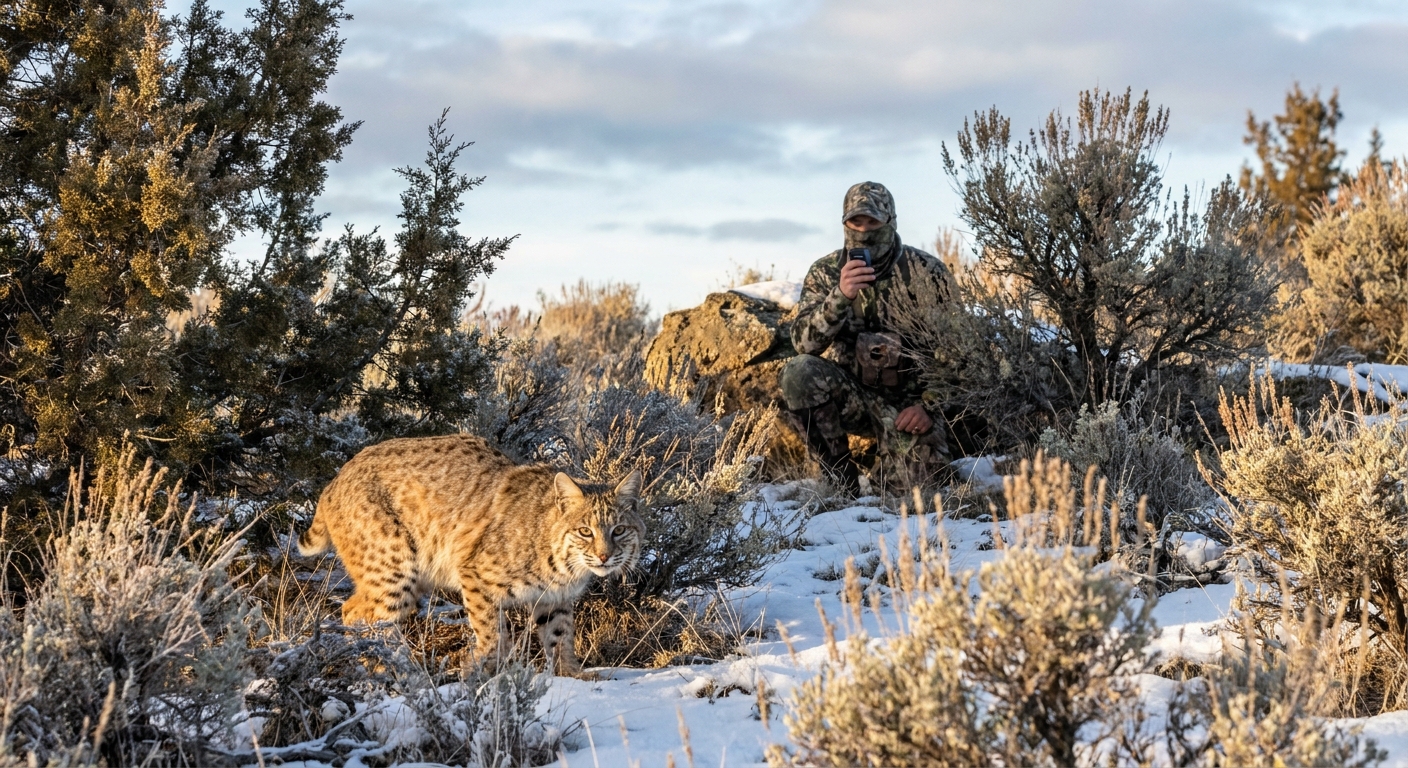
Calling bobcats is fundamentally similar to calling coyotes, with one critical difference: bobcats move slow. A coyote might hammer your call from 300 yards away and be at your feet in two minutes. A bobcat may start at 200 yards, crouch, watch, advance 10 feet, crouch again, and spend 20 minutes covering the last 100 yards. Hunt accordingly.
Best Calls for Bobcats
- Cottontail distress: The standard prey distress. Effective at any time of year. Start at moderate volume and work it in 30-second bursts with long pauses.
- Bird distress sounds: Bobcats eat a lot of birds — quail, grouse, songbirds. Woodpecker distress and quail distress calls have produced surprising results in timber and juniper country.
- Jackrabbit distress: Particularly effective in Eastern Oregon open country where jackrabbits are a primary food source. Use a louder call to reach cats in open terrain.
- Mouse squeaks: Close-range finish call. If you see a cat hung up in cover, drop to a very soft mouse squeak or lip squeak to pull it that last 20 yards.
Sit Longer Than You Think
Set up with the wind in your face, get comfortable, and plan to sit a minimum of 30 to 40 minutes per setup. A coyote that does not respond in 15 minutes has usually moved on. A bobcat may still be working its way toward you. Bobcats have been documented approaching calls more than 45 minutes after they were first broadcast. This is not fast hunting. It rewards patience and stillness.
Shot Opportunities and Firearms
Bobcat encounters typically happen at close range — inside 75 yards is common, with many encounters under 40 yards. A flat-shooting rifle is not required. What matters is a clean, ethical shot on a small-to-medium sized animal. Popular choices among Oregon bobcat hunters include the .223 Remington with a 40-55 grain varmint bullet (minimizes hide damage), the .22 Hornet, and even a 12-gauge shotgun with a full choke and #4 shot for timber hunting. If you plan to have the hide tanned, shot placement matters — aim for the shoulder or high chest to preserve the pelt.
Making Your Bobcat Hunt Count
Bobcats are not a volume game. One cat per season is considered a genuinely successful year by most dedicated predator hunters. Treat each setup as its own event — slow down, read the terrain, set up with more care than you would for coyotes, and give the call time to work. The patience required is exactly what makes a bobcat over the call one of the most memorable moments Oregon predator hunting can offer.