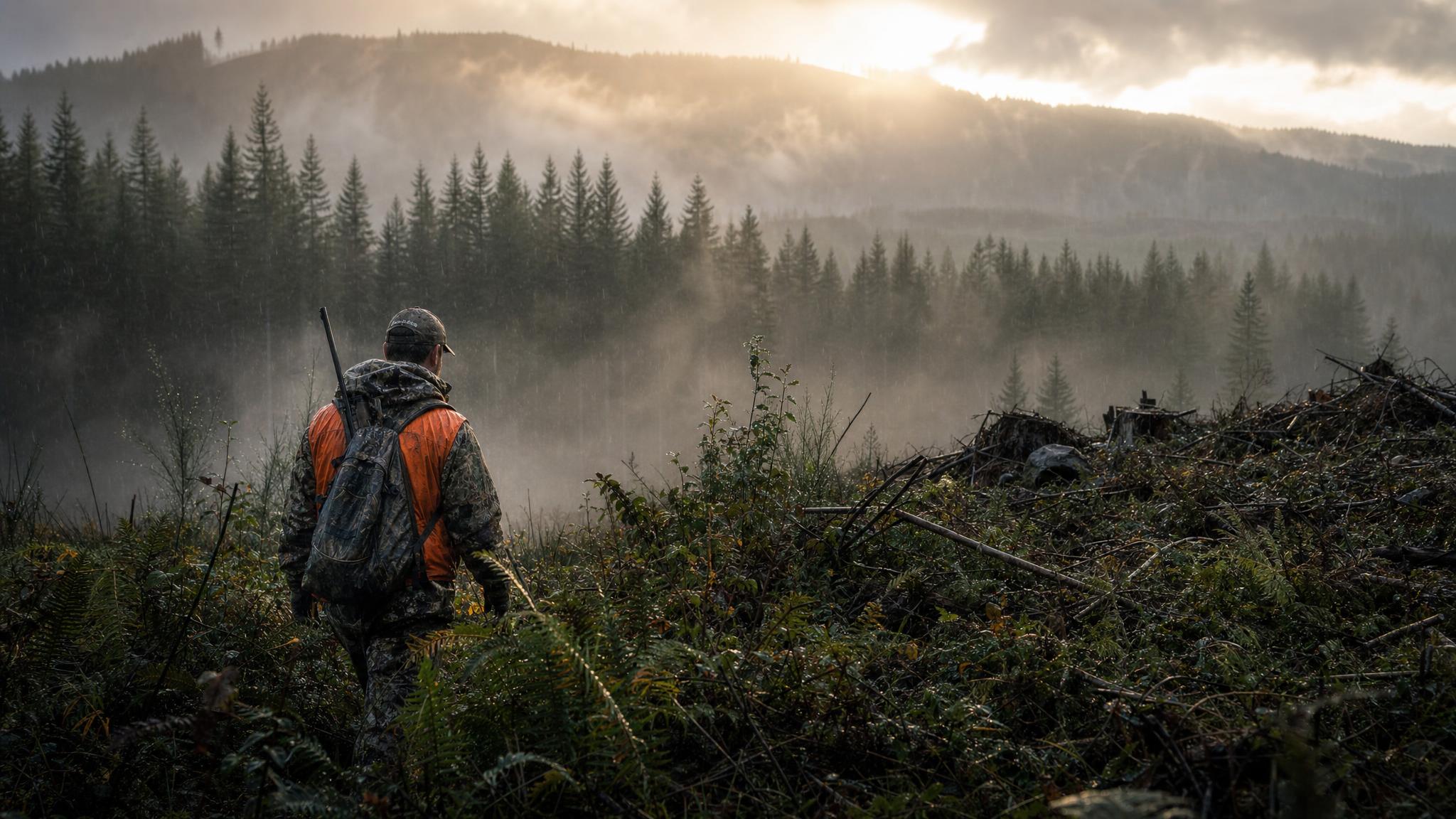
Before bear hunting in Oregon had bait stations, trail cameras, and scent-killing spray, it had dogs. The hound hunting tradition runs deep in the Siskiyou Mountains, the upper Rogue River drainage, and the timbered ridges of Curry and Josephine counties. It's a physically brutal, logistically complex, and deeply traditional way to hunt black bears — and for those who grew up with a pack of Walker or Plott hounds, it remains the only way worth doing it.
Oregon Regulations: What You Need to Know
Oregon currently permits the use of dogs to hunt black bears during the general bear season. The spring season runs April 1 through May 31; the fall season opens August 1 and runs through December 31, with specific dates varying slightly by zone — always check the current ODFW regulations before you go. Bear tags in Oregon are over-the-counter and available at any license vendor. There is no draw required for general bear. One tag per license year is the standard, though additional tags are sometimes available through controlled hunt draws for specific population management units.
Dogs must be licensed and vaccinated per Oregon law. Running dogs on bear outside of legal hunting hours is prohibited. Keep a copy of your hunting license, bear tag, and dog vaccination records in the field.
The Country: Southern Oregon's Siskiyou Range
The Siskiyou Mountains straddling the Oregon-California border hold some of the densest black bear populations in the Pacific Northwest. It's not open country — these are steep, gnarly ridges covered in tanoak, madrone, manzanita, and old-growth Douglas fir. Bears here are heavily built, dark-coated animals that routinely exceed 300 pounds. A 400-pound boar is not uncommon. The terrain is hard on dogs and harder on hunters.
Key drainages include the upper Illinois River corridor, the Applegate drainage, the Chetco River headwaters, and the rough country around the Kalmiopsis Wilderness boundary. Public land access is excellent here — the Rogue River-Siskiyou National Forest covers hundreds of thousands of acres, and most of the best bear country is accessible by forest road if you're willing to navigate rough two-track.
The Dogs
Bear dogs are purpose-bred athletes. The most common breeds in the Siskiyou country are:
- Plott Hounds: The traditional American bear dog, bred specifically for big game. Plotts are aggressive, cold-nosed, and physically powerful. They will push a bear hard and hold it at bay reliably.
- Walker Hounds: Faster and with a bigger voice than Plotts, Walkers excel at striking a cold track and closing the distance quickly. They're sometimes faulted for being easier to call off when a hunt gets hard.
- Redbones and Blueticks: Used less commonly for bear but effective. Both breeds have excellent noses and will work a cold track methodically.
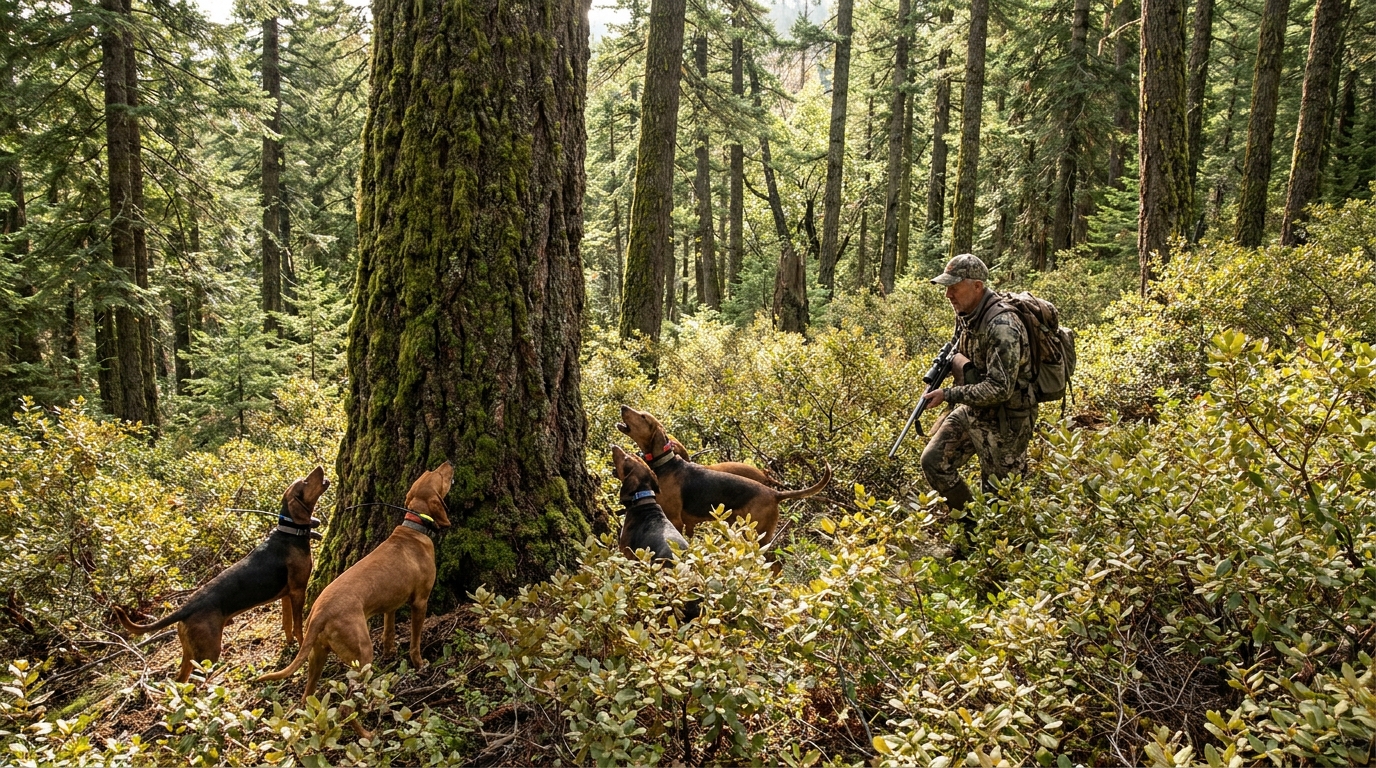
Most serious bear hunters in southern Oregon run mixed packs — a cold-nosed strike dog or two to find and open up the track, and one or two harder, heavier dogs to push the bear and hold it at bay. Running a pack well takes years of experience and a deep understanding of individual dog temperaments.
The Hunt: From Strike to Tree
Bear hound hunts start before first light. Hunters load the dogs — typically in a dog box mounted in the truck bed — and drive the ridge roads slowly with windows down, watching for fresh tracks in the dust and listening for any dog that opens up on its own. When a track is found, the strike dogs are cast. If they're on a fresh track, the chase is on.
A chase in the Siskiyous can last minutes or hours. Bears in this country will run hard before treeing, sometimes covering two or three miles of steep terrain. The hunter's job is to follow the GPS collars on the dogs and reach the tree before the bear bails or the dogs wear out. In thick brush at elevation, "following" sometimes means clawing up 60-degree slopes on hands and knees.
When the bear trees, the hunter must make a clean shot. Shooting up at a bear in a tree requires careful attention to angle and bullet placement — aim for the off-shoulder to ensure the bullet passes through the chest cavity rather than deflecting off bone. A .44 Magnum lever-action, a short-barreled .30-06, or a compact .308 are all popular choices for this type of hunting where weight and length matter in the brush.
Respect the Tradition
Hound hunting is controversial, and Oregon bear hunters who run dogs know it. The best practitioners in the Siskiyou country take the tradition seriously — they don't kill every bear they tree, they manage their dog packs responsibly, and they hunt in a way that maintains the bear population for future seasons. Taking a big boar from a tree after a two-hour chase through Siskiyou oak and manzanita is a hard-won accomplishment. That's the point.