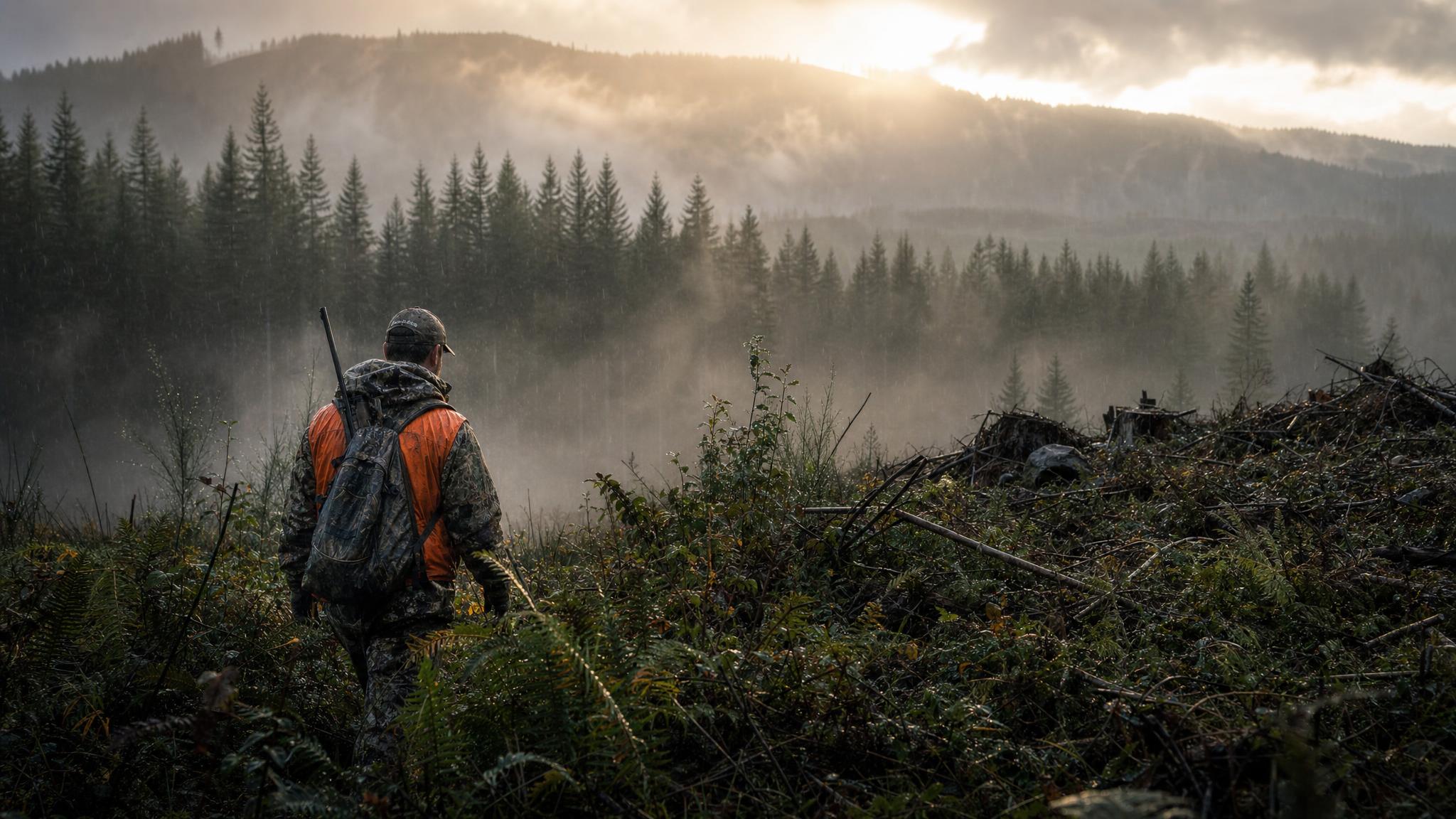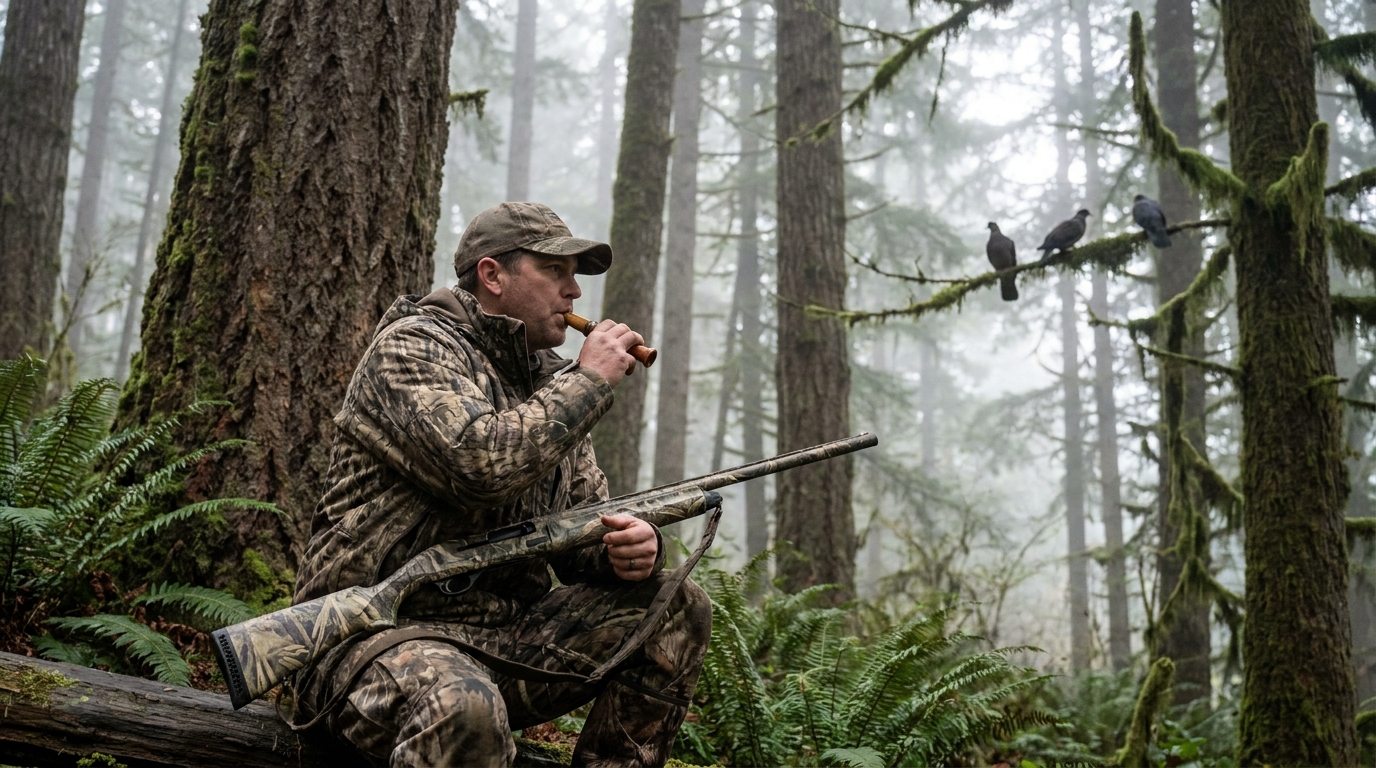
Ask most Oregon hunters about band-tailed pigeons and you get a blank stare. Ask the ones who've hunted them and you'll find out quickly — these birds are legitimately underrated. Fast, deceptive fliers that travel in tight flocks and feed hard on elderberries and grain, band-tails offer a challenging wingshooting experience in some of the most beautiful terrain the Pacific Northwest has to offer. The September season is short, and the opportunity gets little press, which means you're often hunting birds that haven't seen much pressure.
Understanding Band-Tailed Pigeons
The band-tailed pigeon (Patagioenas fasciata) is a large, stocky bird — considerably bigger than a mourning dove — with a distinctive white crescent on the back of its neck and a banded gray tail. Adults weigh 10 to 14 ounces and present a surprisingly challenging target in flight due to their speed and the way flocks move in loose formations through tree canopies.
Band-tails are migratory, breeding along the Pacific Coast from British Columbia to California and following berry crops and mast as the season progresses. In western Oregon, the primary food sources during early fall include elderberries, cascara berries, and wild blackberries. They also hit agricultural grain fields — particularly cut wheat — in the Willamette Valley foothills and eastern Coast Range drainages.
Oregon Season and Regulations
The Pacific Coast Management Unit band-tail season typically opens in September, often the second Saturday, with a daily bag limit of 2 birds and a possession limit of 6. The season is short — usually just 30 days or less — and regulations have varied year to year based on population surveys. Always verify current ODFW regulations before hunting. A federal band-tailed pigeon permit (free, obtained through USFWS) is required in addition to your Oregon hunting license. Pick one up at the local ODFW office or online before opening day.
Where to Hunt in the Oregon Coast Range
The western Cascade foothills and Coast Range drainages between Eugene and Portland produce consistent band-tail action in September. Focus your scouting on:
- Elderberry-laden drainages: Any creek bottom or seep edge with mature elderberry clumps is worth glassing. Band-tails hit these hard in late August and September.
- Clearcut edges adjacent to mature timber: Birds use old clearcuts thick with berry shrubs and wild blackberries, then roost in adjacent standing timber. Work the edges at dawn and dusk.
- Mineral springs and mineral licks: Band-tails have a documented need for sodium and actively seek mineral sources. Known mineral springs on Coast Range public land are worth locating — birds will congregate there in numbers.
- Water sources in dry conditions: In drought years, small seeps and stock ponds draw birds predictably.
Public land opportunities exist throughout the Siuslaw National Forest and BLM parcels in the Oregon Coast Range. Use OnX or Gaia GPS to identify access points and ownership boundaries before heading out. Timber company lands are sometimes open to hunting with a free-use permit — check company websites for current access policies.
Shooting Setups and Technique
Band-tails move at first light and again in the two hours before dark. The classic setup is to identify a known feeding area or flyway — a saddle between two drainages where birds commute, or a berry patch being actively hit — and post up on the edge before birds arrive.
These birds come in fast and often higher than you expect. Unlike mourning doves that flare and dodge, band-tails frequently commit to a landing area and give you a brief window of a reasonably predictable shot. On the flip side, a flock that spooks before landing will circle and circle without committing, testing your patience. Don't move. Don't skyline yourself. Stay against background cover and wait.
Shotgun and Load Selection
- Gauge: 12 or 20 gauge both work. A 12 gives you flexibility in choke and load selection for varying shot distances.
- Loads: 7½ or 8 shot in a standard 1 1/8 oz or 1 oz load. These are big-bodied birds and you need adequate pattern density. Avoid going too light on shot size — clean kills require penetration.
- Choke: Modified or improved-modified. Band-tails typically present shots in the 25 to 45-yard range. Tight full choke is overkill inside 30 yards and can cause excessive pattern gaps at that distance.
On the Table
Band-tailed pigeons are exceptional table birds — arguably the best eating of any Oregon upland species. Breast them out, remove the skin, and treat them like a high-quality dark-meat bird. A simple preparation: sear the breasts hot in cast iron with butter, garlic, and fresh rosemary, finished with a deglaze of red wine. They pair well with mushrooms, which is convenient given that September is prime chanterelle season across the same Coast Range drainages you'll be hunting.
Band-tails don't get the attention of elk, deer, or salmon in Oregon's outdoor media, but the handful of hunters who pursue them keep coming back every September. The combination of challenging shooting, wild country, and quality table fare makes them worth putting on your radar.