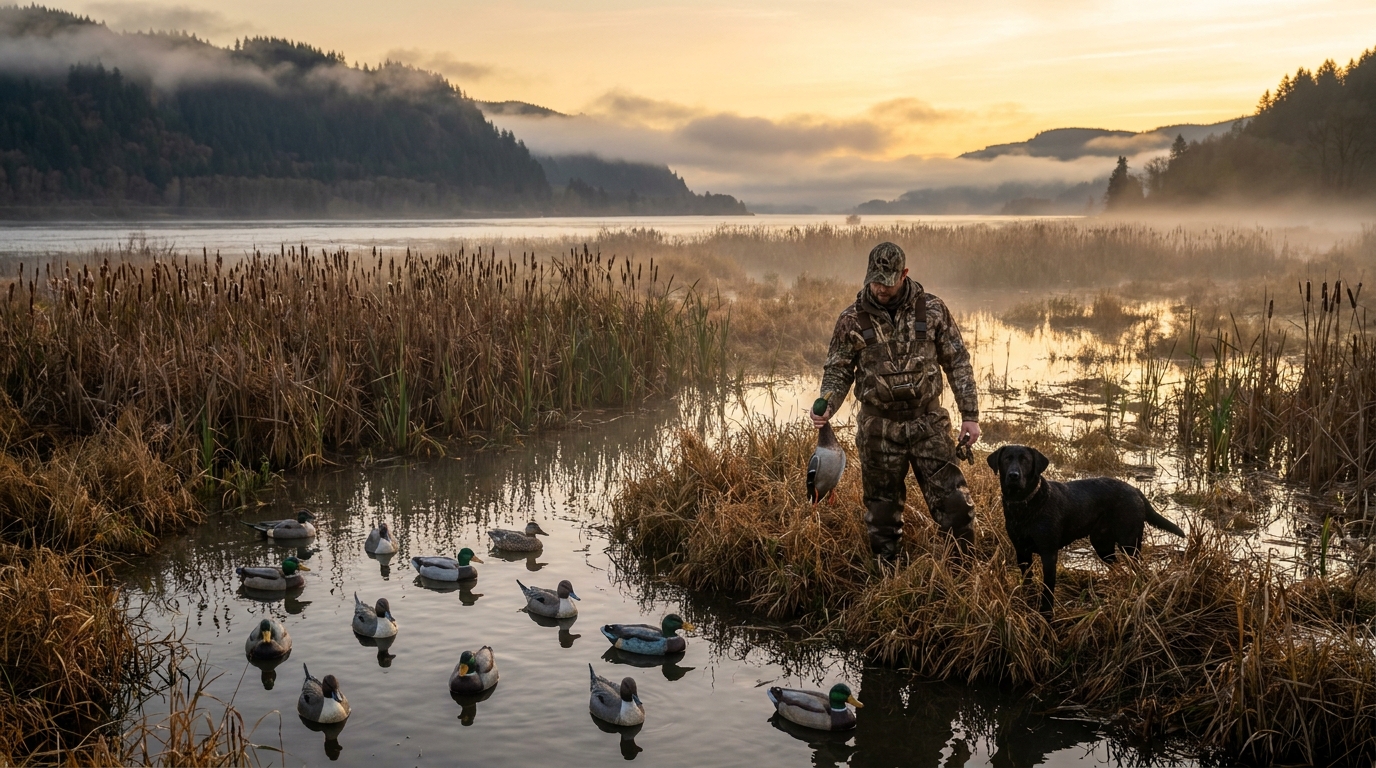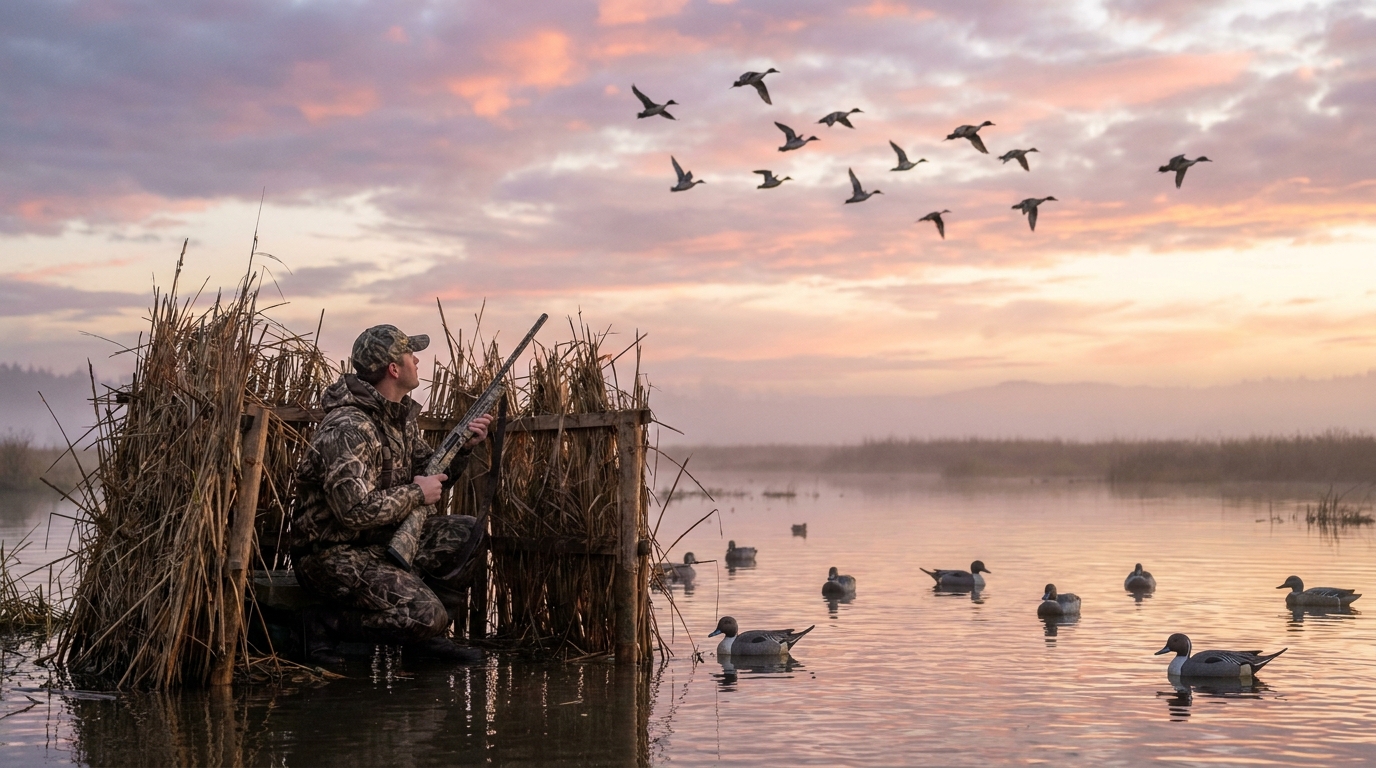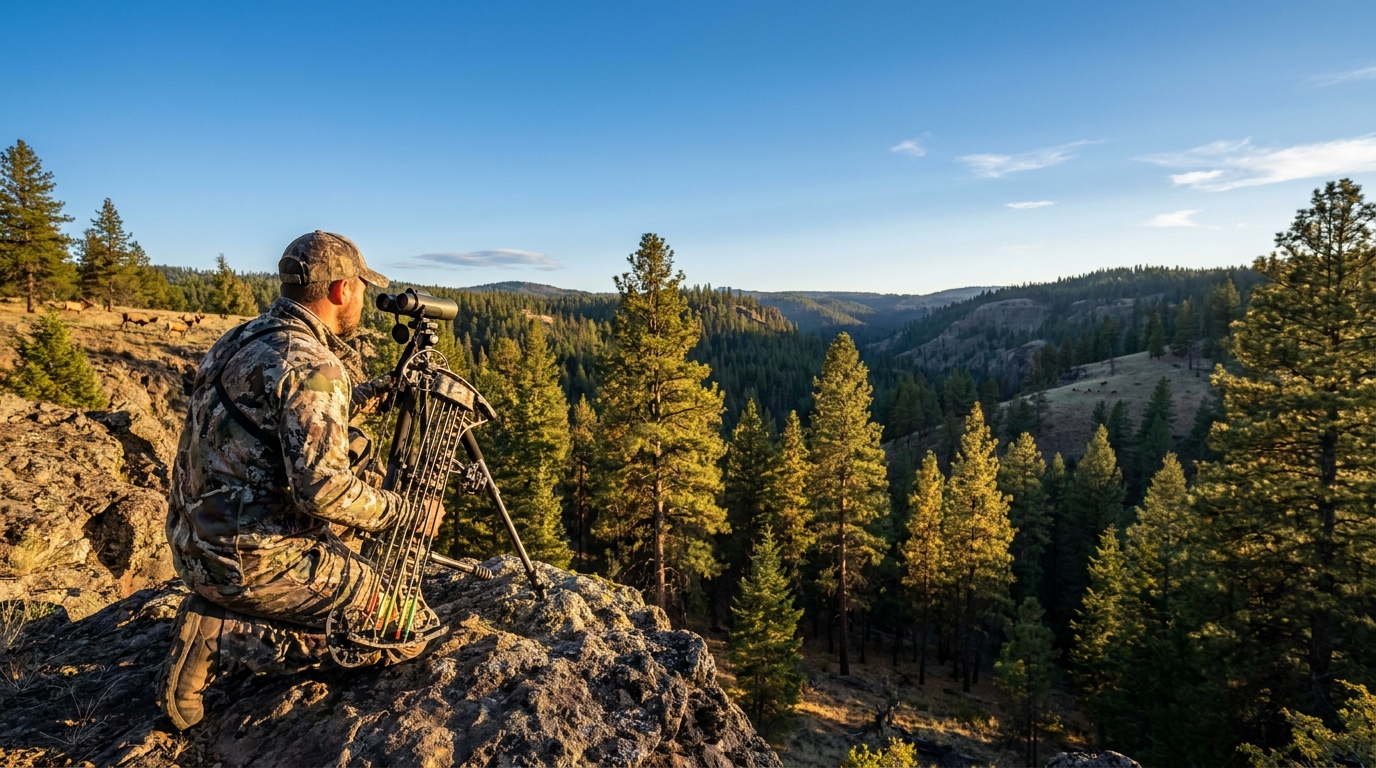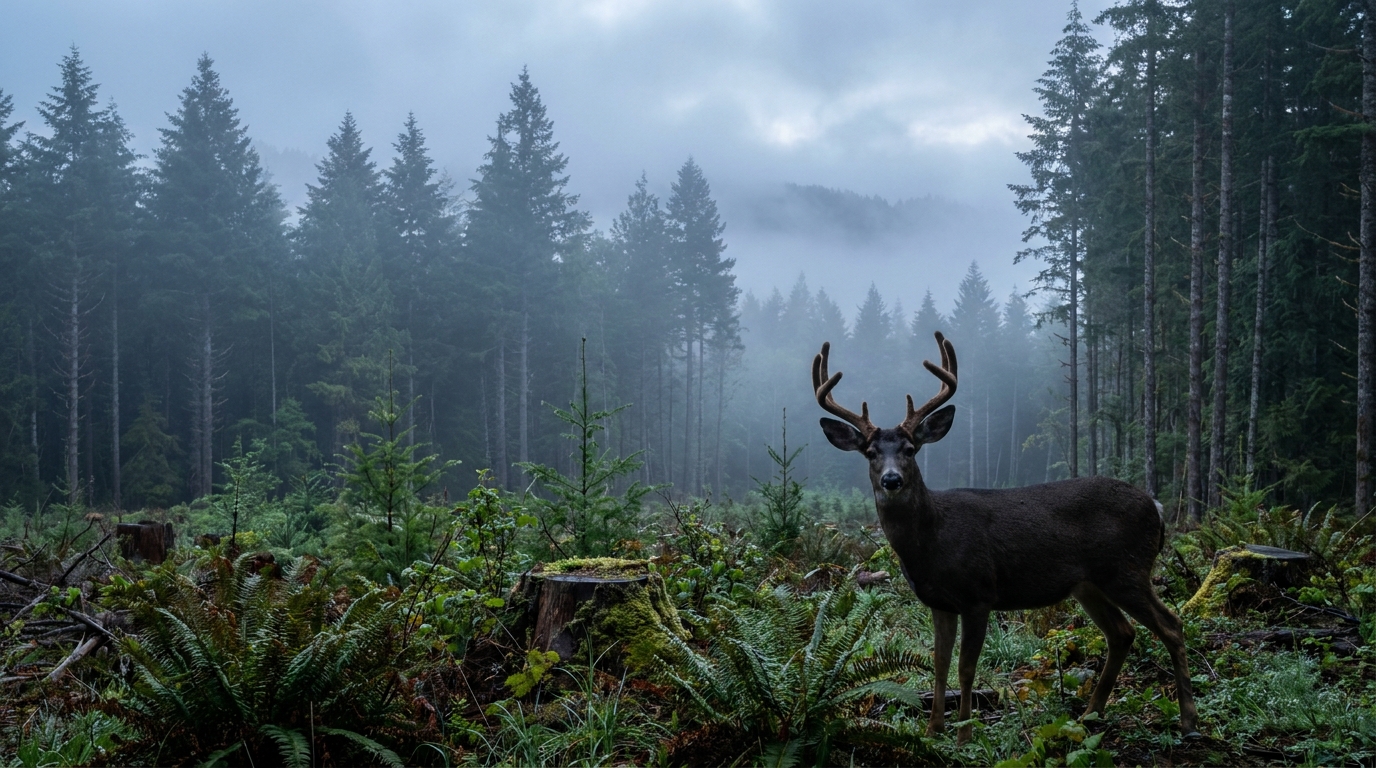
Ask most Oregon deer hunters about the Siuslaw unit and you'll get a blank stare. That tells you everything you need to know about hunting pressure on this section of the Oregon Coast Range. While hunters stack up at trailhead parking lots in the Tillamook and Applegate units, the Siuslaw National Forest — sprawling across Lincoln and Lane counties from Newport south toward Florence — receives a fraction of the archery deer pressure you'll find almost anywhere else in western Oregon.
The blacktail deer here are a different kind of challenge. Coast Range bucks that have never seen a hunter behave very differently from those that have survived multiple archery seasons in the rainforest timber. The latter group — the timber bucks — develop survival patterns built around fog, density, and the 40-foot visibility ceiling that coastal weather imposes through much of late August. Getting close to a Siuslaw unit buck with a bow is some of the most demanding archery deer hunting in the Pacific Northwest.
Unit Overview
The Siuslaw unit covers approximately 1.2 million acres of the central Oregon Coast Range, centered on the Siuslaw National Forest between Highway 20 and Highway 126. The unit is dominated by Sitka spruce, western hemlock, Douglas fir, and red alder — a dense closed-canopy mix that creates the low-visibility environment where typical western hunting techniques fail completely.
Deer density varies across the unit. Burned and clear-cut areas from recent fires and ongoing timber harvest have produced exceptional forage regrowth and elevated deer populations in recovering zones. South of Florence in the dune country interface, blacktails have access to open foraging areas at dawn and dusk that simply don't exist in the deep timber.
Access and the Road System
The Siuslaw National Forest road system is your key to huntable interior ground. Timber harvest roads — maintained, unmaintained, and gated — create a grid across much of the unit. The Motor Vehicle Use Map (MVUM) for the Siuslaw NF is essential and available free from the forest office in Corvallis or downloadable from the USFS website before season.
Target areas worth scouting: The Lobster Creek drainage on the north district, the Drift Creek area above Lincoln City, and the upper Siuslaw River tributaries near Noti and Veneta all hold good deer numbers with reasonable road access. Clear-cuts 5–12 years old are the gold standard — old enough to develop a dense browse layer with blackberries, sword fern, and vine maple, young enough that deer still work the edges actively at first and last light. Pre-season road drives at dawn and dusk in late July will show you deer quickly.
Hunting Techniques for Coastal Timber
Still-Hunting in Fog
The Coast Range fog that frustrates elk hunters in September is your best friend as a blacktail archer. When the cloud layer drops into the valley floors and visibility closes to 50 yards, blacktails feel safe and move more boldly. Get into a clear-cut edge an hour before first legal shooting light and still-hunt the perimeter slowly. Move one step, stop, scan for 60 seconds, repeat. The deer that materialize out of the mist at 20 yards are what this hunt is about. Slow is fast in the Siuslaw timber.
Rub and Scrape Hunting
Blacktail bucks in the Siuslaw unit begin working rubs and pre-rut sign earlier than calendar-based hunters expect. By mid-August, mature bucks are peeling velvet and making rubs on small-diameter alders and vine maple along creek drainages. Find the bench between a clear-cut feeding area and bedding cover in the standing timber above, and set your ground blind or portable hang-on stand in the transition zone.
Water Sources in August
Late-summer drought conditions have intensified in recent years. Reliable water sources become magnets for deer movement during the August archery opener. Small springs, seasonal streams with consistent flows, and stock tanks near National Forest boundaries create predictable movement funnels. Use USGS topo maps or OnX layers to find surface water before your scouting trip.
Gear Considerations for Coastal Conditions
Moisture is your primary enemy in the Siuslaw unit. Rain, heavy fog, and morning dew will soak arrow fletching and quiet fabrics within minutes. A light waterproof shell over quiet synthetic layers outperforms wool in active rain. Hunt with a mechanical broadhead you trust in wet conditions, and carry a microfiber towel for wiping fletching and bow cams between sits.
Navigation is critical in the closed canopy. Landmarks disappear quickly in fog, trails overlap logging roads, and valley drainage navigation can disorient even experienced hunters. Load your offline map and drop a GPS waypoint at your vehicle before hiking in on every single trip.
Regulations
Oregon's archery deer season in the Siuslaw unit typically runs August 22 through September 21, archery equipment only. One deer per tag — buck only in most of the unit, with forked horn or better restrictions that vary by year. Check ODFW's current regulation booklet for exact Siuslaw unit rules and any antlerless tag availability.
The Siuslaw unit rewards patience, pre-season scouting, and commitment to the slow, deliberate approach that coastal timber demands. What it offers is something increasingly rare in Oregon deer hunting: genuine solitude, minimal competition, and a legitimate chance at an unhunted buck that has never smelled a human in his drainage.